
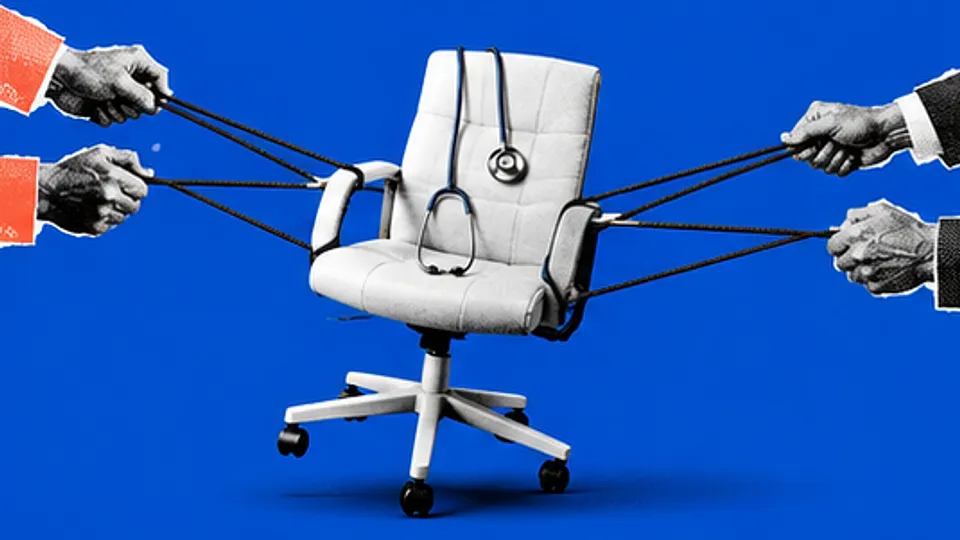
If you want to understand how the leadership of an international institution gets chosen, you could read the constitution of that institution, the rules of procedure, the formal nomination and election processes. Or you could read the quote from the official at Nepal’s Ministry of Health and Food Safety, who explained it rather more plainly: “This is a geopolitical issue, and whichever country gets India’s support, it will be elected.” Sure. The formal process exists — applications, vetting, a vote of member states — and then there is the actual process, which is the same thing wearing a suit.
The post in question is the directorship of the World Health Organisation’s South-East Asia Regional Office, known as SEARO, which has been vacant since Saima Wazed resigned on September 9. Wazed is the daughter of Sheikh Hasina, the former prime minister of Bangladesh, which gives you a rough map of the terrain. She won the job in a 2023 election — eight votes to two over Nepal’s candidate — while her mother was still in power, and several international outlets criticised the then-prime minister for leaning on the election, including with India. Then in August 2024 Sheikh Hasina’s government collapsed amid mass protests, she fled to India, and her daughter’s position at WHO became considerably less tenable. Bangladesh’s anti-corruption commission filed charges against Wazed, the WHO put her on administrative leave, a WHO committee recommended her dismissal on September 8, and she resigned the following day. She has denied the allegations, which were investigated by both the WHO and Bangladeshi authorities.
Now everyone wants the seat. Nepal has decided to nominate Dr Sangeeta Kaushal Mishra, an additional secretary at the health ministry, and a senior official there told the Kathmandu Post — anonymously, because he wasn’t authorised to speak — that “the government has already started lobbying member countries for support” and “will make every effort to ensure Mishra is elected.” Bhutan, the Maldives and Sri Lanka are also preparing candidates, according to officials. The WHO hasn’t publicly announced the selection timeline, but Reuters reports that nominations open October 12, applications are vetted in December, and the election is set for January 24 next year.
The electorate is worth a moment. The region has 11 member countries, but only 10 can vote in this election, because Myanmar is under UN sanctions following its 2021 coup. The voters: Nepal, Bhutan, the Democratic People’s Republic of Korea, India, Maldives, Sri Lanka, Thailand and Timor-Leste among them. Ten votes in total, so five or six gets you the UN health job for a region of some two billion people. Small electorates make for intense lobbying; you are not running a campaign so much as doing arithmetic one government at a time.
Nepal has been here before, and it went badly. In 2023 it ran Shambhu Acharya, a three-decade WHO veteran then serving as Director of Country Strategy and Support in the WHO Director-General’s office in Geneva — a serious résumé by any measure. He got two votes. The loss prompted criticism back home that the government of the day hadn’t lobbied hard enough, which the government disputed at the time. So this time the pitch is explicitly political. “The result will hinge on prime ministerial diplomacy and Nepal’s ability to rally member states,” another health ministry official said, adding: “We are confident the prime minister’s international goodwill and pro-Gen Z stance will help secure the votes we need.” You do not often hear “pro-Gen Z stance” cited as a qualification for running a UN regional health office, but the Balendra Shah government clearly sees it as diplomatic currency.
The candidate herself comes with a small subplot. Mishra’s name was previously put forward for Health Minister under the Sushila Karki-led interim government — it reportedly reached the President’s Office before being withdrawn after Karki learned of a probe by the Commission for the Investigation of Abuse of Authority. In June this year, the Special Court acquitted her. She has also sued the government once, over not being appointed health secretary. None of this is disqualifying, and officials say she is the prime minister’s pick, but it does mean her election campaign will begin with a file that opponents can photocopy.
The likeliest outcome, if the ministry’s own analyis is right, is that the election is decided less in the January vote than in whatever conversations India has beforehand. Last time India backed the daughter of a friendly prime minister in Dhaka. That alignment is gone now, and four countries are asking New Delhi what it wants instead. The WHO will run its process. The geopolitics will run in parallel, and one of them is usually the trailer and the other the film.