
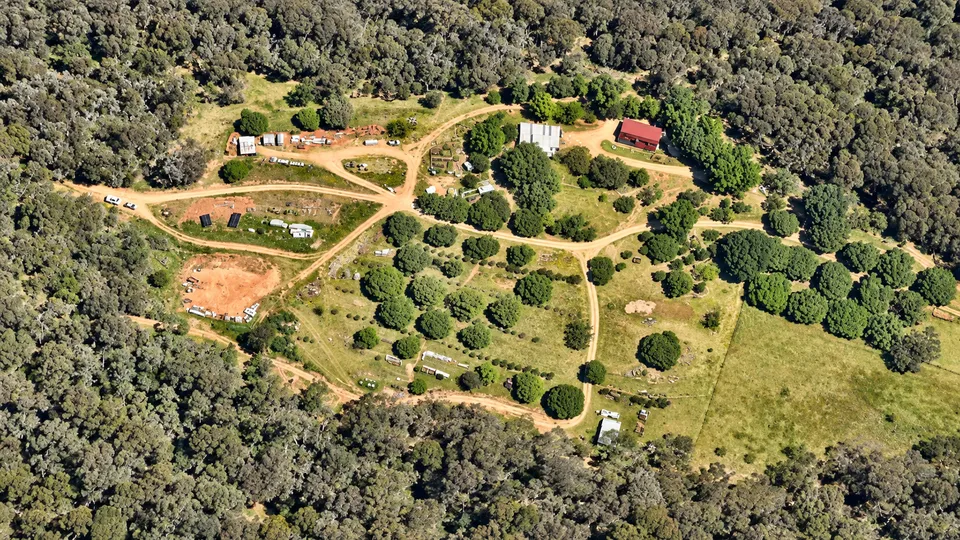
Here is a question for the small-caps fund managers of Australia: what was Nearmap worth in 2022? If you were running money back then, the answer was $2.10 a share, or about $1.06 billion in total, because that is what Thoma Bravo, the Chicago private equity firm, offered for the aerial imaging business, and that is what the market accepted, and off it went from the ASX boards into private hands. Whatever the number was, it was the numberthe market had chosen, more or less.
Well. Street Talk at the Australian Financial Review reports that Thoma Bravo is now preparing to float Nearmap back on the ASX at a valuation of more than US$4 billion — about $5.75 billion in local currency — and has hired Goldman Sachs and Barrenjoey Capital Partners to run the initial public offering. That is, to be clear, more than five times the price at which the same public market, give or take, happily sold the company four years ago.
The natural response from anyone who owned it last time is a sort of weary disbelief, and the AFR notes the number would come as a surprise to the small-caps funds that held it during its previous stint. But give the mechanism its due, because there is a mechanism. The pitch is not that the market mispriced the same business. The pitch is that this is a different business.

During its time in private equity’s stables, Thoma Bravo has been pivoting Nearmap from a niche aerial data provider — planes, cameras, photos of your roof — into what is now called a property intelligence platform, the kind of thing that competes with Moody’s, Cotality or Verisk. It made two sizeable acquisitions to get there. The first, Betterview, helps identify and mitigate property risks and improves underwriting and inspection systems. The second, Itel, provides building material pricing data and repair-versus-replace analysis. Which is to say: it bought its way into the insurance industry, an optimistic place to stand if you sell data about what is on top of people’s houses and what it costs when it blows off.
The numbers attached to this new creature are genuinely better than the old one’s. Nearmap is expecting US$350 million of revenue for the 2026 financial year and is said to be running earnings margins as high as 50 per cent. A software company growing at pace with 50 per cent margins is, in the argot of the IPO roadshow, a quality asset.

Still, do the arithmetic the other way, because someone has to. More than US$4 billion on US$350 million of revenue is a multiple of more than 11 times sales. That is not a property-data multiple; that is a software-is-eating-the-world multiple. The vendors will argue the margins and the growth justify it. The buyers will remember they were offered this exact equity story in 2022, at one-fifth of the price, by roughly the same market that is now being asked to re-rate it. Everyone is right, which is what makes IPO pricing fun.
The pipeline needs a win
Timing matters here, and not just for Thoma Bravo’s internal rate of return. As the AFR points out, a Nearmap float at US$4 billion-plus would make it the biggest candidate in the ASX’s floats pipeline — barring Glencore’s dual listing, which becomes effective Wednesday but involves no raising and so doesn’t really count as a test of anyone’s risk appetite. The last big test of that appetite was Firmus Technologies, the so-called neocloud, whose $7.9 billion bookbuild last week was, in Street Talk’s words, a “colossal flop.” So the window into which Nearmap proposes to step is, charitably, ajar rather than open.
It would also tower over the other hopefuls. Sharon AI is already listed at a US$1.3 billion market capitalisation, and SwipeJobs is expected to chase a $2 billion listing. Nearmap at $5.75 billion would be the main event.

And it would extend what is becoming a recognisable pattern on the local exchange: companies that limped along on the ASX, got taken private, spent a few years being fed and exercised in a private equity stable, and then trotted back to the very same market wearing a much bigger number. Estia Health is this year’s prominent example. The pattern raises an awkward question for public market investors, which is whether the public market is where Australian growth companies go to be undervalued, while the private market is where they go to be fixed.
There is a less awkward and funnier way to put it. In 2022, the ASX’s small-caps funds looked at Nearmap and saw $2.10. Thoma Bravo looked at it and saw a property intelligence platform worth more than US$4 billion — it just needed to be bought, merged, acquired into, margin-expanded and re-pitched first. One of these valuations was wrong, and Goldman Sachs and Barrenjoey now have the moderately delicate job of explaining to the people who sold at the bottom why they should buy at the top.
To be fair, the people buying this time will mostly not be the people who sold last time. That is the beauty of an IPO: a fresh register, a fresh story, and no awkward questions about what anyone paid in 2022.