
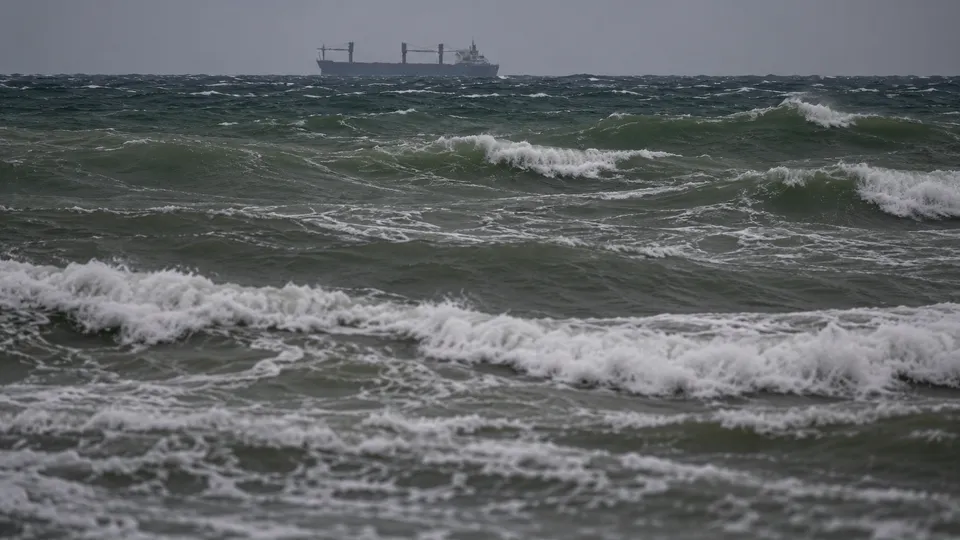
The Black Sea has never belonged to anyone for long, which is why so many have fought to possess it. On Tuesday, the world’s largest military alliance announced it was turning more of its eyes and ears toward those waters: patrol aircraft, radar, technicians who dissect explosives, men and women who read intelligence, and drones of its own.
As Al Jazeera reported, the deployment follows a series of deadly drone attacks in the region — strikes widely blamed on Russia and, with the usual fluency of such matters, denied by the Kremlin. Between the accusation and the denial lies the sea, and on the sea the wreckage.
Colonel Martin O’Donnell, speaking for the alliance, listed the reinforcements with the flat precision of an inventory.
Allies have or will send additional maritime patrol aircraft, radar systems, explosive exploitation teams, intelligence personnel, drones and more to the Black Sea
The language of reassurance
Note the grammar of that sentence: have or will send. Some planes are already circling; others exist, for now, as promises. Turkey’s anews identified O’Donnell as a spokesman for NATO’s Supreme Headquarters Allied Powers Europe, the office where the geometry of deterrence is drawn on maps. The explosive exploitation teams deserve a moment’s attention: their trade is to pick through the remains of what killed people and determine whose hand designed it. Bureaucracies give such work neutral names.
Other reporting sketched the attacks that provoked all this: Nukta reported that the alliance acted after drone strikes on commercial cargo vessels near the territorial waters of Romania and Bulgaria, two member states whose coastline makes the Black Sea, in legal language at least, partly NATO’s sea.
There is an old pattern in how wars spread. First the front is a line on land. Then it becomes a corridor. Then it reaches the shipping lanes, where grain and steel and fuel move under flags that believed themselves bystanders. The merchant sailor learns what the villager learned before him: neutrality is a status granted by those with the power to violate it.
Moscow denies the attacks. The patrol planes will fly regardless. On the Black Sea, as everywhere the powerful contend, what matters is rarely what is said but what now circles overhead, watching.