
Every ruler keeps one argument in a drawer, polished, ready for any door that will not open. For Donald Trump, in his second term, the argument is national security. Judges halt his projects — national security. Congress withholds support — national security. A tariff needs firmer legal ground — national security. A credentialed reporter asks an inconvenient question — national security.
The latest door is the White House gate itself. The president barred journalists from CNN, Politico and MS NOW from the grounds, cutting off their ability to report on matters of state. The news organizations sued under the First Amendment, and the Justice Department answered in court: “The President determined that Plaintiffs have failed to maintain minimum professional journalistic standards by publishing classified and national security information.” When the ban was first announced, the reason given had been simpler — the outlets published news the president disliked.
At a hearing on Wednesday, the outlets’ lawyer told the judge the new rationale does not survive contact with the timeline: “I guess the lightbulb went off and they all said, ‘Start talking about national security.’” Federal District Judge Timothy Kelly questioned whether the ban truly rested on security grounds and noted that due process had not been followed. Hours later, in the first dark of Thursday, he ordered the credentials restored.
The order’s first morning was its own story: badges taken at the gate, then quietly returned by lunchtime. Days later, the White House was still keeping CNN off Air Force One, offering the press seat to a friendlier network.
From Monument to Arsenal
The boldest conversion came last weekend, around a 250-foot Independence Arch Trump means to raise between Arlington Cemetery and the Lincoln Memorial — a structure that would dwarf the residence of the presidency itself. Preservation groups, civil rights organizations and Democratic members of Congress had resisted the project for months. When reporters first asked whom the monument would honor, Trump answered without ornament: “Me. It’s going to be beautiful.”
At the strong request of the United States Military, and for National Security purposes, I have agreed to convert the magnificent Triumphal Arch… into a top grade Military Complex/Triumphal Arch.
The arch, the president wrote on his Truth Social network, will house and rapidly deploy large numbers of drones, hold Secret Service snipers on its roof and plaza, and store large quantities of sniper ammunition. Before this revelation, the White House had defended the monument on quite different grounds: that Congress, back in 1925, had authorized two ornamental 50-meter columns near the Arlington Memorial Bridge rotunda — an old permission, stretched like canvas over a new ambition.
From Ballroom to Bunker
The same alchemy surrounds the new White House ballroom, a $400 million project requiring the demolition of part of the East Wing. Lawsuits from members of Congress and civil-society groups persuaded a judge to halt the work. The administration then explained that the reception hall would shelter a military bunker beneath it and a drone staging area upon its roof; it was leaked that the underground structure would run five stories deep, with missile-resistant columns and beams. Judges accepted enough of this to let the shelter and Pentagon facilities proceed below ground while the ban held at the surface. After an appeal, the Supreme Court narrowly allowed the full renovation to go forward — Chief Justice John Roberts voting against, on the view that the construction was likely illegal.
One Key, Every Lock
Around these monuments runs a longer list. National security has been cited to send ICE agents to arrest migrants at airports; to cancel offshore wind farms on the East Coast; to post the military on the border with Mexico; to freeze union rights for thousands of federal employees; to roll back environmental requirements on fracking in the Gulf of Mexico; to justify strikes on alleged narco-boats in Caribbean waters; and to dress ambitions toward Greenland in uniform. Most of it belongs to an older agenda — against renewable energy, against migrants, against the size of the federal government — now marching under a single flag.
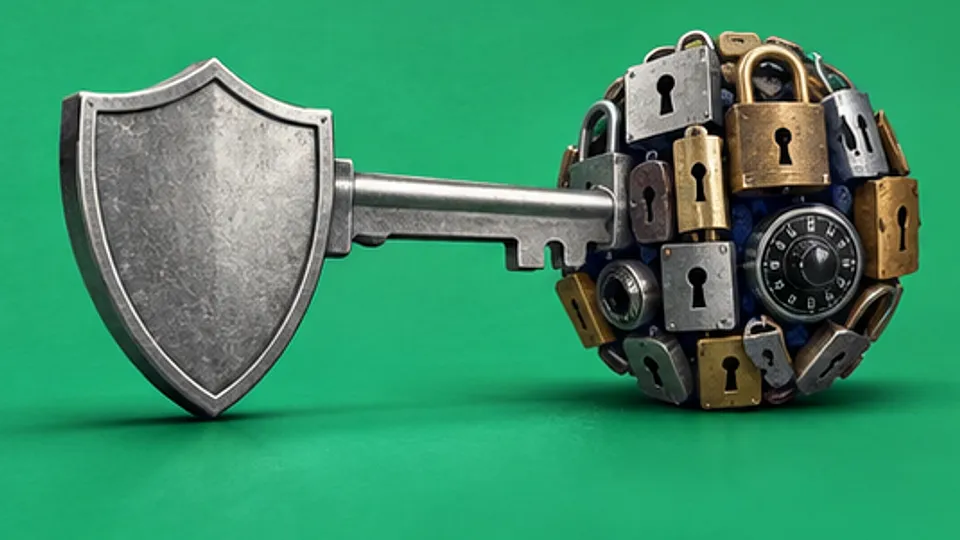
American presidents have reached for this key before; there is nothing new in that. What is new, as EL PAÍS’s correspondent in Washington observes, is the promiscuity of its use — turned even in locks that have little to do with national security at all. Whether the courts keep opening for it is the question the capital now answers one hearing at a time.