
NASA has moved the launch of its DAVINCI probe to Venus up by a year, to December 2030, and has funded its long-delayed VERITAS orbiter for a November 2032 launch, scientists on the missions said last week.
The schedules were laid out at a meeting of the Venus Exploration Analysis Group, a gathering of researchers who study the planet, Ars Technica reported. DAVINCI will drop a probe on a parachute through the Venusian atmosphere and send back the first direct pictures of the surface since 1982. VERITAS will map the surface by radar from orbit. They would be NASA’s first Venus missions since Magellan, which launched in 1989 and ended in 1994.
“We have some good news for Venus,” said Jim Garvin, a planetary scientist at NASA’s Goddard Space Flight Center and the principal investigator for DAVINCI.
Mr. Garvin credited “encouragement in early ’26 from our leaders at NASA Headquarters and the Planetary Science Division.” He said the team had “accelerated launch by 54 weeks to a case where we have a very low delta-V trajectory that gets off the ground in late December 2030.”
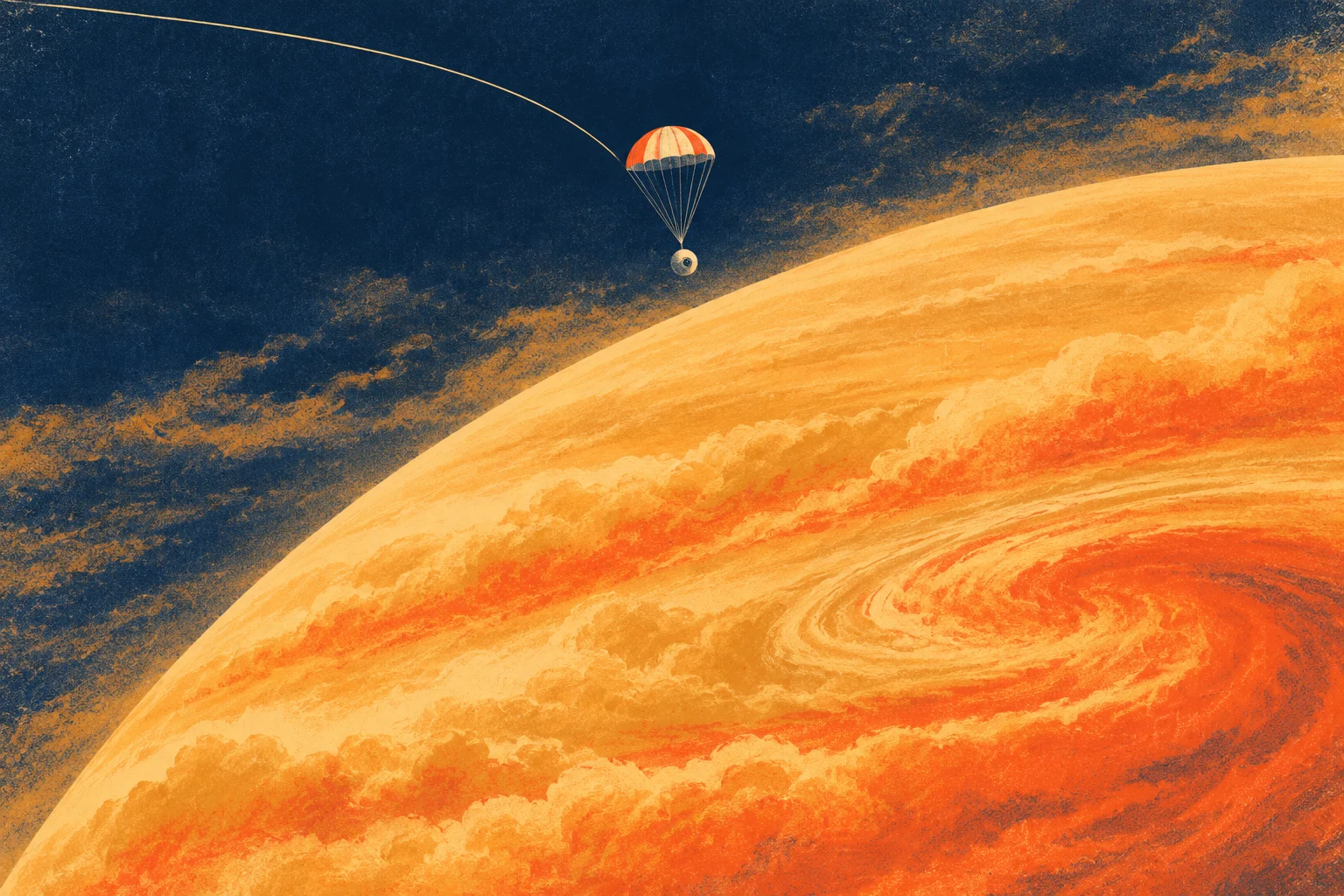
That route takes relatively little energy by the standards of interplanetary travel. A flyby of Venus in early 2032 will set up the spacecraft to release its entry probe on Oct. 3, 2032. The carrier spacecraft will keep going through the inner solar system, and the new path should leave it enough fuel to enter orbit around Venus when it swings back, Mr. Garvin said. That hadn’t always been certain.
VERITAS is the bigger turnaround. Less than two years after NASA picked it in June 2021, agency officials weighed canceling it to cover cost overruns and delays on Psyche, the mission to a metal asteroid. VERITAS survived, but its launch kept slipping. In late 2024, Sue Smrekar, its principal investigator, warned that there was “a real possibility of a further delay to ’32,” SpaceNews reported. November 2032 is now the official date.
“VERITAS is now funded with a launch date of November 2032, so this is great news for us,” said Dan Nunes, the mission’s deputy project scientist at NASA’s Jet Propulsion Laboratory. “We’re staffing up. We’re accelerating, not to the point of Jim’s acceleration, but we’re moving.”
The orbiter will launch the month after DAVINCI’s probe reaches Venus. “We’re going to arrive at Venus close to the middle of 2033, and we’re going to have a phase of aerobraking,” Mr. Nunes said, before regular science observations begin. Its radar is meant to map the planet in much finer detail than Magellan, which could only pick out features about the size of a football field or larger, with a focus on regions with active volcanoes.
The money came from other projects. NASA ended its support for Envision, a European Space Agency orbiter, and canceled Mars Sample Return, which would have been the most expensive project in JPL’s history. The Trump administration has twice proposed deep cuts to planetary science. Congress restored most of the money for fiscal 2026 and is expected to do the same for 2027.
NASA had agreed to supply Envision’s radar. ESA is now building its own, and Nick Lang, a program scientist in NASA’s planetary science division, confirmed the withdrawal at the meeting, citing the agency’s budget. “That decision was not an easy one,” Mr. Lang said. Envision is scheduled to launch in 2032. NASA had already spent more than $50 million on its share of the radar work, according to Tech Times.

The first spacecraft to go could be private. Rocket Lab aims to launch a privately funded probe as early as late 2027 to look for signs of organic material in the planet’s high-altitude clouds.
Venus is about the size of Earth, but its atmosphere is nearly pure carbon dioxide under clouds of sulfuric acid, and surface temperatures reach about 872 degrees Fahrenheit. The air pressure is 93 times that at sea level on Earth, about what a submarine would meet 3,000 feet down.
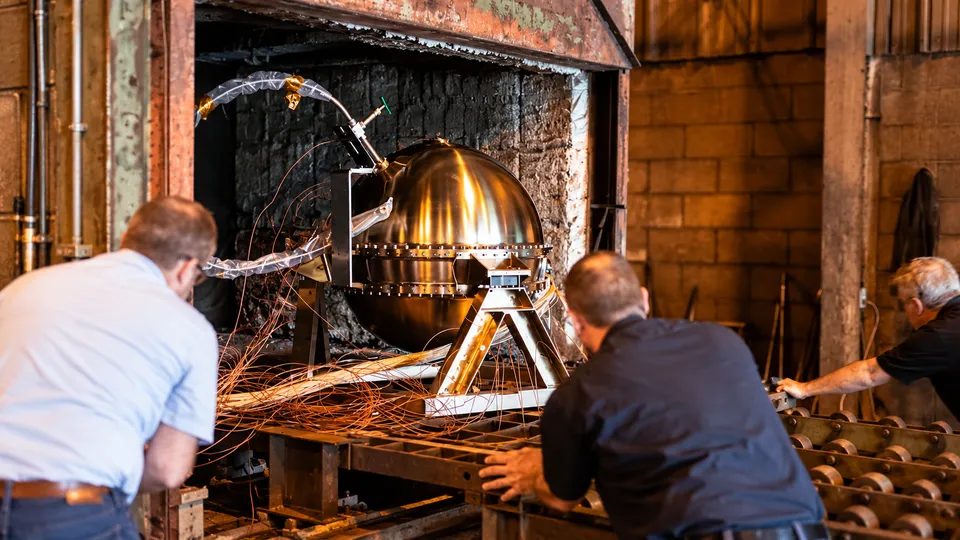
In recent months, DAVINCI engineers finished experiments showing how the probe’s cameras and instruments will collect data on the way down. The battery-powered titanium descent craft will take about an hour to reach the surface, and everything it gathers has to be relayed to Earth through the carrier spacecraft before the carrier drops below the horizon.
“We have to optimize everything in the final eight to 10 minutes of descent as we come into the supercritical atmosphere to get this data back for all of us to work with,” Mr. Garvin said.