
Some rulers name what they conquer after saints, and some after generals. At the end of October 2026, Elon Musk named two of his new possessions after a tinned luncheon meat and a place where a city’s police once fired at paper targets.
As Business Insider reported, Musk said on X that Colossus 2, the computing campus his AI company is building in the Memphis area, would get two more sites, called Spam and Gun Range. The first, he said, used to store Hormel products, Spam perhaps among them. The second had belonged to the local police department. “It was literally the local police department’s gun range that we bought,” he wrote, according to Tesla North’s account of his posts. He then gave a progress report:
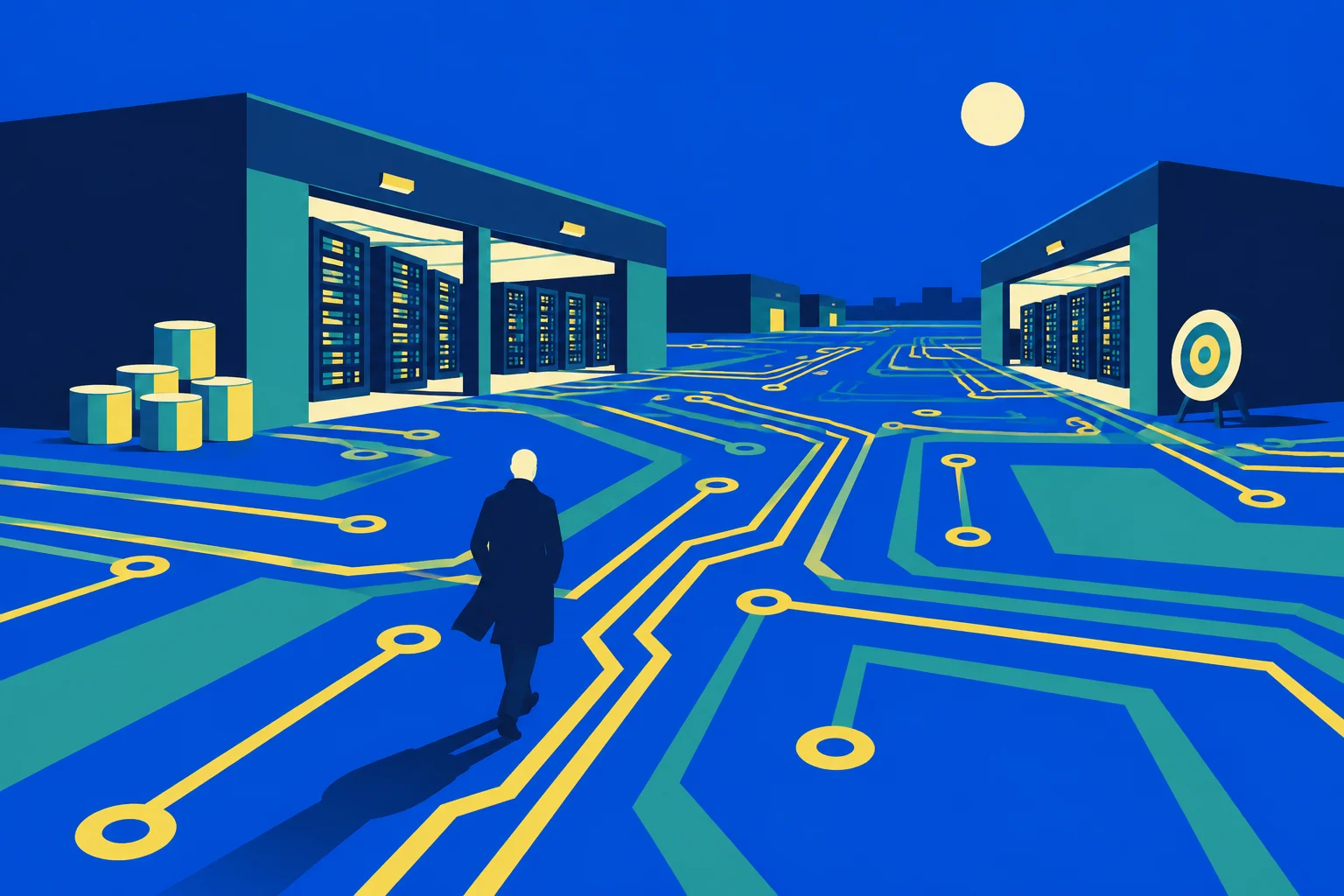
I walked the whole Colossus 2 site around midnight and again this morning. Good progress by the SpaceX team and contractors. Gun Range is tracking to be operational by end of November and Spam in December.
A man walking his estate at midnight is an old image of ownership. What is unusual here is how fast the estate is being built.
The arithmetic of the machines
The first Colossus went up in Memphis in 2024 to supply the huge computing power that AI systems need. xAI, which SpaceX later acquired, then started Colossus 2 to give its chatbot, Grok, more capacity. Construction began last year. Each building has had a name: Macrohard, Macroharder, Minihard. Now there are Spam and Gun Range.
According to Musk’s posts, Gun Range will hold about 220,000 Nvidia GB300 chips set up for training. Spam will hold about 200,000 GB300s set up for inference, the work of running models once they are trained. He said that job needs simpler networking and less than half the fiber. By the end of the year, he wrote, Colossus 2 will have “a total of around 1.2M Blackwells.” This is the race that executives now describe on their earnings calls as a race toward “super intelligence.”
All of these figures come from Musk alone, on his own platform, and the dates are targets. He did not say exactly where the two buildings are, DeSoto County News noted.
The neighbours
The people who live near these campuses have never been asked to name anything. Their part has been the public hearing, the petition and the protest. Residents near Memphis have filled hearing rooms, marched and gathered signatures against both Colossus and Colossus 2. Data centres provoke this kind of anger in many places. In Memphis it has turned into a legal fight.

Much of that fight is about power in the electrical sense. Machines on this scale need electricity faster than a grid connection or a permanent plant can be built. On 14 April the NAACP sued xAI and its subsidiary MZX Tech in federal court. The Southern Environmental Law Center and Earthjustice filed the case for the civil-rights group. It alleges that the companies were running methane gas turbines without permits to power Colossus 2. The turbines sit across the state line in Southaven, Mississippi, less than 20 minutes from Memphis. The complaint says 27 turbines were installed and run there from August through December 2025 without the required air permit.
A courtroom in Mississippi
The companies asked the court to throw the case out. Their argument, set out in a June motion, was partly about definitions. The turbines, they said, should count as “mobile” and therefore need no permit. They also argued that the NAACP had no standing to sue under the Clean Air Act, that such citizen suits are unconstitutional, and that approval from the Mississippi Department of Environmental Quality already covered the turbines.
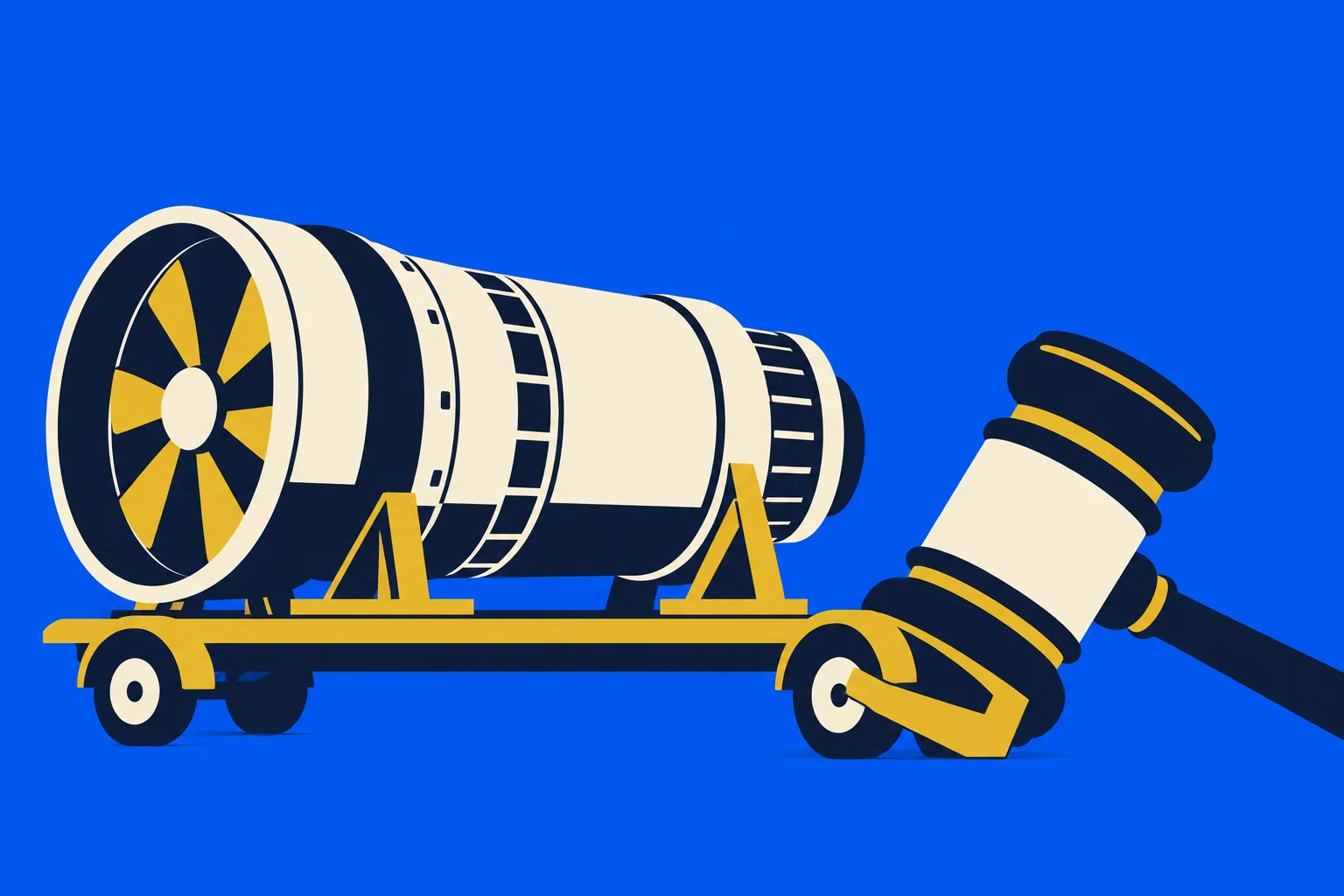
On Friday, 30 October, Chief US District Judge Debra M. Brown of the Northern District of Mississippi denied the motion in a 28-page opinion and order, DeSoto County News reported. The case will go ahead. She has not ruled on whether the companies are ultimately liable. A trailer with a turbine on it may still be called mobile. At this stage, though, calling it mobile was not enough to make the lawsuit disappear.
“Our position has been clear: xAI cannot operate gas turbines without the required permits,” said Abre’ Connor, who leads environmental and climate justice work at the NAACP, according to the ruling’s coverage. The group’s request for a preliminary injunction is still pending. The Southern Environmental Law Center says the court has not ruled on it.
The case is only one of the company’s problems in Mississippi. In March, the state environmental department approved dozens of permanent gas-powered turbines at the Southaven plant to supply the data centre in the future. The same department is now seeking about $6.1 million in potential penalties connected to the company’s Southaven sites. Residents living near the power plant have also filed a proposed class action over turbine noise. The company, which now operates as SpaceXAI after the acquisition, faces all of this at once.
Old buildings, new owners
In a reflective mood, one could read meaning into the inventory. A building that once held cheap, long-lasting food for ordinary households will now run inference for a chatbot. A range where a municipal police force trained, a small piece of the city’s own authority, was bought by a private company and given to its engineers. Musk added his own joke: “I hope Spam doesn’t produce too much spam!”
The judge in Mississippi has not yet ruled on the injunction. By Musk’s own schedule, Gun Range has until the end of November.