
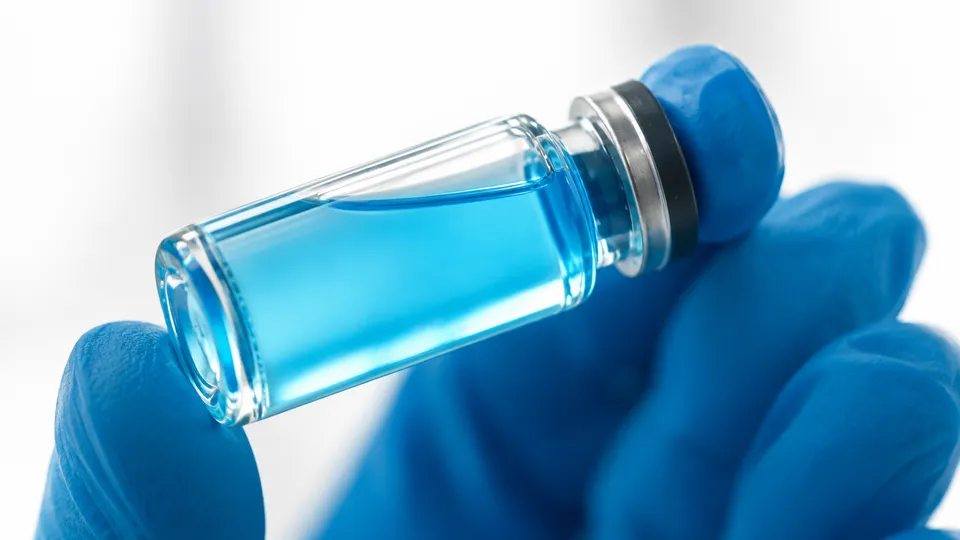
The deep freeze — that tyrannical chain of minus-20 to minus-80 degrees Celsius that has dictated where on Earth an RNA vaccine may travel — may have just met its match in a laboratory at MIT, where researchers have used a machine-learning algorithm to reformulate the fatty bubbles that carry mRNA into the body. The result, described in a paper published in Nature Biotechnology (billed by its authors as the “accelerated discovery of thermostable mRNA–lipid nanoparticle vaccines using data-efficient AI”): vaccines that could remain stable sitting at room temperature for up to a year, or baking at nearly 100 degrees Fahrenheit for two months.
RNA vaccines, proven against Covid-19 and now being developed for everything from other infections to cancer, are built around a magnificently fragile molecule. To keep RNA from disintegrating, scientists swaddle it in lipid nanoparticles — LNPs — tiny fat globules that shield the cargo and smuggle it into cells. But even swaddled, the vaccines demand ultracold storage, which is precisely what vast stretches of the world do not have. Solve the heat problem, and you don’t just widen the map of distribution; you open the door to exotic delivery systems like microneedle patches, little Band-Aids bristling with hundreds of vaccine-filled needles that dissolve into the skin.
The senior authors are a pair of MIT heavyweights: Ana Jaklenec, a principal investigator at the Koch Institute for Integrative Cancer Research, and Robert Langer, the David H. Koch Institute Professor. The lead authors are graduate student Jinbi Tian and postdoc Khanh Tran. The team had already built polymer-stabilized LNPs that shrugged off higher temperatures, but those particles differed from the FDA-approved formulations underlying the Moderna and Pfizer Covid-19 vaccines. This time they wanted to toughen up the approved recipes themselves — and they began, sensibly enough, by recycling the excipients (the sugars, salts and polymers used as stabilizers) that had worked before.
It flopped. They were “really getting stuck,” Jaklenec says. “We were trying to use and screen excipients that we’ve previously used successfully to stabilize LNPs, but it just wasn’t working. It was really frustrating for the team.”
Enter the in-silico sous-chef — for what is this algorithm but a cook who has tasted every sauce and says, with eerie confidence, two parts of that, one of this. Working with MIT’s Computer Science and Artificial Intelligence Laboratory, the researchers built a machine-learning system that can make predictions from very small datasets. “The real beauty of this algorithm is that we can use it with small data sets,” Jaklenec says. “It’s really hard to run thousands of experiments, so this algorithm allows us to more easily achieve formulations with features that we want — in this case, stability.”
Mina Konaković Luković, a CSAIL assistant professor of electrical engineering and computer science and another author on the paper, admits to being startled. “We’d used our algorithms for various automated experimental design applications before, but never on a biological problem like vaccine stability,” she says. “It was surprising to see how quickly the algorithm converged on a stable formulation — getting there in just a handful of iterations, rather than the exhaustive search that would normally be required.”
The hunt proceeded like this: the researchers fed nearly 50 FDA-approved excipients through the algorithm. For each one, they measured how well it stabilized RNA inside an LNP by loading the particles with mRNA encoding firefly luciferase — the protein that makes fireflies glow — and gauging how much light treated cells emitted. More light, better protection. From the glow-off emerged five finalist excipients, and the algorithm then predicted which ratios of the five would best stabilize LNPs resembling Moderna’s. The team tested two formulations at a time in cells, fed the results back into the machine, got fresh predictions, and repeated. After several rounds, one formulation looked good enough for animals.
The whole process took only a few weeks. “Before we implemented the AI algorithm, we spent several months testing different combinations and also doing the prescreening of all the excipients that we could find, but nothing would get us to 100 percent stability,” Tran says.
Then came the ordeal by heat. The researchers packed Covid-19 mRNA antigens into their new LNPs, dehydrated them by vacuum drying, and stored the particles at 37 degrees Celsius — 98 degrees Fahrenheit — for two months, or at room temperature for a full year. Mice vaccinated with these long-stored particles showed immune responses equivalent to those of mice getting a vaccine carried by LNPs similar to the original Moderna formulation. The team also built solid microneedle patches delivering a SARS-CoV-2 antigen with the heat-resistant recipe, and those patches produced an immune response similar to the injectable vaccines.
Our approach broadens the application of not only mRNA vaccines, but also therapeutics or advanced drug-delivery platforms like controlled-release particles or microneedle patches, which requires the formulation to either be in solid state or to be stable at higher temperature
That’s Tian, the graduate student, sketching the horizon. The method proved portable, too: the algorithm stabilized an LNP formulation similar to Pfizer’s using the very same excipients as its Moderna-style version, merely in a different ratio. And once a heat-resistant formulation exists for a given particle, the researchers say, it could be adapted to carry any mRNA payload at all. The research was funded in part by the Gates Foundation — an outfit that has spent years worrying about exactly the problem this work attacks, namely how to get vaccines to places where the cold chain ends long before the road does.