
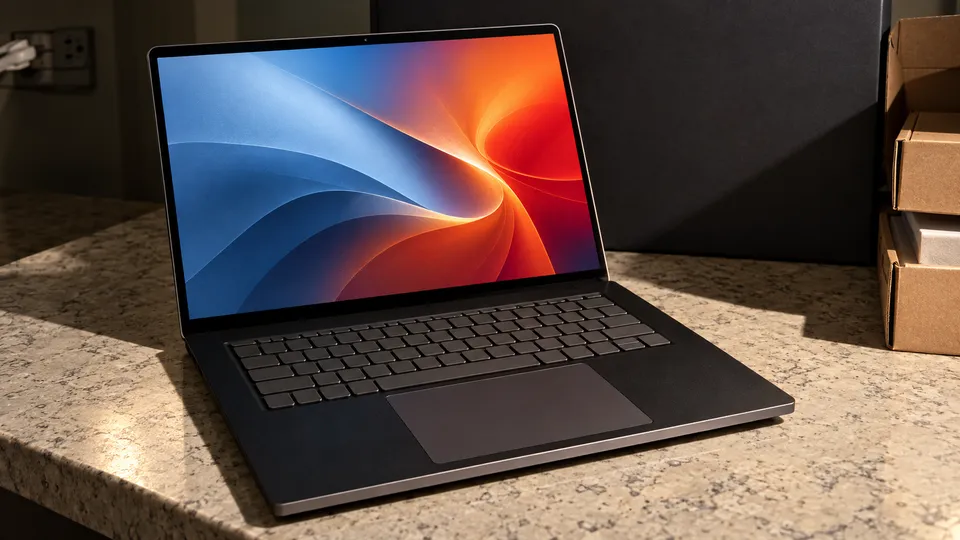
A laptop that runs a 70-billion-parameter AI model locally and plays AAA games at credible speed on an ARM chip is the pitch behind Microsoft’s Surface Laptop Ultra, and Nick Indge’s review at Ars Technica concludes it mostly holds up — with the qualifier that mostly is doing real work in that sentence. The machine is built on Nvidia’s RTX Spark platform, and Microsoft is aiming it at the would-be MacBook Pro buyer: what the company calls a high-performance audience, people it hopes will pay for one machine instead of a gaming desktop plus a work laptop.
The context argues against easy wins. Total PC shipments fell 20 percent year over year in the third quarter of 2026, across consumer and enterprise alike, squeezed between what the industry calls the RAMpocalypse — memory prices that have exploded consumer costs — and vendors chasing enterprise budgets. Microsoft is not alone on the platform: Dell’s XPS 16 Creator Edition and Asus’s ProArt series are also shipping RTX-chipped laptops. The review’s real question is not whether the Ultra does what it claims, but whether power users finally have a reason to switch to ARM without their daily x86 workloads hiccupping.

The price starts at $2,599 and tops out at $5,899 depending on processor and memory, so it is not a budget alternative to Apple silicon. The base 24GB unified-memory model ships with Windows 11 Home; everything above it gets Pro. Indge tested the 64GB configuration and calls it the probable sweet spot. He also flags the unresolved base-model problem: Windows 11 is memory-hungry on its own, and once a slice of 24GB is assigned as VRAM for gaming, it is unclear what is left. Asked directly about the base model’s usefulness in a press session, Microsoft offered only that it is useful for smaller models locally — an answer, he notes, that may firm up in a few months when software and drivers catch up with hardware.
The silicon
Per Nvidia, the RTX Spark N1X is a Grace CPU fused to a Blackwell GPU. Unlike AMD’s Ryzen AI or Intel’s Core Ultra parts, it has no dedicated NPU; AI work leans on unified memory and the Blackwell GPU instead. That creates a certification wrinkle: Microsoft’s Copilot+ label has traditionally required a 40+ TOPS NPU, which this chip does not have. Microsoft is extending the label to cover GPU-based AI performance anyway. The graphics benchmarks, given access to 40GB or more of usable RAM, back the AAA-gaming claim, though the review notes the machine takes different paths to that performance than x86 buyers are used to.

The hardware around it
The 15-inch mini-LED display runs a native 3270×2180 with a 2,000-nit peak brightness, deep blacks without visible blooming, and a glossy finish that turns mirror-like in direct sunlight — the glare hindered photographing the screen more than using it. Indge declined to rank it against the latest MacBook Pro display without a side-by-side, which is the honest version of that comparison. The keyboard is a comfortable, unremarkable lift from Apple’s playbook; the trackpad is 5.5 by 3.5 inches and accurate enough that a habitual external-mouse user never reached for one. Microsoft touted contextual haptic feedback in native apps; across days of testing, none was ever noticed.
Microsoft describes the charging connector as the world’s first built-in magnetic USB-C charging experience, a claim Indge files as technically true rather than an engineering feat. Apple shipped MagSafe in 2006; Microsoft’s novelty is doing the magnetic breakaway over a USB-C port instead of a proprietary connector. Marketing aside, it works: the magnets guide the plug home in the dark, and simulated cable yanks disconnected dutifully instead of dragging the laptop off a counter. A nice-to-have, not a unit-mover at these prices.
The open item is the same one Microsoft left hanging in its own press session: whether the 24GB base configuration is a real product once VRAM carve-outs and a memory-hungry OS take their share, and whether drivers and software close the gap between the hardware’s bench numbers and daily x86 workloads. The company said it would have a better answer in a few months. Prospective buyers spending between $2,599 and $5,899 are being asked to take that on schedule.