
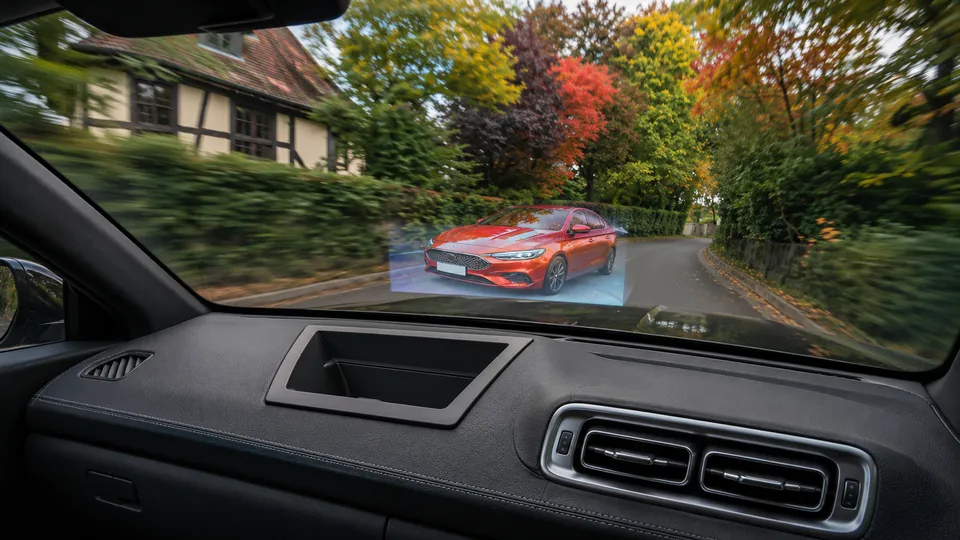
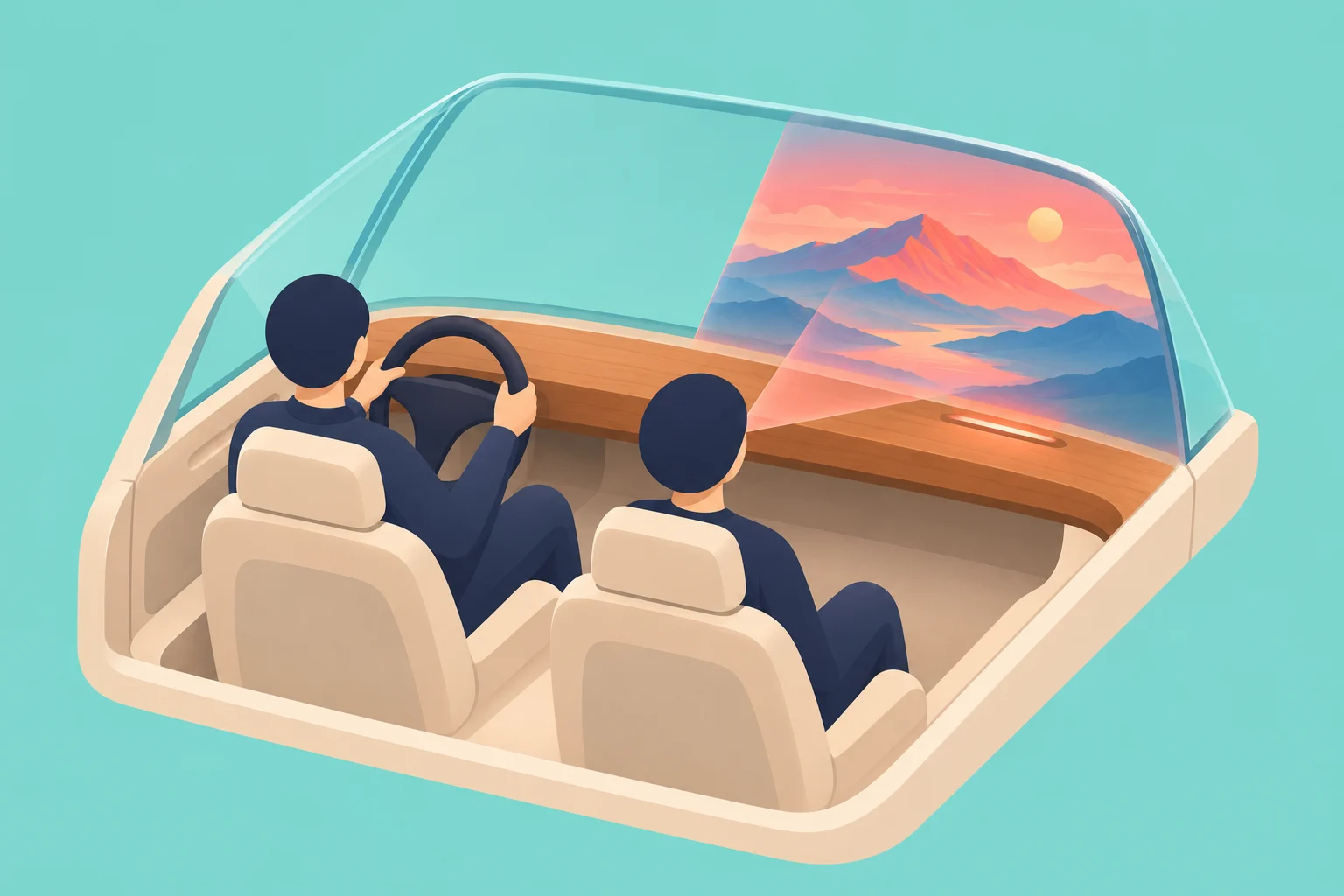
Mercedes-Benz is developing a holographic windshield display that would play video for the front-seat passenger while keeping it out of the driver’s sight, according to a demonstration of an early prototype described on Tuesday.
The system, which James Riswick saw for Ars Technica at the company’s research facilities in Sindelfingen, Germany, pairs a projector in the dashboard with a transparent film laminated into the windshield glass. The film holds holographic optical elements, which Lena Hees, a Mercedes development engineer, described as “super-small mirrors.” They reflect the projector’s light selectively, so the image stays visible in direct sunlight but can’t be seen from the driver’s seat.
Mercedes and other luxury brands now hide passenger touchscreens from drivers with driver-monitoring cameras or polarized screens. Mr. Riswick wrote that the company is clearly weighing the holographic display as an alternative to those screens, or a replacement for them. At the least, it could replace today’s heads-up displays and the large projector boxes behind them.
Owners haven’t warmed to passenger screens. In its 2026 U.S. Tech Experience Index study, released Aug. 20, JD Power found that 35 percent of owners with a passenger screen had never tried to use it, and 6 percent used it every time they drove. The screens ranked among the most problematic technologies in the survey, at 21.3 problems per 100 vehicles, according to the study, which drew on responses from 68,084 owners of 2026 model-year vehicles.
Mercedes engineers gave a different reason for looking past the screen. “We have customers who like the Hyperscreen,” said Maximilian Hilger, a development engineer, referring to the pillar-to-pillar glass panel in a growing number of Mercedes models. “But there are others who want to maintain luxury materials.”
The company’s leaders have said much the same. Bastian Baudy, the new chief design officer, recently told the German magazine Auto Motor Sport that “Materiality and haptics must remain tangible — with switches, buttons, and intuitive controls. Real materials are at the heart of Mercedes: metal, wood.” Ola Källenius, the chief executive, counts interior quality and materials among the brand’s “forever values,” along with safety and the way a Mercedes drives.
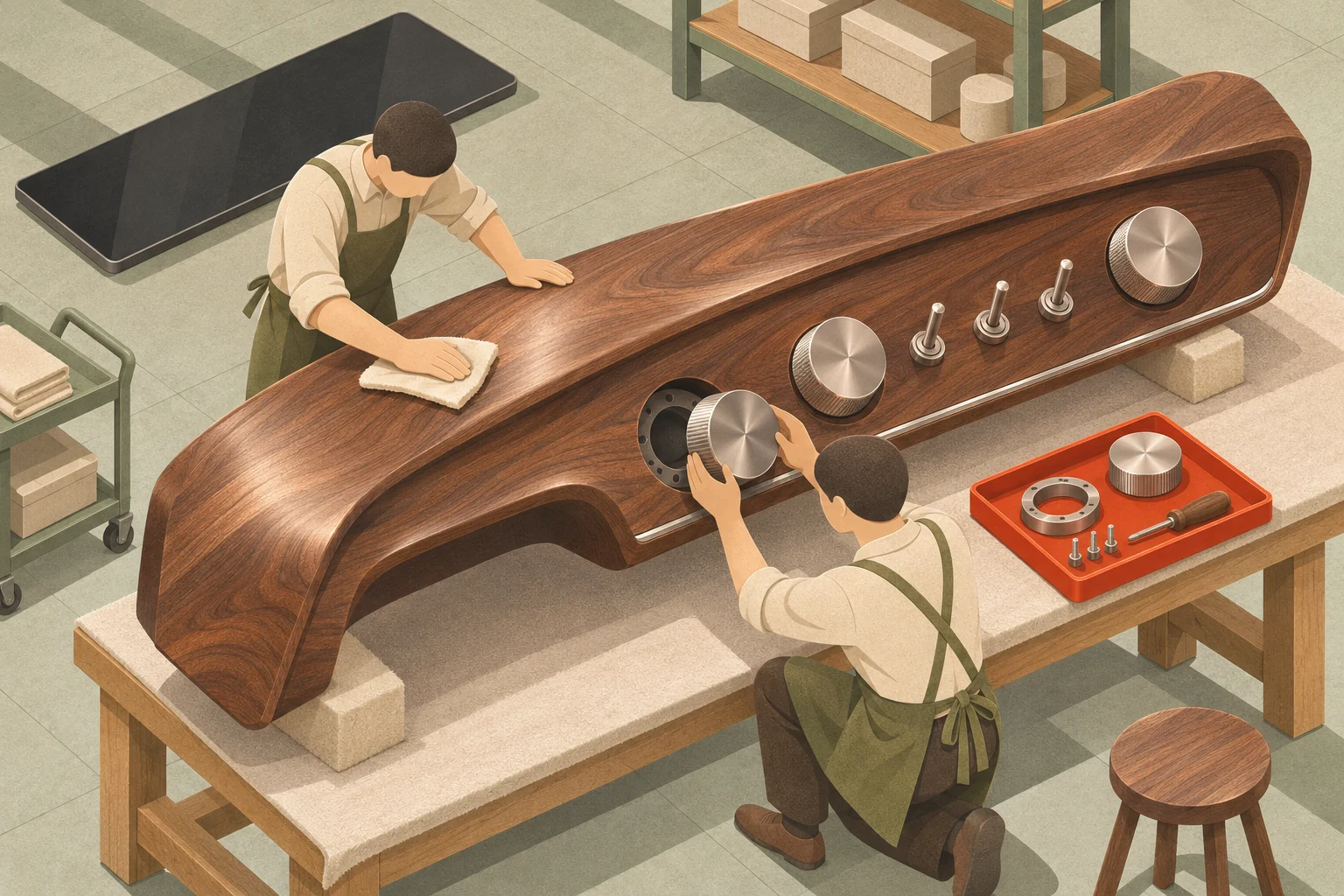
“Yes, you need to have all the [technology] that a customer could ever dream of and wants,” Mr. Källenius told Ars Technica. “But you need to package it in an aesthetically pleasing way. That’s also part of it.”
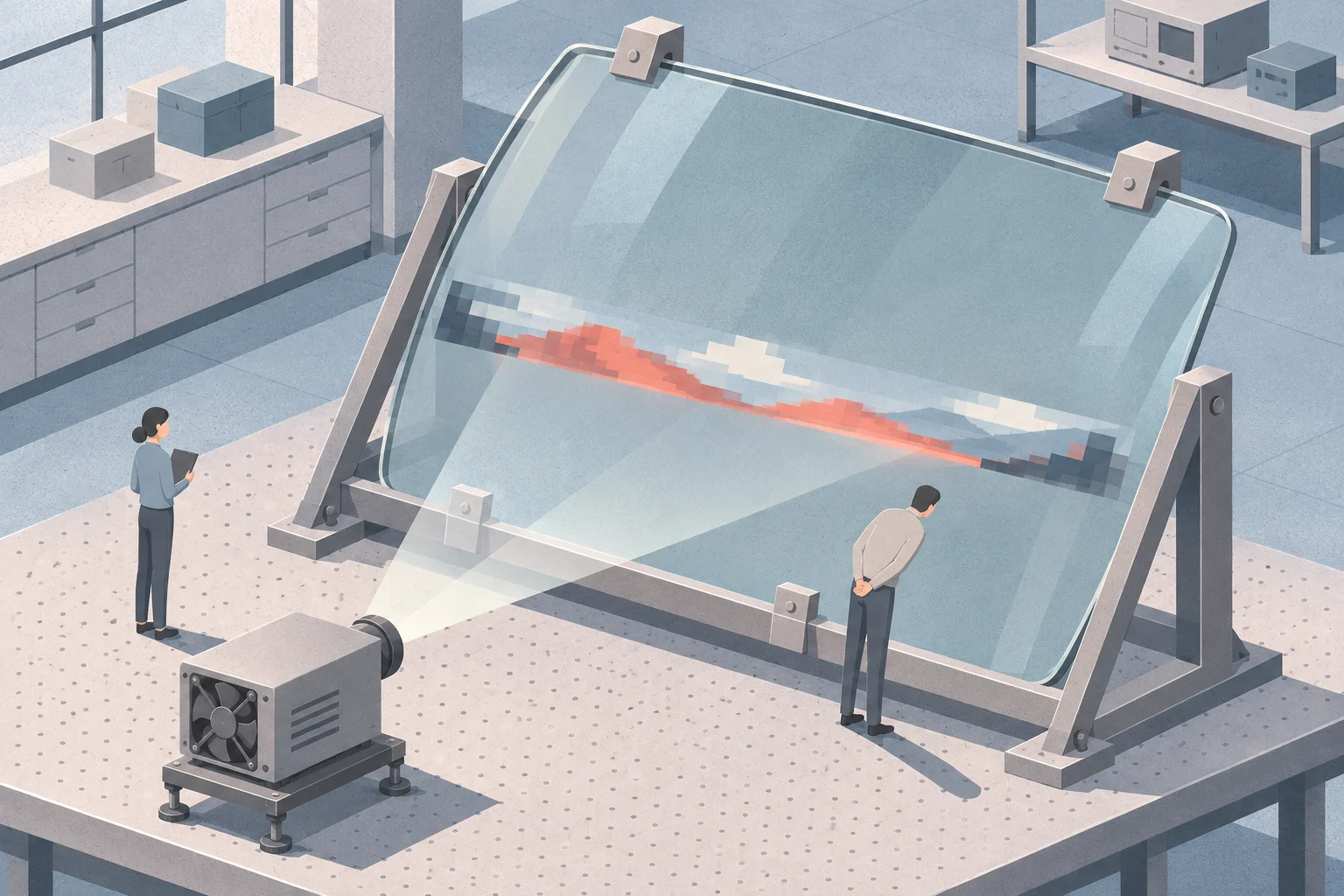
The prototype is rough. Its projector sits in a crude trapezoidal hole cut into the dash of a right-hand-drive S-Class from before the 2027 model year, and a cooling fan whirs loudly while it runs. Manual Holstein, a manager in Mercedes research for future displays, said a production projector could be small enough to tuck behind wood or metal trim, would have no audible fan and would offer sharper resolution.
Even now, the picture beats any current heads-up display, Mercedes’ own augmented-reality version included. Full-color promotional videos of the C-Class Electric played during the demonstration, and the image was bright enough although the prototype was running at 20 percent of its maximum brightness, Mr. Holstein said.
Next to a passenger touchscreen, though, the resolution is poor. The contrast was too high, and the windshield’s angle squeezed the picture into a narrow strip. Mr. Riswick wrote that no one would pick it over a phone, a tablet or a conventional passenger screen. Mr. Holstein said the holographic film area, which engineers call the “eyebox,” could be made much larger and placed higher, and he called the distortion a problem of the prototype alone.
Mercedes envisions nearly half the windshield working as a virtual screen for the passenger, showing entertainment or marking points of interest in the view ahead. A version on the driver’s side could display driving information, handle video calls or play entertainment while the car is parked, and eventually let drivers watch other things when the company’s Level 3 automated driving system allows them to look away from the road. After riding with the prototype in a moving car, Mr. Riswick wrote that the higher image might also cause less motion sickness than a passenger screen does.
Gorden Wagener, Mr. Baudy’s predecessor as design chief, put the case against screens more bluntly. “Screens are not luxury,” he told ABC News. “You have a better — and bigger — TV at home, right? And every car has a big screen. So we have to create luxury beyond the screen.”
It is not clear when, or whether, Mercedes will put the display into production. A competitor already has a target date. Hyundai Mobis and Zeiss showed a holographic windshield display that runs from the driver’s side to the passenger’s side at CES 2025, and Mobis plans to begin mass production by 2027, S&P Global Mobility reported.