
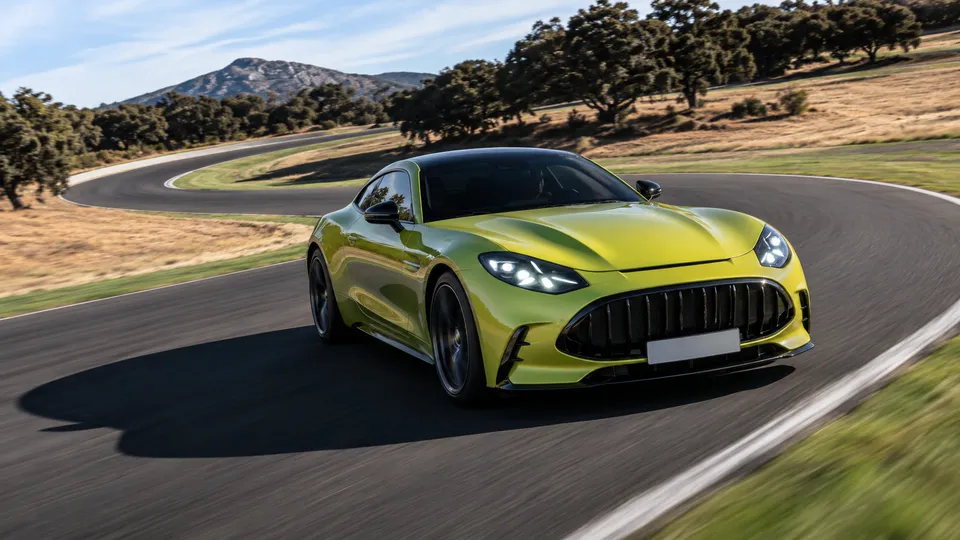
Mercedes-AMG showed off its first car built to run only on batteries, the AMG GT 4-Door Coupe, at a Los Angeles launch this week, and an early drive suggests battery weight has not dulled the Affalterbach brand.
Roberto Baldwin, writing for Ars Technica in a first-drive review published on Thursday, spent two days with the car on public roads and on a track and called it “a technological triumph” that is planted to the roadway in both settings. Really very good on the track, in fact.
The hardware explains much of it. Three axial-flux electric motors, built by Yasa, the company Mercedes bought in 2021, do the work: two units just 3.1 inches wide at the rear and one 3.5-inch motor in front. In the top AMG GT 63 they produce a peak 1,153 horsepower, available for exactly 63 seconds in Boost mode, a nod to the badge, against a nominal output of 711 hp and 1,475 pound-feet of torque. The lesser AMG GT 55 peaks at 805 hp for 55 seconds, with 557 hp and 1,372 lb-ft the rest of the time.
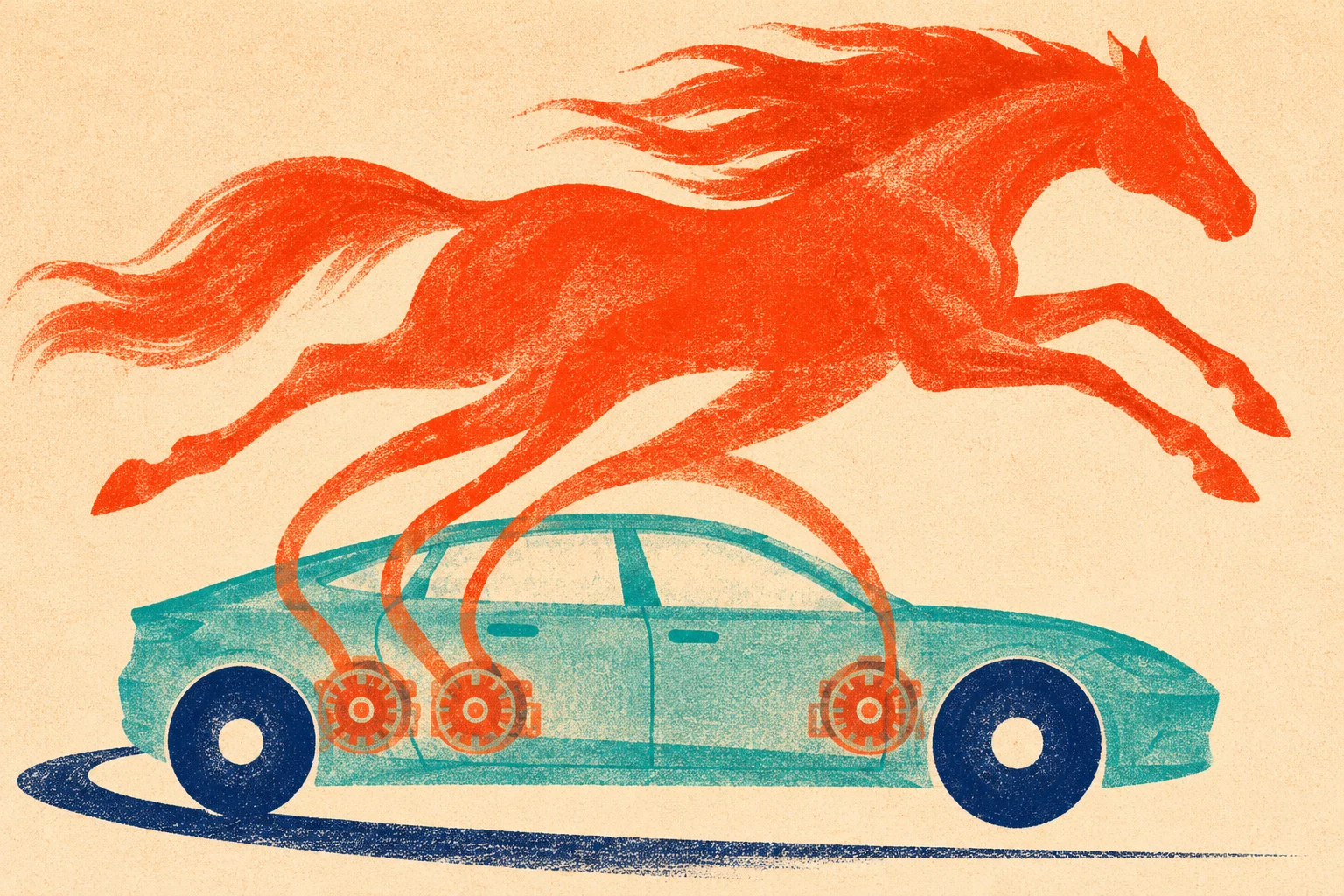
The results are quick by any standard: zero to 60 mph in about 2.3 seconds and to 124 mph in about 6.8, Mr. Baldwin reported. The AMG.EA sports-car architecture constantly adjusts power delivery among the three motors while managing the suspension, rear-axle steering of up to 6 degrees and the active aerodynamics. Stopping is handled by regenerative braking plus hydraulic brake-by-wire friction brakes, carbon ceramic discs in front and steel at the rear, which hauled the car down hard even as it crested a hill into a tight left-hand corner, he wrote.
Track regulars get the AMG race engineer system, standard on the 63 and optional on the 55: three console dials labeled Response, Agility and Traction, each adjustable from one to nine. At seven, the setting the instructors chose, the rear tires broke loose easily, Mr. Baldwin found.
The car moves to an 800-volt electrical architecture and can DC fast-charge at up to 600 kW. In one demonstration a GT 63 peaked at 637 kW, was still drawing 252 kW at a 79 percent charge and went from 17 to 80 percent in about 10 minutes. The 106 kWh pack’s cylindrical cells are cooled by a non-conductive oil whose chemistry Mercedes would not disclose, calling it a secret. The company has not shared range targets.

Then there is the noise. The car pumps the recorded roar of a GT R’s V8 through the speakers and vibrates it through actuators in the seats on startup and again in Sport+ and Boost modes, where it gets louder. Mr. Baldwin wanted to dismiss it as a gimmick and could not. “It’s the difference between listening to a cassette tape of your favorite band and going to see them live,” he wrote.
Inside, the seats are quilted and highly adjustable, the back seat fits a 6-foot-3 reviewer and the passenger screen can display live drivetrain data down to each motor’s torque output. The AMG GT 55 starts at $145,000 plus a $1,550 destination charge and arrives by the end of the year; the AMG GT 63 starts at $175,000, destination fee to come, early in 2027. The prices are steep, but Mr. Baldwin’s verdict was that the car should end the argument that all EVs drive alike.