
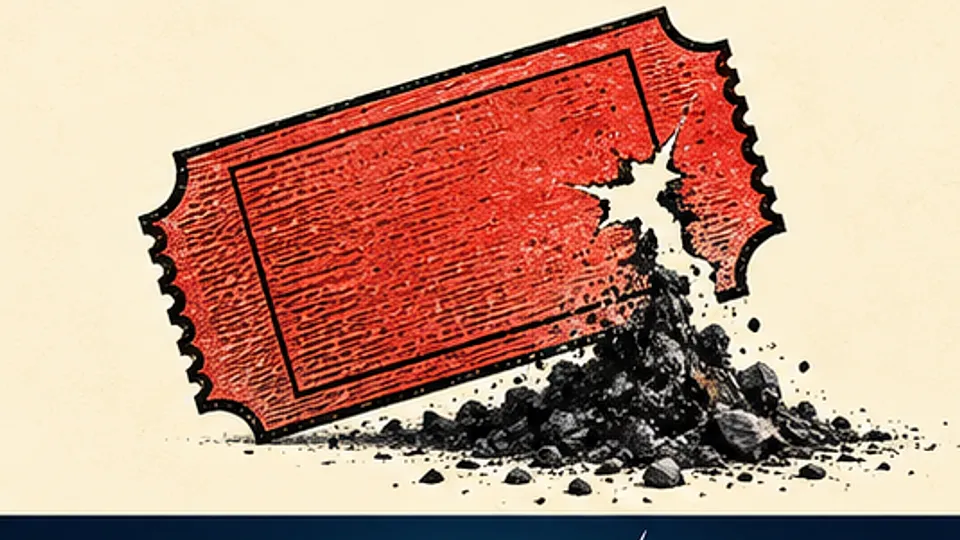
For seven years, the Korean cinema chain Megabox has been running what is, by all accounts, a charming little merchandising program. Since 2019 it has given away ‘original tickets’ — small collectible keepsake tickets, designed differently for every film — free to actual moviegoers, on a first-come, first-served basis. The tickets are popular enough to have acquired a nickname among fans, who call them ‘OT,’ and the newly released Assassin(s) was the 187th film to get one. The 188th, being handed out now, is a Chiikawa movie about a mermaid island. That is the general pitch of the program: turn up, watch your film, go home with a cute laminated souvenir, regret nothing.
Assassin(s) is not that kind of film. It deals with the events of 15 August 1974, when a shooting at a Liberation Day ceremony in Seoul left Yuk Young-soo, the wife of then-president Park Chung-hee, dead — a wound in Korean public life that has never fully closed — and the picture was already caught up in arguments over its handling of that history, according to Korean reporting. Then a second controversy arrived, this one about the ticket.
The controversy is, on inspection, easy to understand. The keepsake came in two parts: a white ticket printed with the ceremony stage from the film — a podium recalling where Park stood to speak, a figure recalling where Yuk sat, the South Korean flag above — and a transparent sheet printed with six bullet-hole impressions, according to descriptions of the design. Lay the sheet over the ticket and the holes fall across the scene. Lee Ki-in, the Reform Party’s emergency committee chief, posted a photo of the ticket and said the effect seemed to be to have ‘the audience’s own hands complete the shooting scene,’ asking: ‘Is this, too, freedom of expression?’ He also said, per the Chosun Ilbo, that freedom of expression is not ‘a bulletproof plate that blocks criticism.’ Which, given the design, is at least a thematically consistent metaphor.
Other conservative politicians joined in. People Power Party lawmaker Joo Jin-woo called the bullet-hole ticket a ‘depraved good’ — merchandise so offensive it violates basic decency — and demanded that the whole lot be disposed of, the Chosun Ilbo reported; per other outlets, he threatened a boycott if Megabox didn’t comply. The point of no return for a cinema giveaway is roughly when sitting lawmakers start describing your promotional laminates in words usually reserved for crimes.
On 4 October, Megabox apologised, in a statement issued in the names of its employees, and explained how this all happened. ‘The goods in question were produced by staff who had not been able to see the film in advance, using only the limited images provided to them,’ the company said. The intention, it went on, was to use scenes from the film and its poster to highlight ‘the nature and content’ of the movie, ‘but we failed to deeply recognise the gravity and weight of the historical tragedy and horrific incident.’ It continued: ‘We sincerely apologise to those who felt discomfort, and to those who suffered at the time of the incident.’
As for the stock that hasn’t yet been handed out: it will not be given to customers at all, and the entire remaining quantity will be destroyed, the company said. Megabox also promised an internal process to verify, for future original tickets, ‘the social and ethical impact’ where historical events or figures are concerned, and said it would act with greater caution in goods production and ‘all external activities.’
I think the telling detail is ‘had not been able to see the film in advance.’ The ticket has to be in customers’ hands on opening weekend, which means the merchandising pipeline always outruns the film: someone receives a folder of stills and a poster, designs something clever, sends it to print. That worked 186 times, mostly on films whose vibes are fully recoverable from a folder of stills. The 187th time, the stills showed a flag, a podium and a figure at a ceremony — images whose meaning anyone born into that history already knows — and the clever design choice was to let the customer place the bullets. The company’s explanation is, in effect, ‘we were doing exactly the thing we always do.’ That is the apology. It is also the problem. An ethics review checklist is a strange thing to need for a cartoon about mermaids, but now every ticket from 189 onward will get one.