
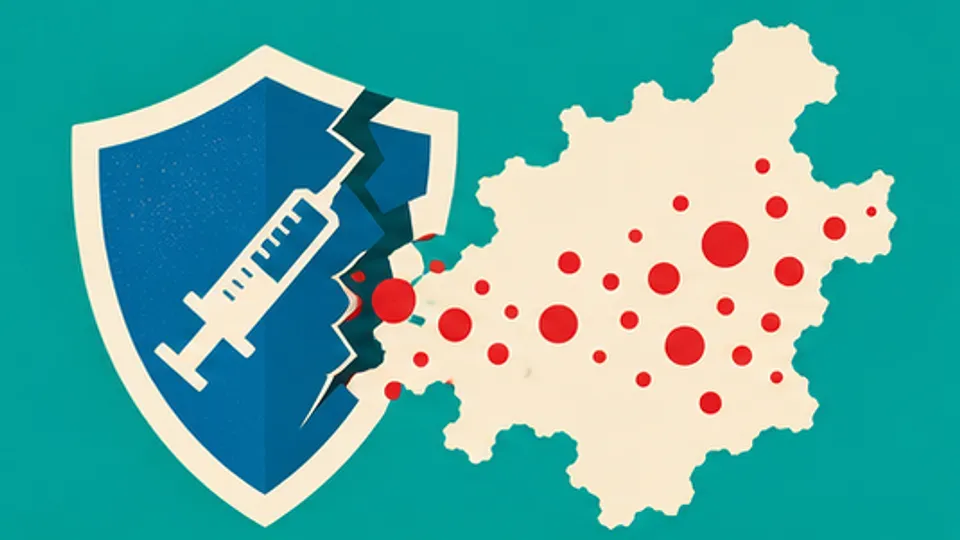
In 2000 the United States announced that measles no longer lived inside its borders. Getting there took several decades of vaccination campaigns, many of them hard fought. A generation of American doctors then trained without seeing a case.
That ended in a meeting room in Washington. An independent commission of the Pan American Health Organization, the regional arm of the World Health Organization, has voted to revoke America’s measles-elimination status, NBC News reported, citing people familiar with the vote. The commission found that the virus had circulated without a break for more than a year. PAHO was expected to make the decision public on Tuesday, November 17. In January the organization had said it was reviewing the status of the United States and Mexico. By last week, The Hill was calling any announcement a formality.
The rule of twelve months
The rule behind the decision is simple. A country loses its status when epidemiological and laboratory data show that one chain of transmission, carrying a virus of identical genotype and lineage, has run unbroken for 12 months or longer. According to NBC, eight public health experts deliberated for four days. They read the genetic data from “homegrown” cases, meaning infections not tied to international travel, to see whether outbreaks in different states were linked. They also weighed vaccination coverage, the quality of surveillance, and whether Washington had a strategy and the money to respond.
They concluded that it was one fire and that it had never gone out.
The arithmetic
More than 5,400 cases have been recorded this year, over twice last year’s count and the most since 1991. The CDC’s own tally stood at 5,412 cases through November 12. “We’ve had more measles cases in the last 18 months than we’ve had in the previous 25 years combined,” said Noel Brewer, a public health professor at the University of North Carolina at Chapel Hill.
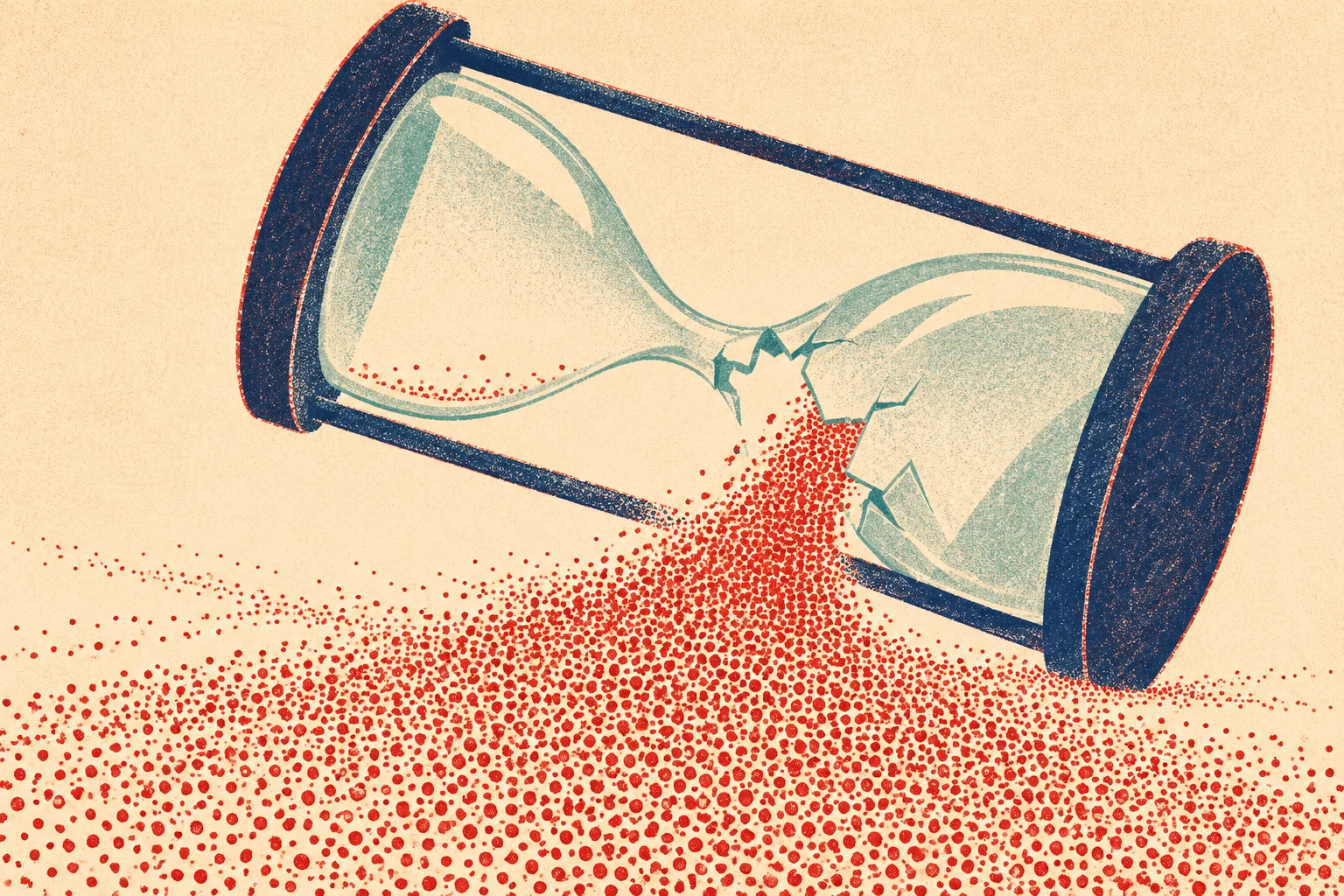
The dead are counted twice. State health departments put the toll at ten: seven in Pennsylvania, one in New York and two in Wisconsin, including an infant whose death was Wisconsin’s first from measles since 1990. The CDC has confirmed six. The gap opened after a rule change under Kennedy moved the agency off state figures. At least four of the dead were babies too young to be vaccinated.
The threshold that keeps outbreaks from starting is 95 percent. In the 2019-20 school year, 95 percent of American kindergarteners had their measles shots. By 2025-26 the figure was 92.
Three points sounds small. Across the country it is enough.
An NBC News investigation found that 75 percent of counties and jurisdictions with kindergarten data fall below 95 percent, and that 82 percent have seen vaccination rates fall since 2019. In three small rural counties, Catron in New Mexico and Adams and Custer in Idaho, fewer than half of kindergarteners are vaccinated.
What the ministry said
When the government speaks, the record shows two voices. One is the official statement. An HHS spokesperson told NBC that the CDC had “mounted an aggressive response to measles outbreaks,” including $100 million in extra funding in October and experts sent to help the states, and that Health Secretary Robert F. Kennedy Jr. and CDC Director Dr. Erica Schwartz “continue to recommend MMR vaccination as the most effective way to prevent measles.” Schwartz added: “Losing a designation doesn’t mean we abandon an evidence-based approach. It means we remain focused on stopping outbreaks.”
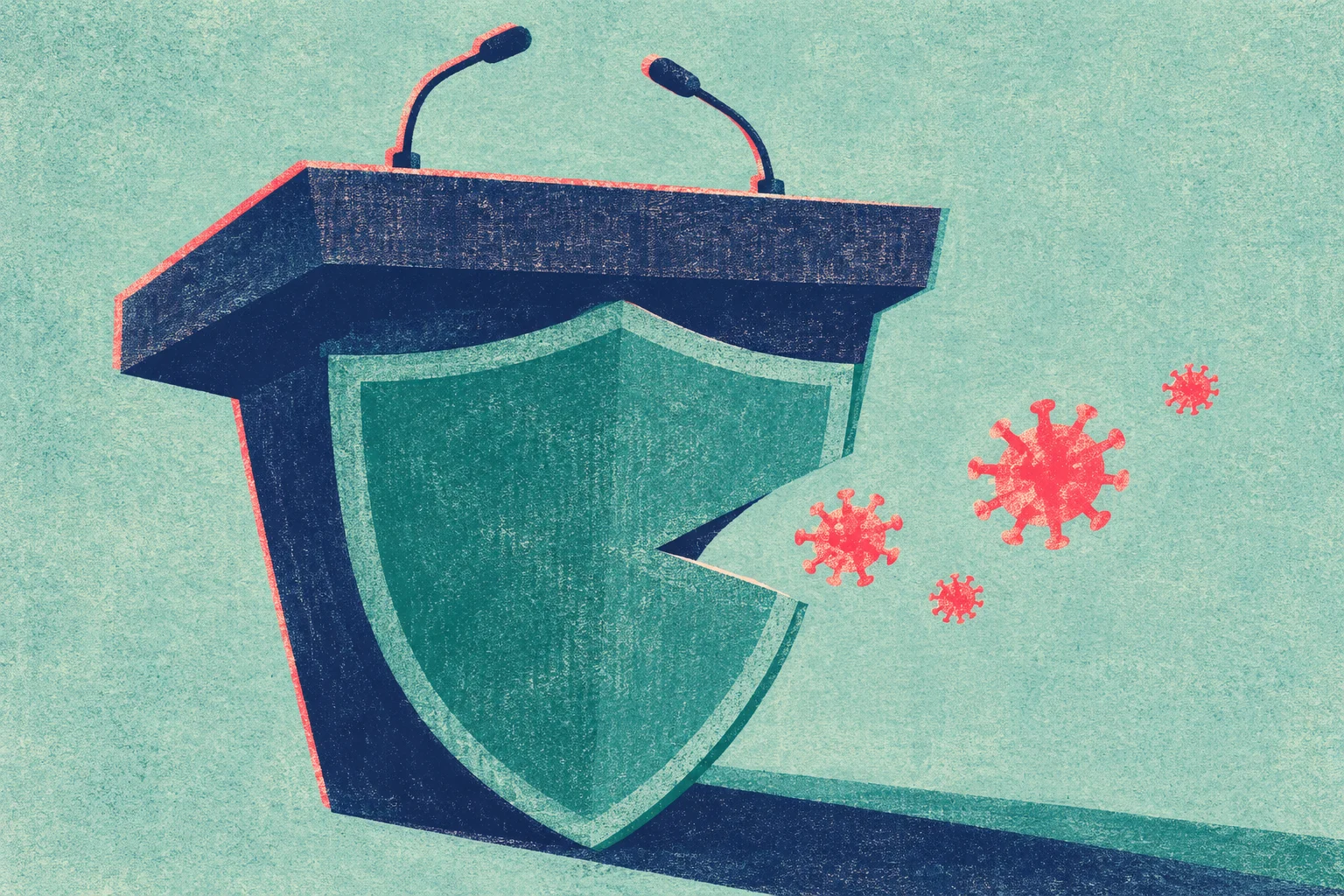
The other voice is the rest of the record. In earlier administrations the CDC answered outbreaks with media briefings and vaccination campaigns. It has held neither this year. As Beth Mole reported for Ars Technica, Kennedy reportedly ordered the CDC to remove measles death data. The CDC director also declined to approve an urgent health alert on the dangers of measles during pregnancy. HHS did not immediately answer Ars when asked what part anti-vaccine rhetoric, Kennedy’s included, had played. Since taking office Kennedy has questioned the safety and effectiveness of measles vaccines and promoted unproven remedies such as inhaled steroids. In August President Donald Trump falsely suggested the combined shot could be “quite lethal.”
“We have seen frequent and damaging public comments that have been shaking the confidence of parents about vaccination,” Brewer said. He chairs an independent American committee that presented findings on the outbreaks to PAHO, and the Wall Street Journal recorded his verdict:
Runaway measles outbreaks in the United States, as well as the needless deaths, are all due to low measles vaccination coverage. We’ve gotten comfortable letting children be stopped by a deadly disease and die from it.
A government can treat a designation as only a word, a line on a list kept by others. That is a reflection, not a finding. But a word lost this way says what a country stopped doing.
The supermarket
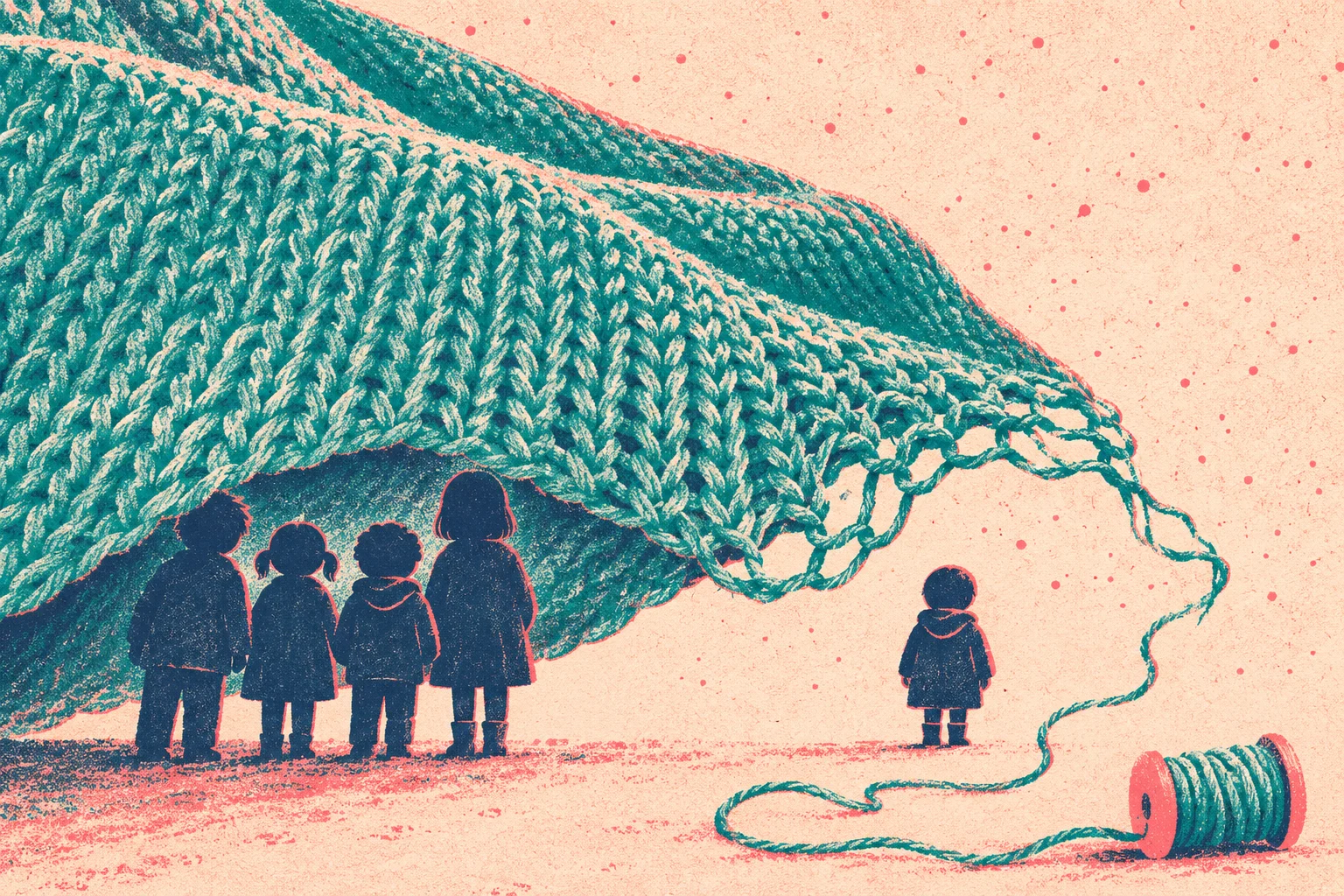
Measles is among the most contagious viruses known. One infected person can pass it to 9 of every 10 people nearby, and it can hang in the air for up to two hours. In unvaccinated people it can cause pneumonia or swelling of the brain. Walter Orenstein, who once directed the CDC’s immunization program, said the danger is sharpest for infants, who usually cannot get a first dose before their first birthday, and for people too immunocompromised to be vaccinated. “People can go into a supermarket and get infected,” he said. Some health departments in outbreak zones now advise an early dose for babies as young as six months.
Canada, and after
This did not start in Washington alone, and Brewer said so: “It’s not just a U.S. problem, and it’s not just this administration.” The pandemic kept children away from pediatricians and delayed their routine shots. Misinformation about the Covid vaccines revived debunked theories, among them the false claim that measles shots cause autism. Even before the pandemic, the WHO had warned that vaccine hesitancy was feeding a global return of measles.
Canada lost its status last year after an outbreak of more than 5,000 cases. Jon Andrus, a global health professor at George Washington University who chairs the PAHO commission, described that case: “It wasn’t for a lack of effort in Canada. There was a political commitment at the highest level to sustain measles elimination and to stop that outbreak. That was for me the sad part of the story, because they really did try.”
Experts say it could take the United States years to win the designation back.