
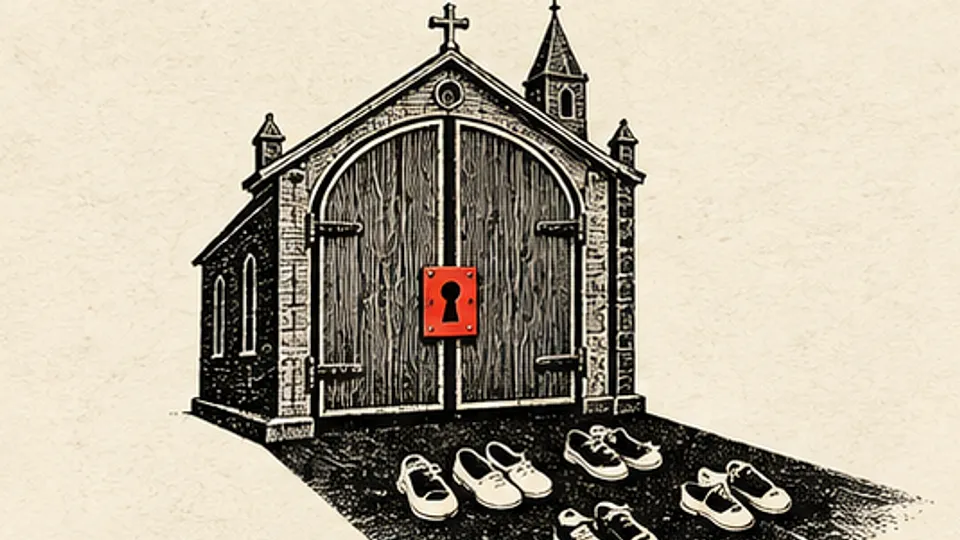
A Massachusetts state investigation found evidence that more than 270 Catholic clerics sexually abused nearly 1,000 children across the dioceses of Fall River, Springfield and Worcester over roughly a century, the attorney general’s office said on Wednesday.
Attorney General Andrea Campbell said the investigation, which began in 2019, found that diocesan leaders repeatedly failed to act on allegations and warning signs, and in some cases transferred accused priests to other parishes without disclosing why.
“This investigation was not about demonizing a faith or a church,” Campbell said at a news conference. “Rather, it was about seeking justice, a value and a promise our faith and the God I serve so deeply reflects.”
Campbell’s office said earlier investigations had exposed institutional failures in the Archdiocese of Boston, but described its inquiry as the “first comparable public accounting of the institutional failures within the Fall River, Springfield and Worcester dioceses.”
Most of the known abuse took place before 2002, when the Boston Globe published its reporting on decades of abuse within the Boston archdiocese, according to the attorney general’s report. But the investigation also identified failures “that persist,” including in training, the investigation of allegations, supervision and recordkeeping, the office said.
In some cases, priests were allowed to remain in ministry for years after the dioceses received reports that they had abused children, according to the report. When accused priests were suspended and barred from publicly acting as priests, they “generally remained largely unsupervised,” and the suspensions in many cases occurred without parishioners or even fellow priests knowing of the allegations, the report found.
Priests were “deeply trusted in their communities,” Campbell said, and “offending priests took advantage of that trust.” She said some survivors told her office they believed their parents would have believed a priest over them, and that many survivors waited decades to disclose the abuse.
“Too often they protected the reputation of the church, rather than protecting children,” Campbell said.
Campbell said her office cannot indict or prosecute the crimes it documented, citing statutes of limitations and “other legal constraints.” In some cases, she said, the alleged conduct was not a crime under state law at the time it occurred. “We cannot apply a criminal law retroactively,” she said.
The dioceses cooperated with the investigation by providing records in response to grand jury subpoenas and answering questions, officials said, though Campbell’s office said no substantive testimony was taken before the grand jury.
Campbell said three cases had been referred to local district attorneys’ offices, including one to the Worcester District Attorney’s office that resulted in criminal charges.