
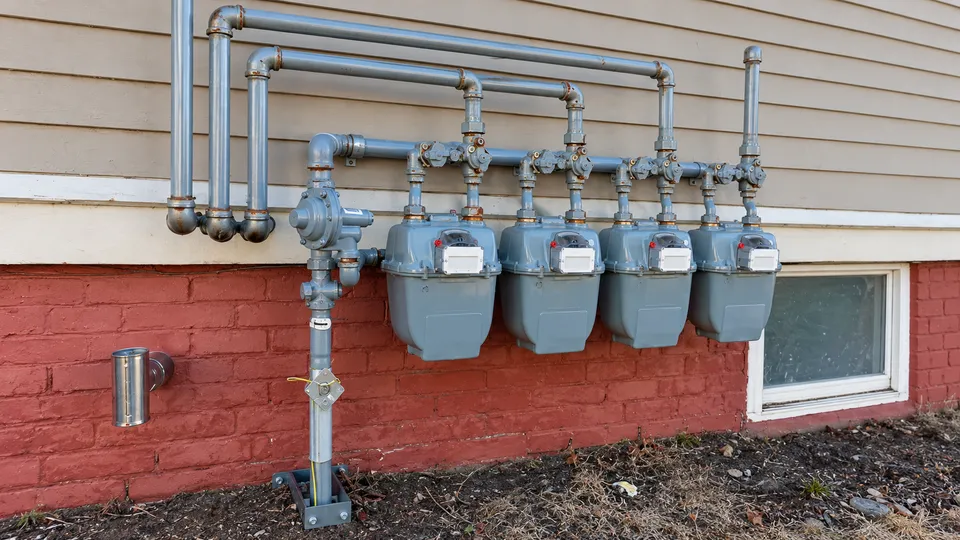
A single paragraph in the Massachusetts Senate’s energy bill -- one that could let utilities end gas service to homeowners who refuse to convert to electric heat -- has become a sticking point in conference-committee negotiations between the House and Senate this fall, The Boston Globe reported on Oct. 1.
The dispute centers on the state’s long-standing “obligation to serve” rule, which blocks utilities from cutting off existing gas customers without their consent. It is unlikely to derail the broader legislation, billed by both chambers as an answer to voter anger over energy costs, but it could get in the way as the two lead negotiators take sharply different positions.
Those negotiators are Representative Mark Cusack and Senator Mike Barrett, co-chairs of the Legislature’s energy committee, and the bills they brought to the table differ well beyond that one paragraph. The House version, shaped by Mr. Cusack, would pare back the Mass Save home-efficiency program. The Senate’s, led by Mr. Barrett, phases out an expensive gas-pipe replacement program known as GSEP. Both ideas offer real savings, The Globe noted, but they add up to perhaps a few dollars a month for a typical home.
The obligation-to-serve language sits inside the Senate’s GSEP section. If a utility decides a neighborhood’s gas pipe needs replacing, and most homeowners there want to switch to electric heat, the holdouts could be required to convert too. The measure requires that state regulators first determine another “safe, reliable and affordable” heat source is available.
Business groups are sounding the alarm. Jon Hurst, head of the Retailers Association of Massachusetts, said passing no energy bill at all would be better than passing the Senate’s. Four of the state’s largest business organizations -- the Massachusetts Business Roundtable, the Greater Boston Chamber of Commerce, Associated Industries of Massachusetts and the Massachusetts Taxpayers Foundation -- told the conferees the language eliminates customer choice and forces people onto an electricity supply that is already constrained.
Bill Ryan, a spokesman for the business-funded Mass Coalition for Sustainable Energy, called the provision “a ‘tip of the iceberg’ type of thing” toward ending natural gas service in Massachusetts altogether. His group estimates billions of dollars in added costs over time, covering everything from furnace and appliance replacements to electrical upgrades.
Environmental advocates read it differently. Natural gas plants still supply much of the state’s electricity, they point out, and state law requires carbon emissions to be all but eliminated by 2050. Amy Boyd Rabin of the Environmental League of Massachusetts said doing nothing on GSEP would only raise utility profits amid overspending on aging gas networks, without delivering rate relief. Caitlin Peale Sloan of the Conservation Law Foundation went further, calling the business groups’ warnings “a self-serving story peddled by the utilities” to protect a program that pads profits at the expense of families and businesses exposed to volatile fossil fuel prices.
The state’s 2024 energy law already allows the Department of Public Utilities to reject petitions for new natural gas supply on emissions grounds, if electricity or geothermal heat is available. Utilities have argued they remain obligated to serve all existing gas customers even so.
Mr. Barrett said the new Senate language is not the end of gas service, whatever the “apologists for fossil fuels,” as he put it, predict. It is meant to give flexibility to neighborhoods where most but not all residents want to electrify. Without it, he said, ratepayers could end up paying for electric-system upgrades and pipe replacements alike for a shrinking pool of gas customers, making the energy system more expensive for everyone. The DPU would still have the final word on whether affected customers have an affordable alternative.
The real debate, Mr. Barrett said, is over the pace of the transition off fossil fuels -- not whether it happens. Resolving it may prove necessary to getting the Legislature’s energy bill over the finish line.