
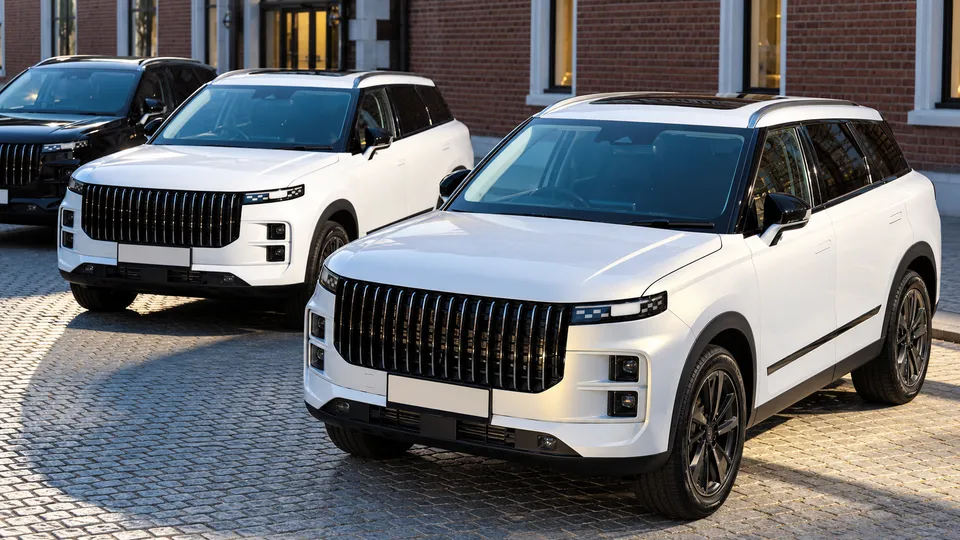
On the roads of Britain the change has been visible for some years: unfamiliar badges, silent engines, prices no European maker will match. Now, according to The Times of London, the government is weighing the answer its neighbours have already given — tariffs on Chinese electric cars in line with the European Union’s, which combined with the existing duty can reach 45.3 percent.
The pressure comes from Brussels. Britain has so far kept its basic 10 percent duty and spared Chinese-made EVs any extra levy. The European Union, having concluded in a 2024 investigation that Beijing’s subsidies could harm industry within the bloc, added countervailing duties of up to 35.3 percent on top of its own tariff. Now the EU has hinted that if Britain does not raise its wall, British-built cars could forgo subsidies and tax advantages in the European market — the privileges of the bloc’s “Made in Europe” preference for goods produced within it.
The figures explain the anxiety. According to Britain’s Society of Motor Manufacturers and Traders and the European manufacturers’ association ACEA, five Chinese groups — Geely, Chery, SAIC, BYD and Leapmotor — together held 19.7 percent of Britain’s new-car market from January to August. That is nearly four times their share of roughly 5 percent in 2021, and double the 9.6 percent the same groups hold inside the EU. The British figure counts everything: petrol cars and hybrids alongside the battery-driven ones.
Two markets, one wall
Britain still builds cars — Jaguar Land Rover, Nissan and others keep factories there — and for those plants the European Union is the largest export market. Brussels, for its part, worries that Chinese manufacturers could use an open Britain as a side door around its trade barriers. London wanted cheap electric cars for its drivers and Chinese investment for its economy; it must now price that welcome against the export prospects of the assembly lines it already has. The government told Reuters it has imposed no additional tariff and is consulting the industry with the national interest in mind.
Seoul reads the London papers
There is a reason this British quarrel is followed so closely in Korea. According to the Korea Automobile Mobility Industry Association and other industry data, 35 percent of the electric cars newly registered in the country in the first half of this year were made in China — a count that includes BYD’s brands and the Teslas built in Tesla’s Shanghai plant.
The argument in Seoul is not over whether China competes on price, but over what the domestic industry can do about it while it must also fund the electric and software transition. Carmakers and their suppliers asked for help. The industry ministry drafted a tax credit for electric vehicles produced and sold at home, but the finance ministry struck electric cars from the list of eligible products. A subsidy reform by the climate and environment ministry — differentiating payments by contribution to domestic industry and to charging and servicing networks — emerged, the industry says, much weakened from its original intent.
“If we cannot impose high tariffs on Chinese electric cars the way the EU did, then systems with the practical effect of subsidies — differentiated grants, a tax credit for domestic production — must be introduced quickly.”
That warning came from an industry official, and it carries weight precisely because it is not only about cars. For Hyundai and Kia, which meet these same Chinese rivals in showrooms across the world, the home market is the vault from which investment in batteries, platforms and software is paid. Behind the carmakers stand the parts suppliers and the industrial towns whose jobs ride on every percentage point of market share. Tariffs are a crude instrument, and Britain’s hesitation shows how crude. But a government that declines to use them must decide quickly what it will use instead.