
Life on Film, the social-media account that hands film cameras to strangers, has become profitable, with seven-figure revenue and no outside investment, co-founder Grant Weintrob told Business Insider in an interview published Friday.
The company is on track for 90 percent year-over-year revenue growth. Its videos have drawn more than 2 billion views across Instagram, TikTok and YouTube, and it has 8 million followers across those platforms. Instagram is its largest.
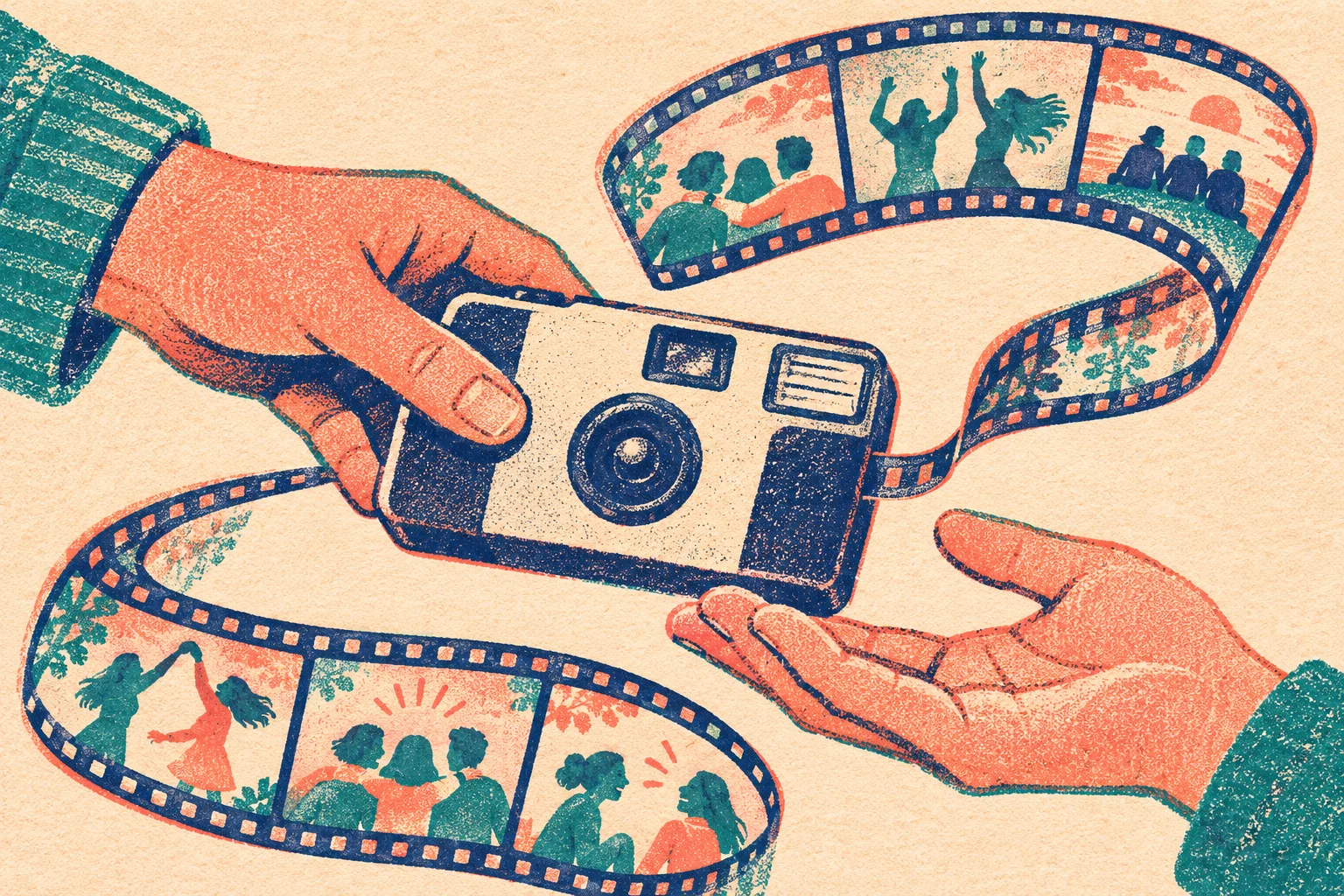
Mr. Weintrob, Christian Baiocco and Griffin Katz started the project in 2023, handing out disposable cameras so strangers could document nights out. The team then assembled the pictures into music-driven montages. Within a year, they were recording with Ed Sheeran, Lil Yachty, Ice Spice and former President Joe Biden. Brand deals and viewership made it a full-time business by the end of 2024.
“We really see it as a human storytelling platform,” Mr. Weintrob said. Mr. Baiocco cast its analog methods as a response to the distrust surrounding AI-generated material online. “Life On Film is literally the opposite of that,” he said. “It’s literally truly unscripted content that’s captured on analog cameras.”
Brand partnerships supply most of the revenue, with additional money from advertising splits on YouTube and Facebook. Past clients include Nike, Home Depot, American Express, Microsoft, Meta and Universal Studios. The company handles inquiries and pitches brands itself, without talent management, because the founders regard it as a studio rather than a vehicle for their own personalities.
Fujifilm is its biggest partner. The company supplies disposable cameras under a long-term sponsorship and supports “Blind Date,” a series in which two strangers receive an Instax camera and document a date arranged for them. Life on Film is also pitching travel companies on a longer-running series that would send participants on trips.
Next come coffee-table books, custom cameras and other products sold directly to viewers. The team already has another show, Discovering Artists, and Mr. Weintrob said the long-term goal is “to have a studio that makes the best unscripted series on the internet.” He described his preferred position as somewhere between the entertainment company A24 and the storytelling project Humans of New York.
Mr. Weintrob said he has noticed more interest from Hollywood, streamers and social-media platforms after creator-made successes such as Backrooms and Obsession. “There is something bigger here to be made than just the 30-second Instagram Reel or TikTok,” he said. The team is considering longer, horizontally shot videos that it could market to conventional production studios.

The film itself remains a substantial expense. Life on Film expects to spend about $50,000 on cameras, film and developing in 2026, Mr. Weintrob said. Costs rose after it added Super 8, a film stock Kodak introduced in the 1960s, although those videos are outperforming footage from disposable cameras. “It’s like a movie,” Mr. Baiocco said.
Old equipment can break, users can make mistakes and the developed film can disappoint. Sometimes people steal the cameras. There is also the possibility that no one will agree to take one, though Business Insider reporter Sydney Bradley found that the street encounters were genuine, apart from some celebrity and branded videos.
Bradley accompanied Mr. Weintrob and Dylan D’Agostino, a full-time producer, to Harlem for a series being made around New York, the founders’ hometown. Mr. Weintrob approached pedestrians with an iPhone in hand while Mr. D’Agostino carried disposable and Super 8 cameras. One couple accepted immediately. “Yeah!” the young woman said. “Wait, OK, how do we get them back to you?” A QR code and written instructions supplied the answer. By the end of the hour, six people had accepted cameras and 10 had declined.