
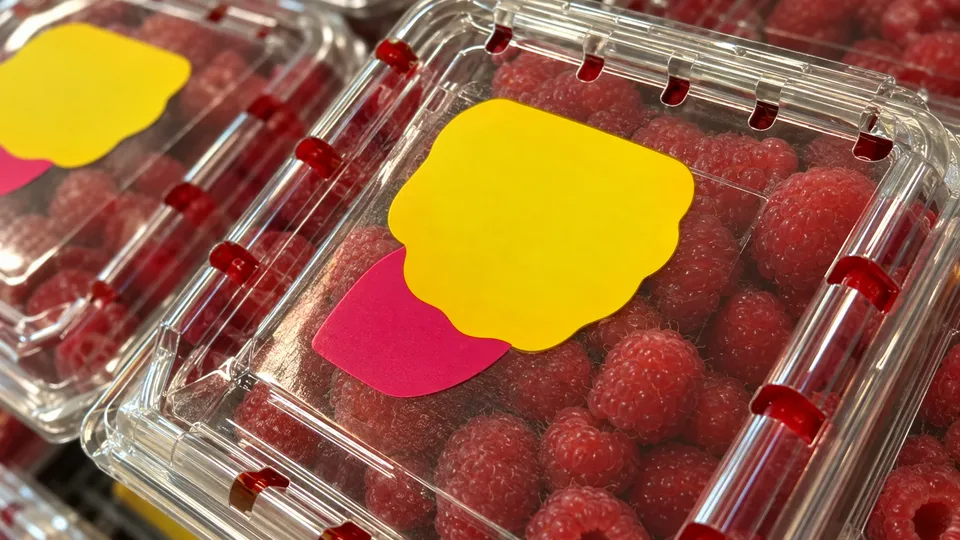
Driscoll’s sells itself on a promise of “only the finest berries,” which is a bold thing to print on a clamshell when, a whistleblower lawsuit in California now alleges, millions of pounds of the company’s fruit containing non-compliant levels of pesticides and other chemicals crossed the border into Canada between 2022 and 2024 — and the company tried to cover it up. The allegations are just that: allegations, untested in court. But some of the underlying record comes courtesy of Canada’s own food inspectors.
The whistleblower is David Harada, formerly Driscoll’s manager of food safety and regulatory compliance for the U.S. and Canada, who has sued the company for unlawful retaliation. His lawsuit claims that by Driscoll’s own estimates, about 50 per cent of shipments to Canada from 2022 to 2024 contained fruit exceeding Canadian safety levels. “And it’s something where you start seeing it so regularly and you know that something’s not right that you have to speak up,” he told CBC News.
Harada says he first noticed problems with pesticide safety and over-application in 2022 and reported them straight away. Upper management, he says, told him it was something he’d have to manage. “I had a conversation with my director as to whether or not they had plausible deniability regarding this issue,” he recalled — a phrase that tends not to come up when a company believes it is blameless. He says he came to feel he was being set up as the “scapegoat” for the compliance failures and was eventually pushed to resign.
The Canadian Food Inspection Agency confirmed to CBC that it ran several inspections of Driscoll’s berries sold in Canadian grocery stores between 2022 and 2024, and found chemicals above Canada’s legal limit — specifically the insecticide bifenthrin and the fungicides iprodione and captan. None of it triggered a recall: the agency says corrective actions were implemented where warranted and the investigations closed, with responses scaled to the size of the health risk. Some investigations began with reports of suspected illness after eating blueberries, or complaints of a chemical taste and smell, though the CFIA says the illness could not be definitively linked to the berries. And the agency cautions against connecting dots: “The presence of the Driscoll’s brand on the products does not, on its own, establish that the non-compliances originated from a single producer or source.”
How alarming is any of this for the person holding the spoon? Stéphane Bayen, an associate professor of food science and agricultural chemistry at McGill University, says berries turning up with residues over the legal limit is “not something abnormal completely, but definitely that’s not what we would like to see.” A single exceedance, he says, “might not be translated as a risk for the health of consumers” — the concern is it becoming regular. Toxicologist Daniel Green puts one sampled case blunter still: “To get an effect, one would have to eat 19 kilograms.” His worry is not the berry but the pile-up: “It is the chemical lifetime exposure experience that has to be looked at.”
Harada thinks he knows how the fruit slipped through. In 2022, he alleges, Driscoll’s removed the food safety and compliance tracking system it maintained for Canada in order to sell more here. That system exists to enforce the interval between the last pesticide spraying and harvest — the waiting time that lets residues break down to legal levels before picking. He says the company asked him to reinstate the system but refused to go public, despite his urging disclosure and recalls. “I completely believe that I was part of a coverup because they chose not to disclose this information publicly,” he told CBC.
Driscoll’s, citing confidentiality, declined to discuss Harada’s employment, but said it “remains confident that the complete factual record will demonstrate that it responded correctly to the concerns Mr. Harada raised, at all times acted in good faith, and at all times conducted itself appropriately.” The company denies removing the tracking system and the suit’s other allegations, says it has never knowingly shipped products it believed unsafe, and promises its evidence will show “a very different picture from the one Mr. Harada has presented publicly.”
Harada says living with the whistleblower label has not been easy, but he thinks speaking up was the right call. “Canada as a whole deserves more and consumers of any products deserve to feel safe when consuming it,” he said.