
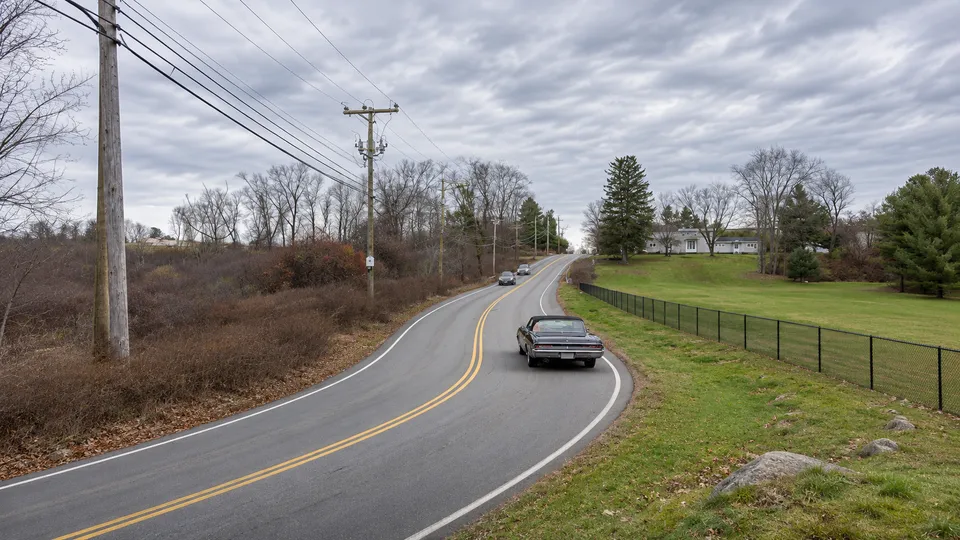
The Kraft Group has proposed a $16 billion data center campus in Sutton, Mass., a farm town of about 9,700 people, and residents packed the first public hearing on the plan on Tuesday night to object.
The 10 buildings would go up on land owned by the Krafts’ Unified Packaging box business, about 10 miles south of Worcester, and would draw 900 megawatts of electricity once finished in 2033. That would make the campus the fourth-largest data center in the United States, according to the research firm Cleanview, The Boston Globe reported. Massachusetts has none of the giant facilities built for the AI boom. Sutton’s would be the first.
Jonathan Anderson, the chairman of the Select Board, said the board wouldn’t vote soon and planned several public forums. “This is not a project that’s a done deal,” he said. “It’s far from it. This is the very, very beginning of the process.”
The board allowed about 15 minutes of public comment, and all six speakers opposed the project. “I would like to see this process stopped tonight,” said Sarah Osterman Stone, a Sutton resident. The crowd kept shouting after the comment period ended. “Kill it now,” one person yelled.
The town manager, Austin J. Cyganiewicz, laid out the plan in a letter to the board on Monday. The first two buildings, each about 250,000 square feet and drawing roughly 90 megawatts, would open in 2029 off Boston and Providence roads, with two more each year through 2033, according to the memo as described by This Week in Worcester. The developer has begun talks with ISO New England, the regional grid operator, and plans to look at reclaimed water for cooling. Sutton has no zoning rules for data centers.
For a town with a $40 million annual budget, the money is large. Mr. Cyganiewicz estimated that the first two buildings would pay $10.4 million a year in property taxes starting in fiscal 2031, rising to about $27.8 million a year with all 10 buildings in 2035. The average single-family tax bill in 2031 could fall to $6,846 from $9,134, he wrote. Town officials also project about $31 million in one-time building permit fees, against a structural deficit expected to grow from about $300,000 in fiscal 2028 to $9.1 million in fiscal 2033.

The full campus would be worth several times the $2.8 billion assessed value of all property in Sutton today. Still, “the proposal is tentative,” Mr. Cyganiewicz wrote. “No application has been filed, and important details on power, water, equipment and site impacts are still to come.”
State Representative Joe McKenna, who represents the area, said residents had raised electricity rates, water use and noise. “They’re concerns that I share, but I’m also not willing to say ‘No’ just based on a fear of an unknown, or fear of an uncertainty,” he said.
At full build, the campus would draw power equal to about 7 percent of the state’s peak demand on the hottest summer day last year. Matt Eastwood, an analyst at IDC, said high electricity rates, land prices and construction costs had kept big data centers out of Massachusetts. As AI use spreads, he said, businesses will need facilities closer to home. “You’ll end up with an AI infrastructure that’s much more distributed and not as centralized,” Mr. Eastwood said.
The Kraft Group did not return a request for comment on Tuesday and has not named possible tenants. It is a family company that has drawn fire before, clashing with Foxborough officials last summer over $8 million in World Cup security costs.
Any approval runs through the town. Gov. Maura Healey signed an executive order on Sept. 8 barring state permits for data centers with peak demand above 25 megawatts unless the host community approves them, WBUR reported. “Unless a community says yes to a data center, we are saying no,” Ms. Healey said then.
The proposal comes a week after voters from Maine to California approved 44 referendums to block or slow data center construction, in places like Wells, Maine, Defiance, Ohio, and Emporia, Kan. Candidates who backed data centers, including the Senate candidates Jon Husted in Ohio and Ken Paxton in Texas, lost in the midterms, part of a run of wins for opponents. Westfield, in Western Massachusetts, moved last month to block a smaller data center.
Representative Jim McGovern, whose district includes Sutton, has cosponsored a bill for a national moratorium on data centers. “Costs of utilities have gone up for a lot of people because the data centers eat up a lot of energy and take a lot of water ... so for me, I don’t like them,” he said. “But, ultimately, it’s up to the people of Sutton.”