
On Friday, 6 November, in the High Court at Mombasa, Justice Diana Kavedza read out what the Kenyan state would do with Paul Mackenzie. The answer was a number too large for any human life. Two hundred years in prison: 100 years for murder by starvation and 100 for direct homicide, as Al Jazeera reported from the judgement. The victims numbered 191. One was an adult. The other 190 were children. All of them, the court found, starved to death on his orders and went into the ground of a forest.
The forest is Shakahola, inland from the coast of Kenya. The number of victims is the number the prosecution could prove in court. It is not the same as the number of the dead.
The road to the forest
Mackenzie did not appear from nowhere. According to reporting carried by allAfrica, the authorities had known about him since 2017, when police searched his premises. In 2019 they closed his church in Malindi. He moved to the nearby Shakahola Forest, and the state, having shut a door, seems to have considered the matter settled. Only in 2023, after reports of missing people, did police begin searching the forest, and the country learned what had been happening there.

A pattern familiar from older and grander tyrannies repeats itself here on a small scale: the institutions saw him, wrote it down, and moved on. The followers stayed behind with him.
In January 2024 prosecutors announced murder charges. Last month the same court convicted him of murdering 191 people. On Friday it handed down the sentence.
The children
The judgement lists the dead by age, and the list is where the case should be read most slowly. According to Pulse Kenya’s account of the ruling, they included a baby of 12 days, starved from birth. They included 161 children under the age of ten, who died of hunger and dehydration, and 22 aged between ten and fourteen. Older teenagers who resisted the forced fasting were violently abused. In the families that survive, grandparents are now raising the orphans.
Justice Kavedza called Mackenzie the principal architect of the enterprise. He led Good News International Ministries and presided over meetings at which he told followers to fast to death, with the children picked out as the first to go. The court treated their helplessness as a serious aggravating factor: children who depended entirely on adults for food, water and protection, and whose adults withheld all three.
Why not the rope
The Director of Public Prosecutions had asked for the death penalty. The judge refused, and her reasons are the most remarkable part of the day.

The sect taught that death was the gate to heaven. To hang its prophet, she reasoned, would be to confirm his doctrine and make him a martyr in the eyes of those who still believe him. The convicts believed that dying would reunite them with Jesus and with the children they had lost. A man who longs for the gallows cannot be frightened by it.
In the respectful view of this court, such a sentence would therefore fail to achieve deterrence.
Instead, decades behind bars would make them face what they had done, and watch their prophecies of the end of the world fail to arrive. She also said plainly that sparing them was not leniency or compassion.
A thought, offered as reflection rather than fact: a man who ruled his followers by promising them a quick death is now sentenced to a long life. In this case the state has found a punishment that turns his own preaching against him.
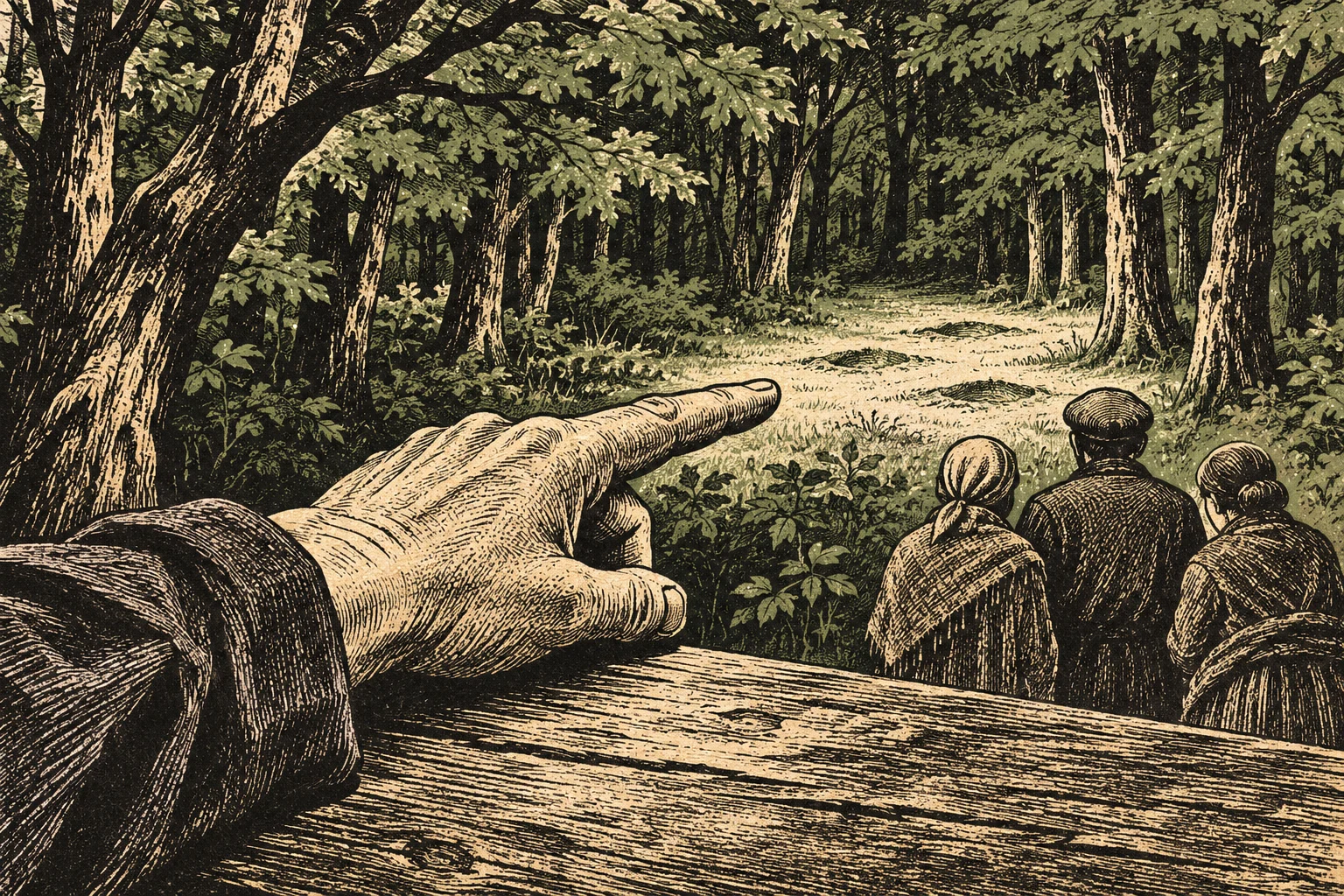
There was a second, more practical reason. A living prisoner can still talk. Keeping the convicts alive leaves open the chance that they will one day help the authorities find remains still lying in unmarked graves. The judge said the “families that are still waiting for answers are better served by preserving that possibility.”
The arithmetic of punishment
Kenyan outlets did not agree on how the 200 years add up. Al Jazeera and Reuters gave the starvation-and-homicide split. Capital FM described one 100-year term for the murder of children and another for the murder of adults. Kenyans.co.ke quoted the ruling as imposing 100 years on each of the 191 counts of murder by starvation, one involving an adult and 190 involving children, to run concurrently with one another. The court cited Section 14 of the Criminal Procedure Code, Kenya’s 2023 sentencing guidelines and the principle of totality, under which some terms run together and others one after another, because the killings formed one campaign but took place at different times and in different circumstances. Whatever the method, the result is the same. He will die in prison.
His 28 co-accused were also spared execution. Their sentences were set according to each one’s role and degree of guilt, and The Kenya Times reported that some received up to 160 years. The court recommended that every eligible convict except Mackenzie be assessed for disengagement and deradicalisation programmes, a door the ruling leaves open through the National Counter Terrorism Centre. For the man who led them to Shakahola, the court left no such door open.
The grandparents raising the orphans of Shakahola are still waiting, along with the families who do not yet know where their dead are buried, for the forest to give up what it holds.