
The usual order of operations in medical research is: write a protocol, get it reviewed, run the study, publish the result, and then — only if anyone remains excited — hold a ceremony. Health Secretary Robert F. Kennedy Jr. has rearranged that sequence. He recently made an unannounced visit to the National Institutes of Health’s research hospital in Bethesda, the New York Times reported, where he cut a ribbon for a new clinic devoted to vaccine injuries and led a roundtable discussion with patients who said they had been harmed by vaccines. Signs at the event labeled the patients “vaccine injured.”
One procedural snag: the research hasn’t been cleared to happen. As Ars Technica reported, Dr. Jonathan Green, the Clinical Center’s CEO, told the hospital’s advisory board that the protocol is still under review — like every protocol at the hospital, it must pass rigorous scientific and ethical reviews before it can be implemented. The space involved, a vaccine evaluation center inside the clinical center, “has been in existence for decades,” Green said, and he suggested the initiative was essentially an extension of work the hospital already does, per the Associated Press account carried by the San Juan Daily Star. None of this nuance made it into the ceremony.

The board’s chair, Jack Leslie, had read about the initiative before the ceremony and called Green to get it on the meeting agenda, then delivered a statement. The patients Kennedy featured “must come first,” he said. “They deserve our care and respect and they deserve answers.” But the secretary, he argued, did those patients — and the hospital — a disservice. “The secretary has spent two decades arguing that vaccines are dangerous,” Leslie said. “Those signs announce the conclusion that the research has not yet reached and that the research exists to test. Think about what that means for those patients.”
If this research finds evidence of harm, many will dismiss it as the work of a secretary who has long argued that vaccines are dangerous. If it finds none, patients will be told that the clinic was a sham. Either way, they’re left with answers no one trusts, and science only helps patients when the public believes it.
That fork is the whole story, and Leslie underlined the asset at risk. “The clinical center standing rests on one thing: the confidence of patients, physicians, and the public that the research done here is designed to find the truth, not to confirm a conclusion reached in advance,” he said. “Trust is slow to build and quick to lose. If people come to believe that research at this hospital can be steered toward a politically desired answer, the damage will not stop at vaccines.” He said he feared the stunt sends a political message that will erode trust the hospital has spent more than 70 years earning and maintaining.
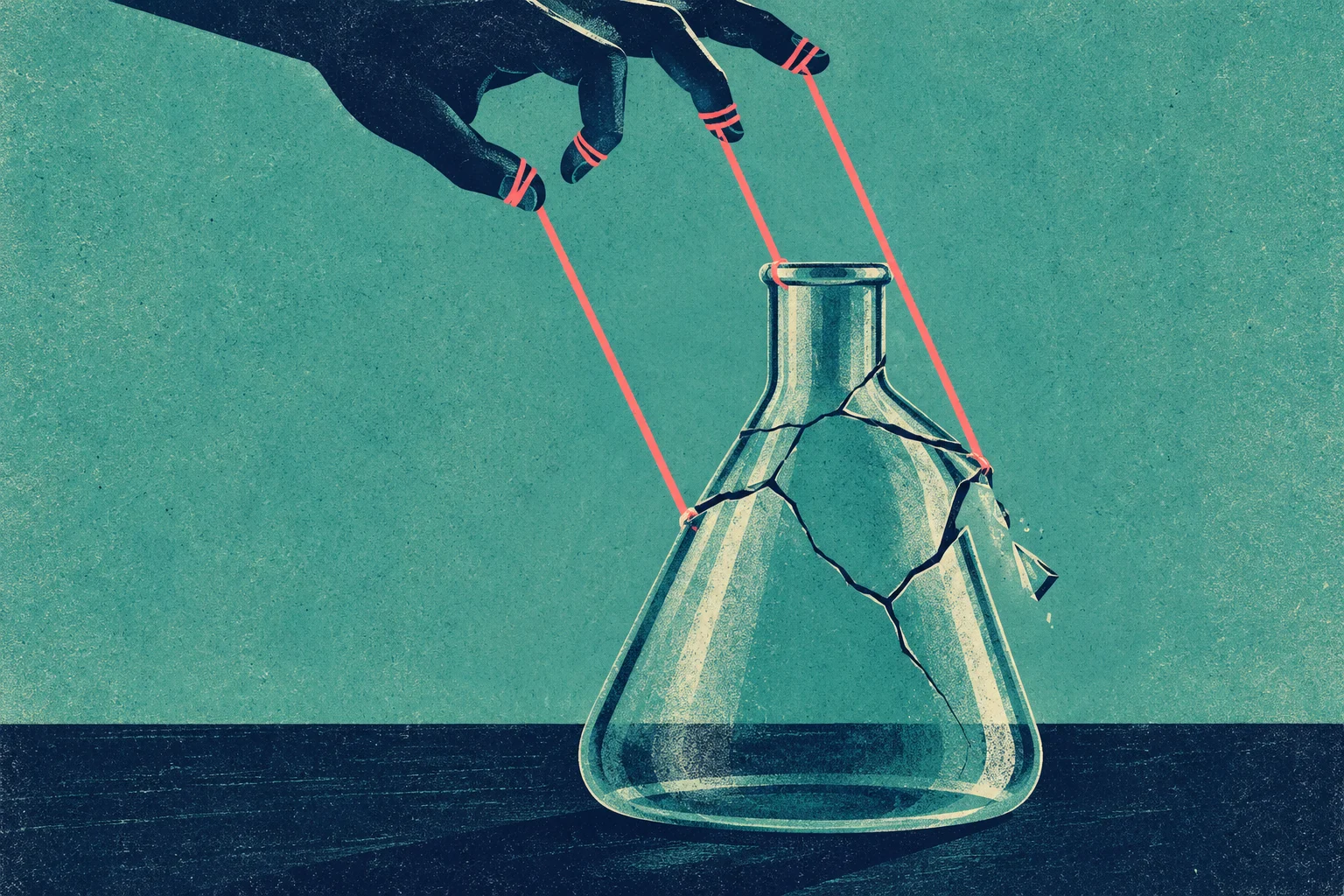
After Leslie finished, another board member thanked him and moved that the board support the statement; the motion was seconded and, in a voice vote, the board unanimously endorsed it.
It is perhaps not an accident that this particular rebuke came from Leslie, who is not a bench scientist defending a grant. Per the Genetic Literacy Project, he is a former chairman of the public-relations giant Weber Shandwick who has advised the World Health Organization — which is to say, someone professionally overqualified to diagnose a reputational mechanism. And the mechanism isn’t really about whether vaccine injuries exist; serious ones are, as Leslie reportedly put it, “rare but real,” and precisely the sort of thing a hospital should study. It is about what a finding is worth when the answer has already been printed on the signage. Imagine, as a pure hypothetical, a judge who poses for photos with the defendant beneath a banner reading “guilty” before the trial starts. The trial can be scrupulously fair; the verdict arrives pre-spoiled. The ribbon, in any case, has been cut. Conclusion installed first, research to follow.