
The central formal decision in Josephine comes in its first 15 minutes: an eight-year-old sees a man raping a female runner, and the film then stays with what that child can and cannot understand. The attack is shown in full, at a distance and through Josephine’s eyes. The rest of the drama examines the effects on her and her parents, rather than treating the assault as a plot device that ends when the scene does.
As Emma Jones reports for the BBC, newcomer Mason Reeves plays Josephine, with Channing Tatum and Gemma Chan as her parents. The opening takes place during an early-morning football kickabout with her father in San Francisco’s Golden Gate Park. Josephine runs into bushes and encounters the attack. Written and directed by Brazilian-American film-maker Beth de Araújo, the US independent film opens in the US, UK and Ireland on 20 November 2026.
Araújo’s script starts from an experience of her own. At about the same age, also in San Francisco, she saw the aftermath of a rape. Her father interrupted it and chased the attacker away. As an adult, she became a certified Witness Advocate for rape victims and worked at a Rape Crisis hotline. She describes the film both as another way of processing what happened and as an attempt to place viewers inside a child’s first encounter with sexual violence.
“I was really interested in how the mind of a young girl changes once [she understands] the word ‘rape’,” Araújo told the BBC. “I want the audience to put themselves back into the mindset of not knowing what rape or sexual assault is, what male violence is, and learning about it in the most brutal way possible.”
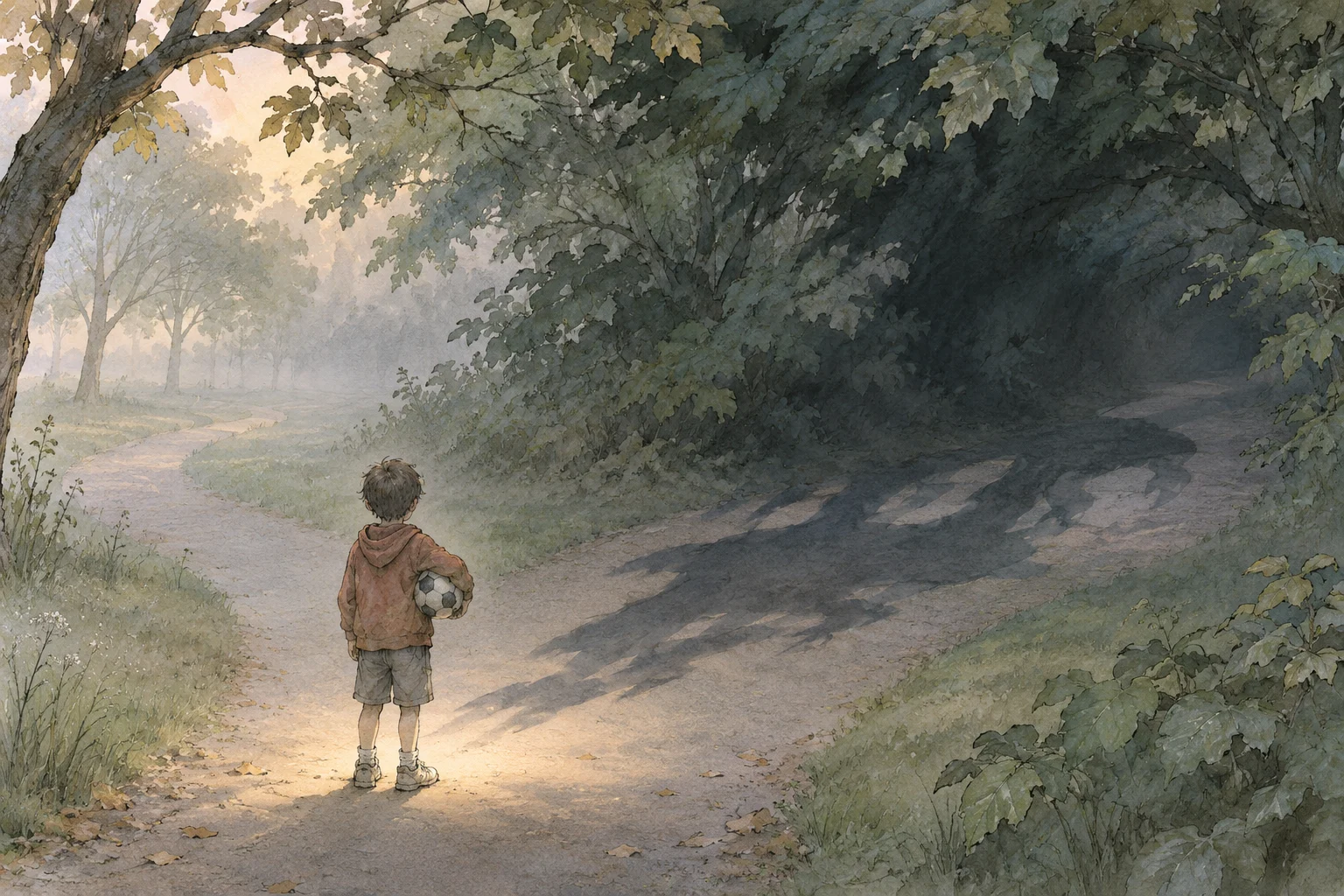
The production protocol around an eight-year-old actor
Reeves was also eight during filming and had never acted professionally. Araújo cast her after meeting her and her mother at a San Francisco farmers’ market. The production made a child psychologist available to the family and tried to limit Reeves’s knowledge of the material. She did not read the script; her mother read her lines aloud and she memorised them. She was not present for the sexual-assault scene and has not watched the finished film. Araújo says Reeves can choose whether to see it when she is 18.
Before filming, Araújo asked Reeves’s parents what she already understood. They said the subject had arisen in conversation and that they had explained it as “It’s how you hurt someone with sex.” Those precautions separate the child actor’s experience from the character’s: the viewer sees Josephine confront an event that Reeves herself was not required to witness or reconstruct in full.
Tatum, who has a daughter, told Variety that the film had changed how he thought about communicating with her and described it as “a story that’s never been told before”. Chan locates the film’s subject in a contradiction: sexual violence remains shameful and difficult to discuss while also being normalised. Children may encounter it on their phones even if adults avoid the subject, she said, and the conversation has to include men.
The release follows another high-profile case. Last week, British comedian and former Hollywood actor Russell Brand was sentenced to 10-and-a-half years in prison for one count of rape and three counts of sexual assault. Araújo nevertheless describes sexual violence as a “global epidemic” surrounded by silence. When she tried as a child to ask what had happened, adults hid it from her. She understands that as an attempt at protection, but says it did not work for her.
What a rape scene is doing
The argument over Josephine sits within a longer dispute about duration, viewpoint and narrative function. Gaspar Noé’s 2002 Irréversible contains a nine-minute assault on Monica Bellucci’s character. More than 200 people walked out of its Cannes Film Festival screening, and there were reports of fainting. Jennifer Kent’s The Nightingale prompted walkouts at a Sydney screening in 2019 with its depictions of rape and murder in colonial Tasmania; Kent defended the film and said some survivors had supported her decision to show those scenes.
Dr Tanya Horeck, professor of Film and Feminist Media Studies at Anglia Ruskin University, adds a newer complication: excerpts can now be removed from their narrative context and circulated on social media. Cinema also makes representation unusually direct because it is visual. Her test is functional: “What kind of work is a rape scene performing in the movie?”
Horeck criticises Irréversible for presenting everything from the perpetrator’s viewpoint. In the 1988 film The Accused, Jodie Foster’s Oscar-winning character is gang-raped in a bar, but the attack is withheld until the end as a climactic event and seen through a weak male bystander who later testifies. Those are different choices from making the assault the starting point for a child’s experience.
Not showing an assault is another choice, not a rule. After #MeToo, Horeck says, a new generation of female film-makers has reconsidered both these scenes and whether to include them at all. Maria Schrader’s 2022 She Said, about the Harvey Weinstein scandal, and Kitty Green’s Weinstein-inspired 2020 film The Assistant both kept sexual assault off screen. Horeck says there is no feminist rule book, but finds Araújo’s argument for placing the scene at the start compelling because the entire film then explores the resulting trauma.
Critical response so far has broadly praised Araújo’s sensitive overall tone. Josephine has three Gotham Award nominations, recognising independent film-making, including best breakthrough performer for Reeves, and could enter next year’s Oscar race. Those are measures of reception, not evidence that viewing it will be safe or useful for every survivor. Araújo’s closing demand is more direct: girls are trained early to take responsibility for their own safety because nobody else will, and viewers should ask whether that arrangement is acceptable.