
On 18 November 1978, more than 900 members of Peoples Temple died at Jonestown, the settlement their leader Jim Jones had carved out of the Guyanese interior, after drinking fruit punch laced with cyanide. More than 300 of them were children. Wednesday is the 48th anniversary, and Fiona Macdonald’s retrospective for the BBC brings together testimony from survivors, relatives and the congressional aide who was shot on the airstrip that day, most of it taken from the 2006 documentary Jonestown: The Life and Death of Peoples Temple and from BBC interviews since then.
For decades it was called the biggest mass suicide in history. Laura Johnston Kohl, a former member, rejected that label when she spoke to the BBC’s Witness History in 2015: “It was mass murder. He completely demolished people’s will to live by telling lies.” I think she is right, and the useful thing is to look at how the lies were built. It took years, and plenty of respectable people helped along the way.
The product was real
Jones grew up poor in rural Indiana. His father drank and was a World War One veteran whose lungs had been damaged by mustard gas. Jones started the church in Indianapolis in 1956. Peoples Temple was built on socialist ideals: it gave members healthcare and other social services, and Jones preached tolerance, community and racial equality. Services mixed gospel music, dancing and faith healing with sermons on integration. People of every age, race and income came in. Jim Jones Jr, one of his adopted sons, called his father a “paradox”, with “this vision to change the world, but having this whole undercurrent of dysfunction underneath that vision”.
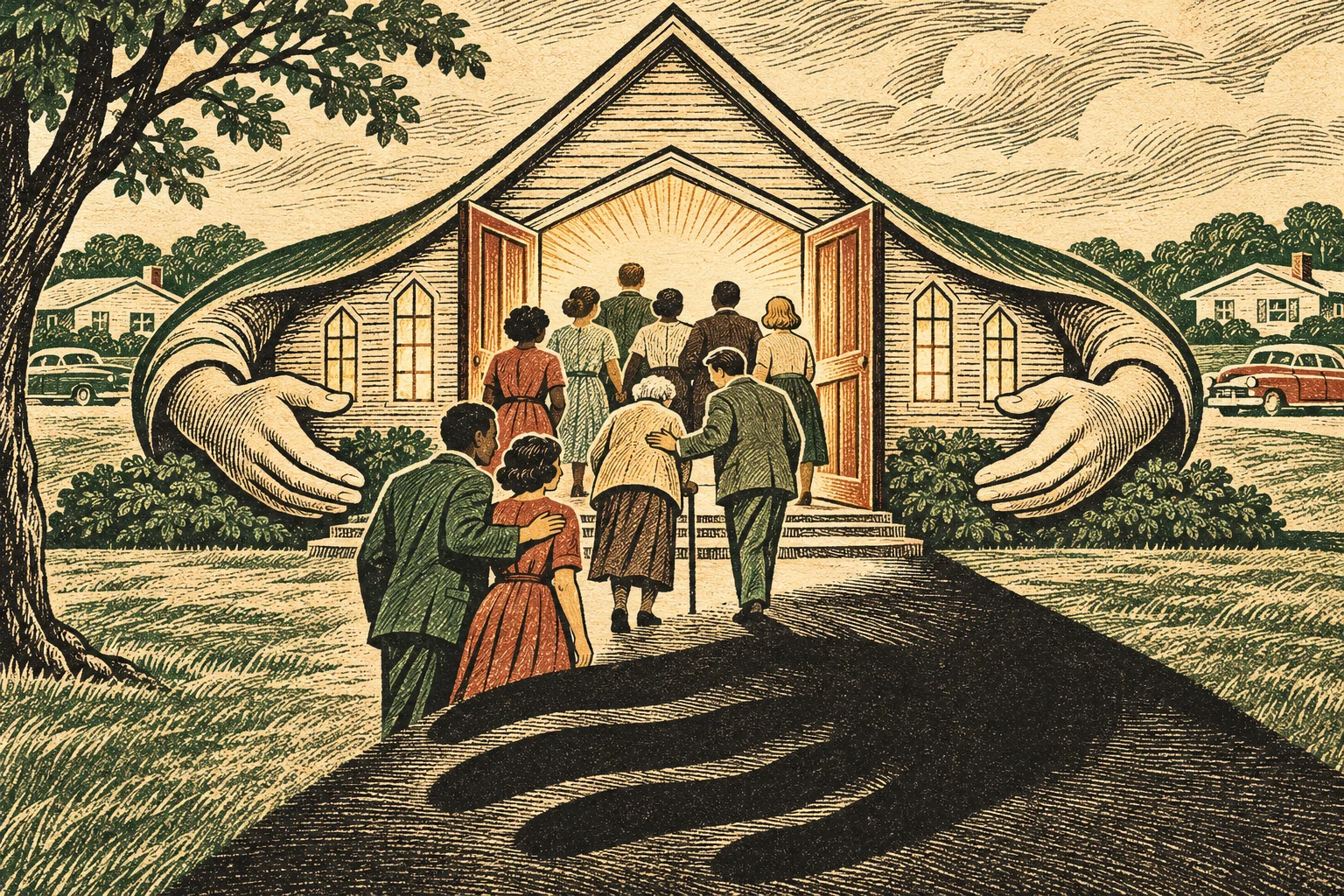
That is how the recruiting worked. Nobody signed up for a death cult. They signed up for an integrated church that gave them a doctor and a purpose. Deborah Layton, a former member, said so herself: “Nobody joins a cult. Nobody joins something they think is going to hurt them. You join a religious organisation, you join a political movement, and you join with people that you really like.” Johnston Kohl said Jones “figured out what he needed to do to manipulate each one of us into a position of being a believer. And I was a zealot. I mean, I bought it.”
The political machine
In 1965 Jones moved the group to California, which he liked for its progressive politics. They went first to Ukiah, which he picked because the media had described it as one of the few places on earth where people would survive a thermonuclear attack. In 1971 they moved to San Francisco. Members marched at demonstrations and worked for local candidates, George Moscone among them. Moscone, a liberal, won the mayoralty by a small margin and made Jones chairman of the City Housing Authority. The journalist Tim Reiterman wrote that “Jones had political power that few people, let alone preachers, could have imagined.” Walter Mondale, then running for vice-president, invited him onto his private jet in San Francisco, and Jones was in contact with Rosalynn Carter during Jimmy Carter’s presidential campaign.
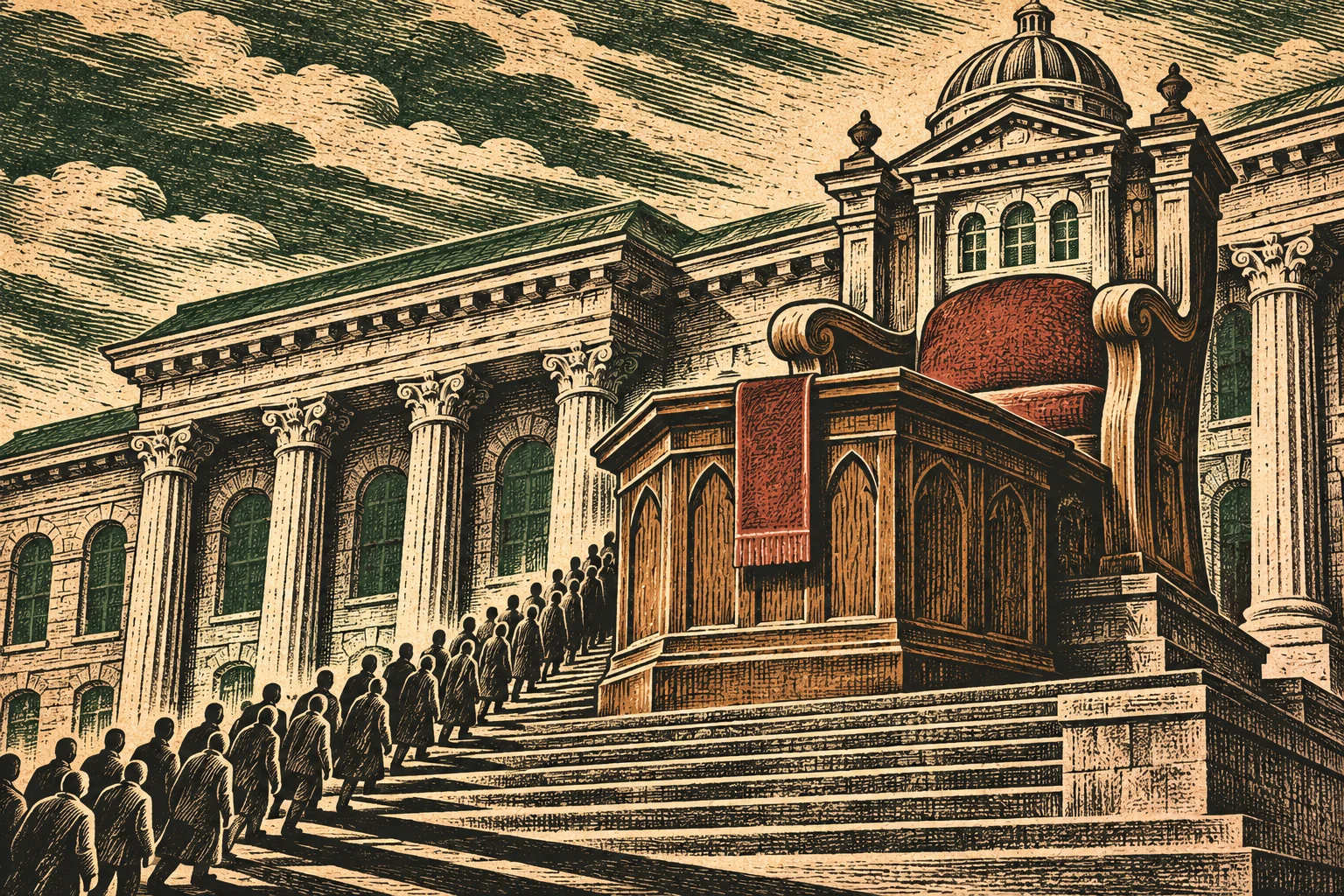
This is my reading, not anyone’s testimony, but the trade is easy to see. In a close race, a congregation that can produce disciplined volunteers on demand is worth a lot. What the politician gives back is legitimacy, and legitimacy makes the man who holds it much harder to question.
It was being spent by the mid-1970s. Jones was abusing amphetamines and barbiturates and growing more paranoid. In August 1977 an exposé appeared in which several people who had left the group said members were beaten in public as discipline. Marshall Kilduff, one of its writers, later said Jones was “a little unhinged… This guy’s getting away with a kind of double life.” Layton, who wrote about the group in her book Seductive Poison, put it this way: “what he spoke from the pulpit wasn’t what he did behind the scenes”.
Making exit impossible
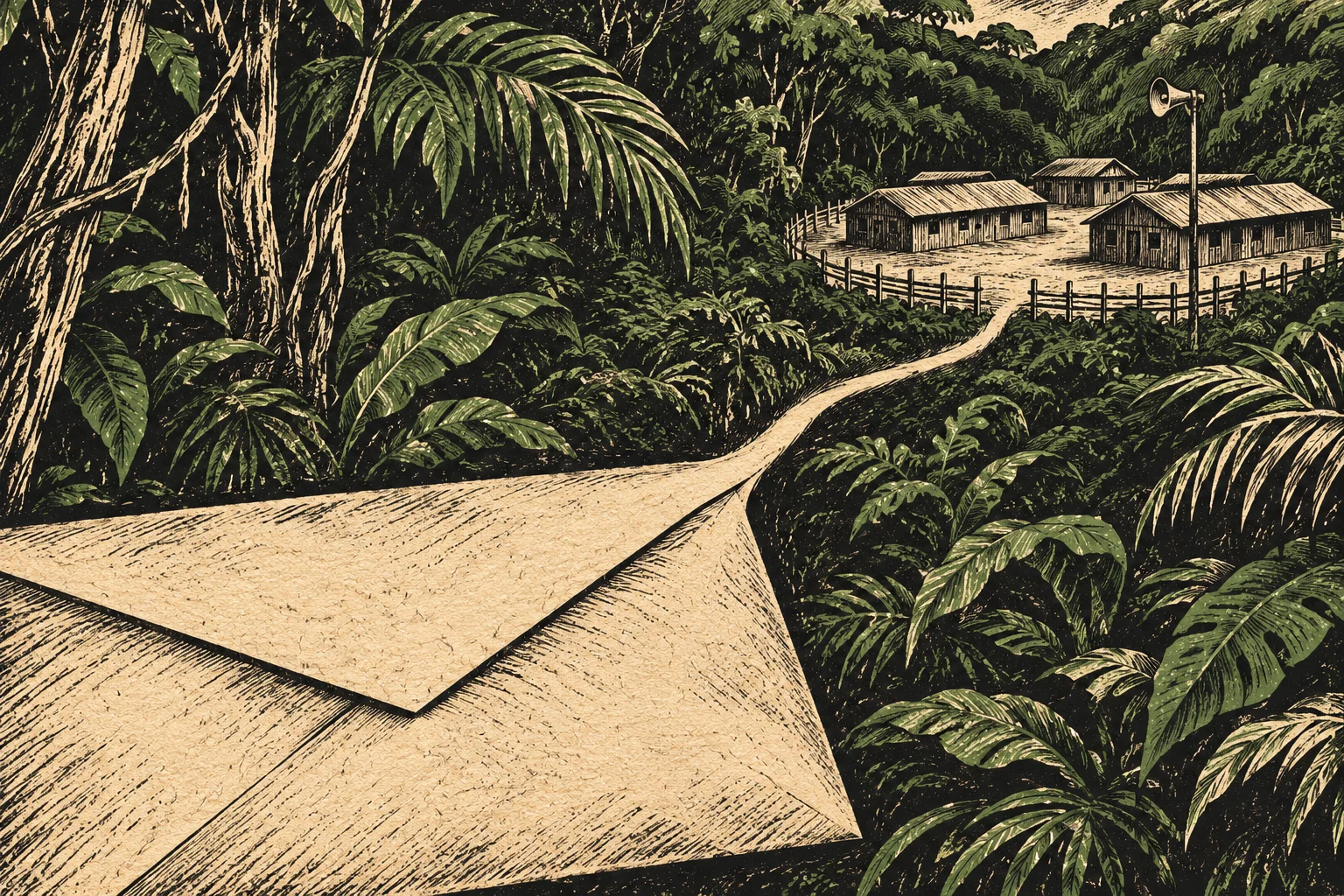
Worried about what the story would bring, Jones moved his followers to the settlement they had been building in Guyana. About 1,000 had gone with him the year before. Many of them saw Jonestown as the Promised Land. It also put them out of reach of their homes and families. “There was no radio, no BBC, no way to bring in any kind of information,” Johnston Kohl said. Jones’s taped voice played over loudspeakers across the camp at all hours. “So in the middle of the night, all through the night, his voice was talking to you,” Layton said. Rebecca Moore, whose two sisters and nephew died there, described “this pervasive sense of being under attack”. Members were told they could not go home and that hostile forces were on their way to Guyana. The pattern has recurred since; last month a Kenyan court convicted the preacher Paul Mackenzie of murdering 191 people in Shakahola forest.
Jones also ran “loyalty tests”: he told followers that someone close to them would try to escape and that they had to turn that person in. “A father would turn in a son. A husband would turn in a wife. A small child would turn in a parent,” said Vernon Gosney, whose son died in the massacre. “The most forbidden thing to express was to leave.”
The visit
The families did not give up. They got the Federal Communications Commission to investigate the Temple and ran letter-writing campaigns to officials. In November 1978 Congressman Leo Ryan of California went to Guyana after relatives contacted him. His aide Jackie Speier said: “The word we were getting was that there was an armed encampment.”
On the night of the visit, Gosney passed a note to a reporter: “Help us get out of Jonestown.” Speier said the NBC reporter Don Harris gave the delegation two notes from people who wanted to leave: “At that point we knew something was very, very wrong.” The next day another follower said they were being held prisoner. Ryan agreed to take a few people out. “When word got out that people were leaving, all hell broke out,” Speier said. Jones told people they could go, “But clearly that was not the message. The message was, ‘You are betraying me.’”
A follower threatened Ryan with a knife and the delegation left in a hurry. Temple gunmen ambushed them at the airstrip. Five people were killed. According to the Jonestown Institute’s account, they were Ryan, Harris, NBC cameraman Bob Brown, San Francisco Examiner photographer Greg Robinson and Patricia Parks, a member who was leaving. Speier and Gosney were among the wounded. The FBI took on the case under a congressional assassination law passed six years before, and Temple member Larry Layton was eventually convicted and sentenced to life.
Once the news reached the camp, Jones gathered everyone. He told them the US authorities would torture their children and old people in retaliation and that killing themselves was the only way out. “He lied to them every day – he fed them paranoia. They had no recourse,” Johnston Kohl told the BBC in 2018. The Institute’s count is 918 dead in Guyana that day: five at the airstrip, four in Georgetown and 909 at Jonestown. Tim Carter, who lost his wife, his son and other relatives, said: “Senseless waste and death.” Moore and her husband, Fielding M McGehee III, now run the Institute, which keeps the primary records.
For years, the officials best placed to ask hard questions about Peoples Temple were the ones it had helped get elected. The questions came from relatives writing letters, and the one congressman who answered them did not come home.