
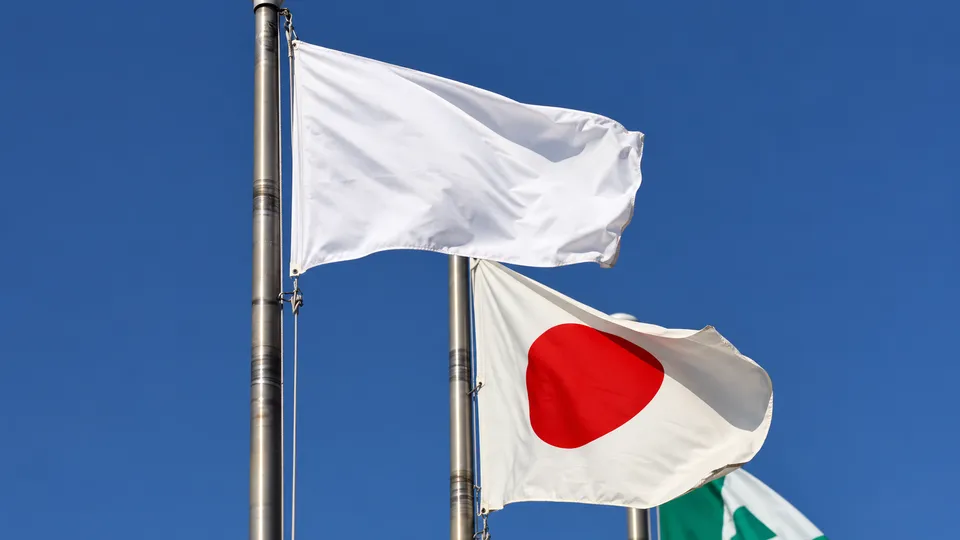
Imagine you run a Japanese manufacturer with operations in China. For most of your career the strategic question was how much bigger to get. Lately the question is how fast to leave, and the answer keeps getting faster. As of June, 10,118 Japanese companies were operating in China, according to Teikoku Databank, a Japanese corporate credit research firm — the lowest figure since it began tracking in 2010, down 22% from its previous survey in June 2024 and about 30% below the 2012 peak. (Do the division and that peak works out to roughly 14,500 companies.) Nor is it a gentle drift: over the past two years a record 4,137 Japanese firms fully withdrew, through subsidiaries, factories or representative offices, while only 1,221 entered, the fewest entries on record outside the Covid-19 pandemic.
The proximate cause is diplomatic. China-Japan relations went into what CNBC calls a tailspin last November, when Prime Minister Sanae Takaichi told parliament that Japan could get militarily involved in the event of a Chinese invasion of Taiwan. Beijing responded by curbing exports of critical minerals to Japanese companies and urging its citizens to refrain from travelling to Japan. Then came the detentions: several Japanese nationals, including executives at top Japanese firms, were reportedly detained in August over alleged violations of dual-use goods export restrictions, which concentrates the mind wonderfully if you are the executive deciding who flies to Shenzhen next month.
Japanese firms and their employees increasingly feel unwelcome and unsafe in China.
That was Jeremy Chan of the political consultancy Eurasia Group, who told CNBC that Japanese firms already planning to shrink their China footprint are now considering withdrawal ‘with greater urgency.’ But the diplomacy is layered on top of arithmetic that was already bad: Teikoku’s report lists shrinking profitability, tariff risks, rising labour and manufacturing costs, and cutthroat local competition, and expects the exodus to intensify. Martin Schulz, chief policy economist at Fujitsu Research Institute, adds U.S. tariffs, growing public resistance to Chinese goods and a growing Indian market to the pile. ‘Investment in China is weathering the perfect storm,’ he said. Some firms, Teikoku notes, have cut their dependence on China without fully decoupling — de-risking, in the vocabulary, which is decoupling with a return ticket you do not necessarily intend to use.
Where does the money go instead? Mostly to America, according to Jesper Koll, expert director at Monex Group. By his estimates, Topix-listed companies derived less than 15% of their profits from China so far this year, down from 23% in 2020, while the share from the U.S. rose to 35% from 25%. Washington, he says, is ‘openly courting’ Japanese companies for its re-industrialization push, while Beijing has shifted toward a ‘made in and made by China’ model — which is to say the Chinese market increasingly wants Chinese suppliers, and the American market is actively recruiting Japanese ones. A firm does not need to feel unsafe to read that; feeling unsafe just speeds up the reading.
Beijing, for its part, would like everyone to know the door is open. On Tuesday, a day after the Teikoku report, Chinese vice premier He Lifeng said China ‘always welcomes’ Japanese enterprises to develop business and share market opportunities. He also told a visiting delegation from the Japanese Association for the Promotion of International Trade to ‘keep to the right course on historical issues … and play a greater role in advancing China-Japan economic and trade cooperation.’ Translate that from the diplomatic: you are welcome, subject to agreeing about the past. A welcome that comes with a political condition attached is less a door than a terms-of-service agreement.
Not everyone is leaving at the same speed. Kei Koga, a professor at Nanyang Technological University in Singapore, told CNBC that automakers, parts suppliers and export-oriented manufacturers are the most likely to scale back, while firms that have localized and can compete with Chinese rivals — medical and precision equipment makers in particular — are more likely to stay. Which is its own small verdict: the companies best positioned to remain are the ones China needs least to court, and vice versa.
‘Unwelcome and unsafe’ is a diplomatic problem, and diplomats can, in theory, fix it. Unprofitable is a business problem, and nobody’s speech fixes that. At the moment China offers Japanese firms all three, and the welcome speeches have addressed none of them.