
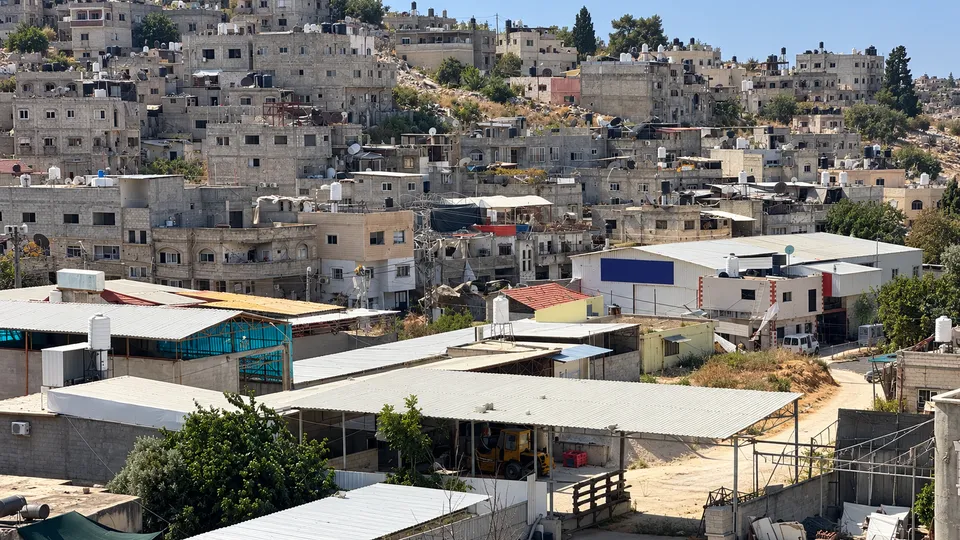
Israel’s Supreme Court on Sunday ordered the government to say when Palestinians driven from three refugee camps in the northern West Bank can return, and Finance Minister Bezalel Smotrich urged ministers not to comply.
The state has until Nov. 23 to respond. The ruling covers the Jenin, Tulkarem and Nur Shams camps, where 33,362 people remain displaced, according to a report cited by UNRWA, the UN agency for Palestinian refugees, titled Destruction of Palestinian Refugee Camps in the Northern West Bank. The UN says Israeli forces emptied all three camps in January and February 2025 and have barred residents from returning ever since.
Mr. Smotrich warned that letting residents back could allow “terror infrastructure” to be rebuilt, Al Jazeera’s Fayha Shalash reported. Last month he called for doing in the West Bank what Israel did in Gaza. Defense Minister Israel Katz said the troop presence in the camps was a security matter and that he intended to keep it.
Mohamad Halaseh, a specialist in Israeli affairs, told Al Jazeera that the right wing was trying to undercut the judiciary’s legitimacy, and he doubted the ruling would be enforced. He pointed to the state’s failure to follow court rulings on visits to Palestinian prisoners. “Declared political stances set a limit on the extent to which executive institutions comply with judicial rulings,” he said.
For the people who lived there, the question is concrete. Fuad Abu Salam, 42, who installs greenhouses, drinks his coffee every morning outside a rented apartment in Thinnabeh, a suburb that looks out over the Tulkarem camp.
His extended family lived in the camp in a two-story building with four apartments of 300 square meters (3,229 square feet) each. He fled with more than 40 relatives. Soldiers partly demolished the building and set it on fire, and more than 80 percent of it can’t be lived in. He, his wife, their four children and his mother now share an apartment of under 100 square meters.

“If a decision were issued right now allowing us to return, I would go back immediately,” Mr. Abu Salam said. He plans to rebuild from the rubble. “I will never waver in my resolve to return, even if it means pitching a tent over the ruins.”
Faisal Salameh, an official in the Tulkarem camp, said more than 2,000 housing units there had been completely destroyed and that about 90 percent of homes were partly damaged and unfit to live in. The camp’s roughly 15,000 residents are now in rented homes, with relatives or in schools, mosques and tin shacks. Israel “has turned the camp into an environment that drives residents away,” Mr. Salameh said.
In Nur Shams, about 400 homes, most of them three or four stories high, were destroyed and about 100 burned, said Nihad Shawish, a member of the camp’s committee. About 10,900 residents are still displaced. Some are sleeping in a school in Thinnabeh.

Mohamad Ararawi, 18, grew up in the al-Damaj neighborhood of the Jenin camp, in a five-story building that housed a family of 40. It was razed and replaced by a wide road. He, his parents and his five sisters moved into his brother’s unfinished apartment, where they have lived through “biting cold and scorching heat.”
By October 2025, 52 percent of structures in the Jenin camp had been damaged or destroyed, along with 48 percent in Nur Shams and 36 percent in Tulkarem, according to the report. Roads and water and electricity lines were hit and aid was cut off. Israeli forces killed 102 Palestinians in the camps during the period it covers, 21 of them children. That was 46 percent of all West Bank deaths caused by Israeli forces in that time.
The operation, called Iron Wall, began in the Jenin camp on Jan. 21, 2025, and reached Tulkarem and Nur Shams about a week later. The Israeli military said it was going after armed groups that had grown stronger in the camps. Some residents have since been allowed back once or twice to collect belongings, and many displaced families are sinking into debt, Al Jazeera reported last month.
The government’s answer to the court is due Nov. 23.