
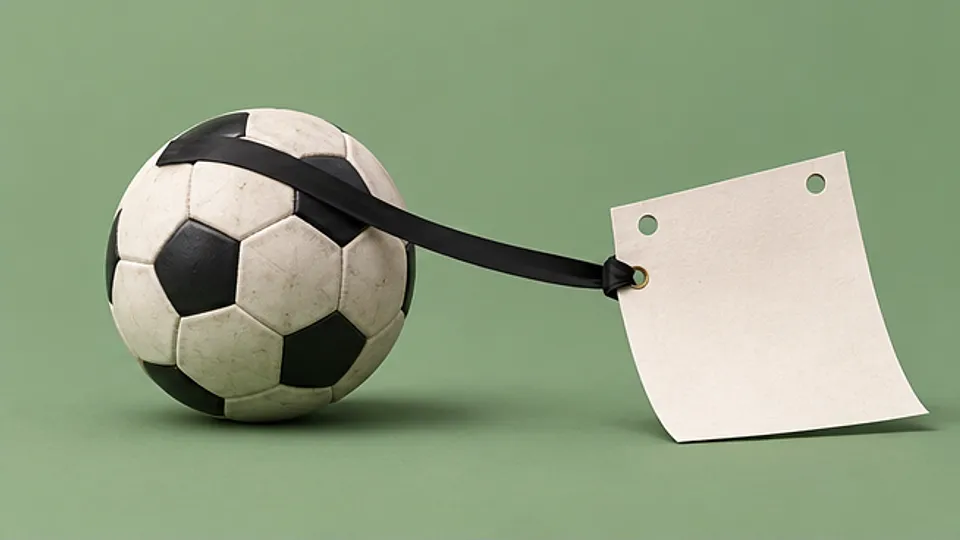
There is a genre of international football fixture that exists purely because the calendar says it must. UEFA’s Nations League draws teams into groups, the group requires everyone to play everyone else twice, and so on Sunday the Republic of Ireland and Israel met for the second time in this campaign — behind closed doors, on neutral ground in Backa Topola, Serbia, in front of no fans, in a match that ended 1-1 and was, in Al Jazeera’s description, “once again played out in a confrontational manner.”
Before kickoff, the Ireland players again wore black armbands in recognition of Palestinians killed in Gaza, bowed their heads during the Israeli national anthem and refused handshakes with their opponents, as they had in the first meeting between the sides. The formality of football — anthems, handshakes, a crowd — was stripped almost entirely away. What remained was the minimum: ninety minutes, because the competition structure and its penalties require the ninety minutes to happen.
Whether the match should happen at all had been a genuine question in Ireland, where public affinity with the Palestinian cause runs strong. Campaigners called for a full boycott of the fixture, and the matter ran deep enough that the players themselves held a vote on whether to play, deciding to fulfil the fixture rather than refuse, according to The Athletic. The Football Association of Ireland, for its part, had done the arithmetic on what walking away would cost: The Athletic reported the FAI reckoned it could lose up to €10 million through a boycott, alongside the six Nations League points from the two Israel matches and the risk of relegation to the competition’s third tier — a drop that would mean less attractive opponents, lower revenues and a worse seeding.
So the compromise, such as it is, looks like this: the matches get played, the points get contested, UEFA’s calendar is satisfied, and the Irish players use the pre-match ceremony to make their position unmistakable. It is a protest that fits inside the fixture list rather than one that breaks it — armbands and bowed heads instead of a forfeited game and an eight-figure hole in the accounts.
The pressure has not been subtle, either. Before the squad departed for the first match, protesters gathered outside the team hotel in Dublin, and the SIPTU trade union put up a large poster by the River Liffey urging the players to “Go with your conscience!” and “Don’t play with genocide,” beside an image of a blood-splattered ball, the Associated Press reported. The players played anyway, and then made their statement on the pitch, twice.
UEFA, meanwhile, got exactly what its rules are designed to produce: two completed fixtures, no forfeits, no disciplinary crisis, and — thanks to the closed-door, neutral-venue arrangement — no images of a hostile crowd. The governing body’s incentives run toward matches being played quietly and controversies being contained. Consider them contained: a draw, an empty stadium, and a protest conducted in fifteenths of decibels before anyone had even kicked a ball.