
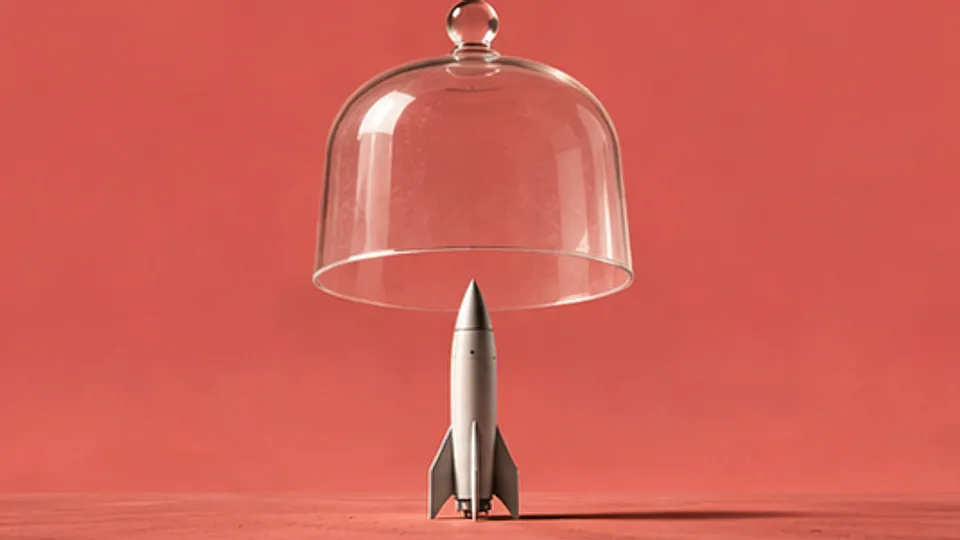
Two thousand kilometres is the range Iran’s leadership told the world, starting around 2015, its ballistic missiles would never exceed. The cap was never a technical ceiling. It was policy, revealed in 2017 by then-IRGC commander Mohammad Ali Jafari as an order from Supreme Leader Ali Khamenei, and later explained by Foreign Minister Abbas Araghchi in plain terms: “We have capability to produce missiles, but we have intentionally limited ourselves to below 2,000 kilometres of range because we don’t want to be felt as a threat by anybody else in the world.” On Saturday, IRGC spokesman Brigadier-General Hossein Mohebbi told a Tehran news conference, as Al Jazeera reported, that the policy is over: “This limitation has been lifted for us.”
Mohebbi did not say Iran has fielded a missile that flies farther than 2,000km. Asked directly, he said Iran would “demonstrate these capabilities in practice” rather than in statements. That is the gap between the headline and the hardware: a policy reversal is a sentence at a press conference; a missile with a new range is a flight test, a launch, a trajectory that radar and satellites can log. None of the reporting around the announcement points to the latter.
Mohebbi also told the briefing that the IRGC Aerospace Force is preparing “surprises … on the battlefield” and that “Iran’s next blows will be even harder” if a new round of fighting starts with the US and Israel, according to Arab News. He described plans to unveil underground “missile cities” built to let the Aerospace Force keep manufacturing missiles and drones during bombardment, and said that if Iran changed its nuclear doctrine toward building a weapon, the necessary preparations would follow. The announcement came days after a statement attributed to Iran’s Supreme Leader, Mojtaba Khamenei, warning that any US or Israeli threat “of any kind and level” would be met without geographic limit, per Al Jazeera.
What 2,000km already reaches
The old cap was never restrictive where it mattered to Tehran. At 2,000km, Iranian missiles already cover the Arabian Peninsula, the Levant, most of Egypt, and parts of southeastern Europe: Greece, Bulgaria, Romania, Albania, North Macedonia and Serbia. Gulf states, which have faced repeated Iranian missile fire since the US-Israel war began on February 28, see little practical change from the announcement, since they were already inside the ring. What changes, on paper, is reach toward Europe’s interior, the UK, and bases further afield, including in the Indian Ocean.
The chart lays out the four numbers actually in circulation, and they don’t agree, because they come from different methods. The 3,000km figure is a 2019 British, French and German technical model of Iran’s Khorramshahr missile flying with a lighter warhead, not a flight test Iran conducted. The 4,000km figure is a distance, not a demonstrated range: how far Diego Garcia sits from Iran, cited by the UK after accusing Tehran of firing at the base. The 5,000km figure is an analyst’s estimate of a ceiling, explicitly flagged as uncertain. Only the 2,000km figure was ever Iranian policy.
The Diego Garcia case
The clearest evidence that Iran can already exceed 2,000km predates Saturday’s announcement by almost eight months. On March 21, the UK said Iran fired two missiles at the joint US-UK base on Diego Garcia in the Chagos Islands, about 4,000km from Iran. UK Communities Secretary Steve Reed told the BBC, as CNBC reported: “Our assessment is that the Iranians certainly targeted Diego Garcia. As we understand it, one missile fell short, failed.” A US warship shot down the other, according to the Wall Street Journal’s reporting at the time. Iran denied firing at all, calling the episode “an Israeli false flag.” NATO Secretary General Mark Rutte said the alliance “cannot confirm” Iran was behind the launch, as Middle East Eye reported.

Doha Institute analyst Muhanad Seloom, also an honorary fellow at the University of Exeter, told Al Jazeera the Diego Garcia episode already made Tehran’s point regardless of who officially confirms it: “Iran denied doing that, but they wanted to signal that they have the capacity. So yes, they do have the capacity.” Seloom put a rough ceiling on that capacity at around 5,000km, while cautioning that range and effectiveness are “a totally different story” — a missile that can fly 5,000km still has to survive a flight that long, carry a useful payload, and land close enough to a target to matter, against defences that get more time to react the farther the missile has to travel.
Sizing the force behind the claim
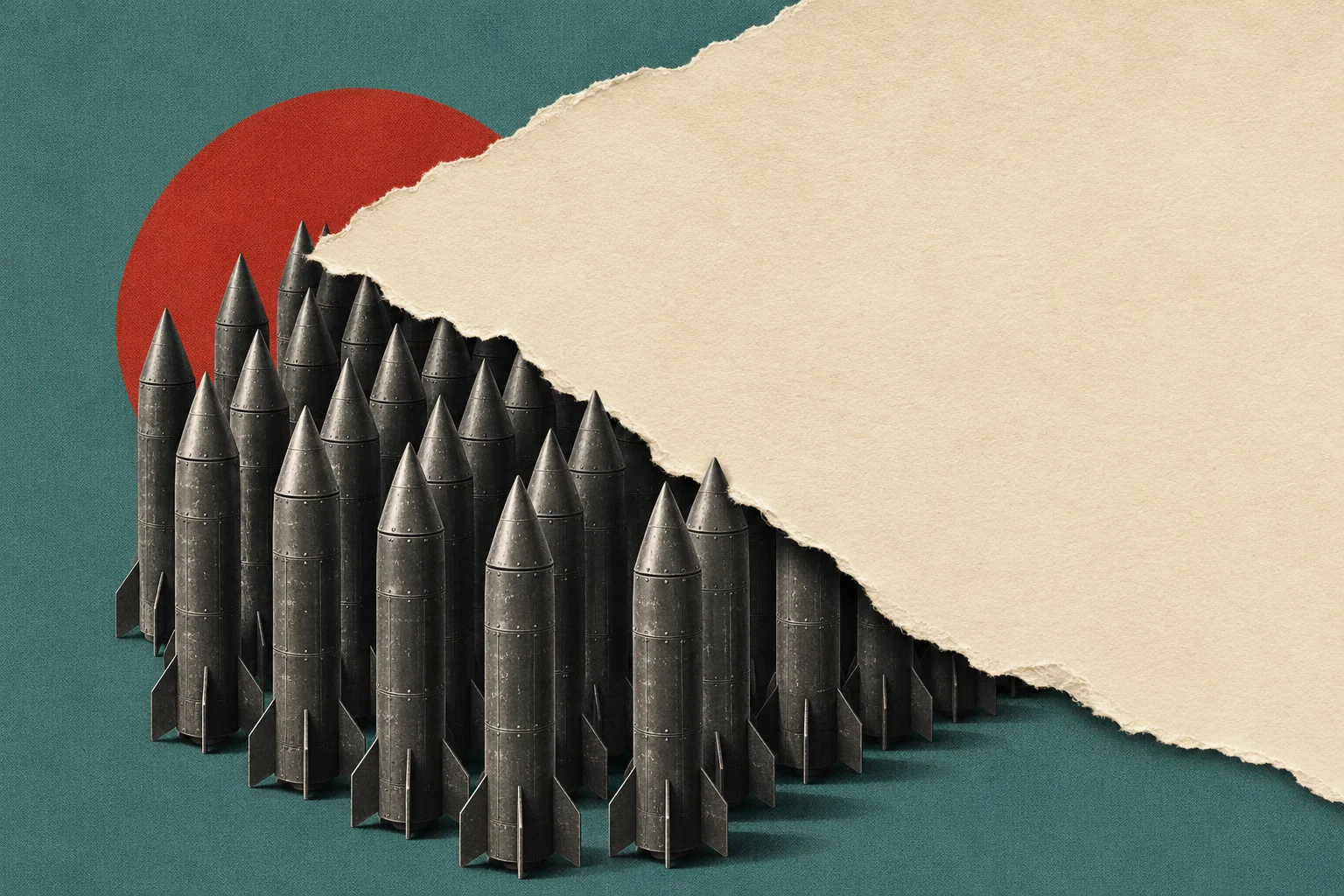
Before the war that started in February, Iran held what US and Israeli officials called the largest ballistic missile stockpile in the Middle East, though estimates span a wide range: Israeli military intelligence put it at roughly 2,500 to 3,000 missiles, former CENTCOM commander Kenneth McKenzie said Iran had “over 3,000,” and other analysts put the figure as high as 6,000. The spread reflects how hard the number is to verify independently, not a disagreement over one dataset. Israeli intelligence had separately projected, before that war, that Iran was on course to expand the arsenal to 8,000–10,000 missiles within two to three years, a volume meant to overwhelm regional missile defences by sheer count rather than by individual sophistication. How much of that stockpile and production capacity the February–March war destroyed is itself disputed, and outside what Saturday’s announcement settles.
Why there is no UN rule left to break
Iran’s claim to be unconstrained rests on more than a change of mind. UN Security Council Resolution 2231, which endorsed the 2015 nuclear deal, carried missile-related restrictions that expired automatically on October 18, 2023; Iran’s Foreign Ministry declared that day that it was no longer bound by “any restriction with regard to its ballistic missile-related activities,” as reported at the time. Separately, France, Germany and the UK triggered the deal’s “snapback” mechanism in August 2025 over Iran’s uranium stockpile, which the IAEA had measured at 48 times the JCPOA limit, and UN sanctions on Iran were reimposed on September 27, 2025, after a China-Russia bid to extend Security Council consideration of the issue failed, as CNN reported. Tehran called the reimposition “unjustified.” Lifting a self-imposed cap costs Iran nothing in UN law that the UN hadn’t already spent.
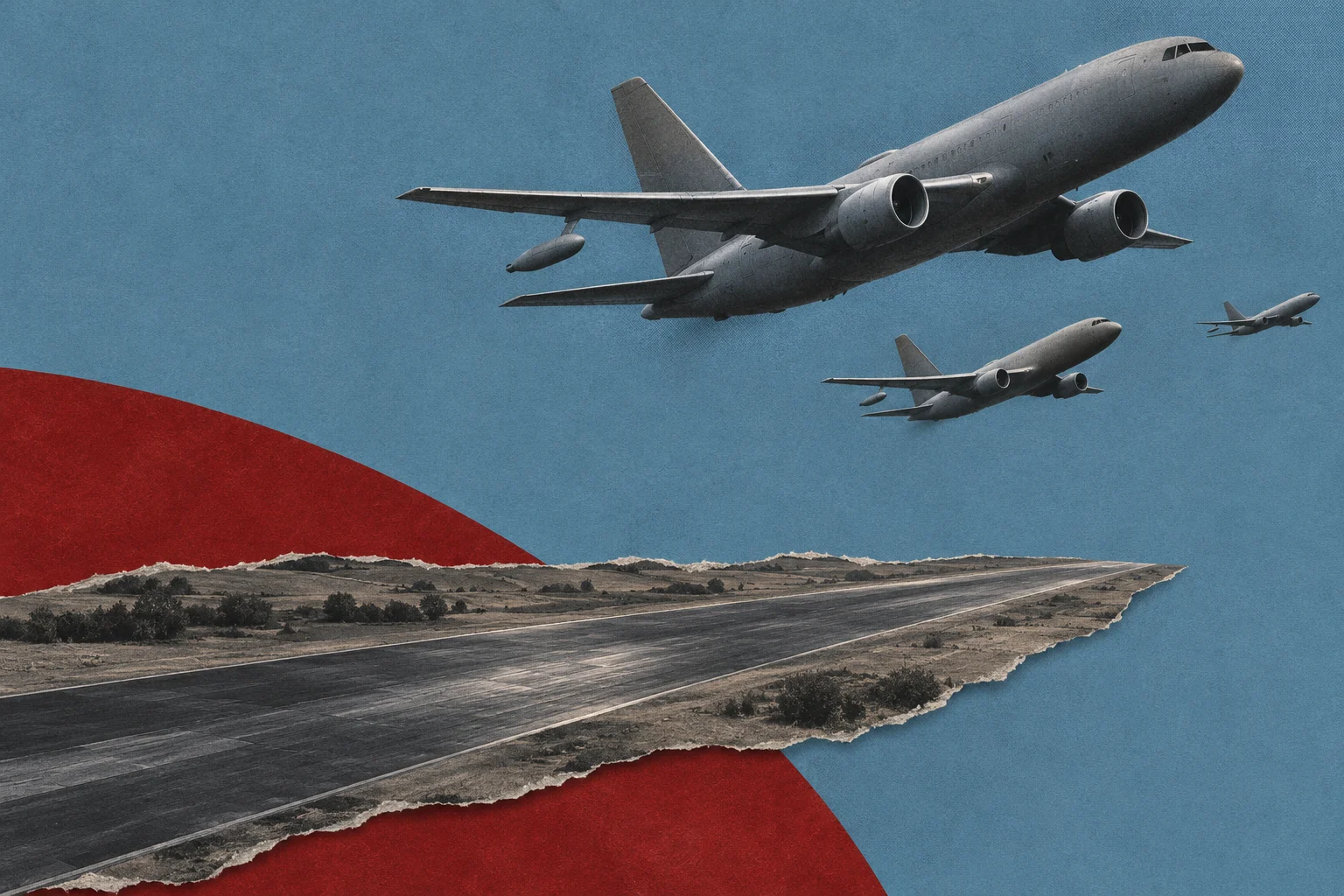
The practical signal since the war began has shown up less in Tehran’s statements and more in where the US and UK move aircraft. Iran warned Bulgaria three times against hosting US refuelling tankers at Bezmer air base before Sofia’s parliament approved up to eight KC-135s there in July; the tankers left on August 21. UK Prime Minister Andy Burnham said this month the IRGC was “almost certainly” behind a suspected plot against RAF Fairford, used by US bombers that have struck Iran, and the US pulled jets from the base over security concerns. On Monday the US evacuated aircraft from RAF Mildenhall “in the wake of a threat from Iran,” the Wall Street Journal reported, relocating tankers to Germany and other sites. The UK Ministry of Defence’s line — “Aircraft and other assets move regularly according to operational requirements” — is the kind of sentence written to say as little as possible while something is clearly happening.
Deterrence, leverage, or both
Seloom reads the timing against the US political calendar: Iran, he argues, sees a narrow window before the new Congress convenes in January, when President Trump may want a deal he can present as finished. Asked whether lifting the cap is deterrence aimed at Washington and the European governments hosting US aircraft, or a bargaining chip to trade away in negotiations, Seloom said: “It’s both.” He called the reaction in Europe “worrying … but not alarming,” since any missile aimed at the UK or continental Europe would take long enough in flight to give NATO warning and an interception window. He also warned the calculus could flip if Iran gets framed, as Iraq was before 2003, as a Security Council-level threat rather than a regional one: “When you give them the idea that you have only one option, is to die … they can do anything. There would be no red lines.” Trump has already framed destruction of Iran’s missile program as a war aim — “We are going to destroy their missiles and raze their missile industry to the ground,” he said, a line echoed by Defense Secretary Pete Hegseth — while CENTCOM has kept new strike options on the shelf. Tehran, for its part, has said it will fire on US warships if Trump orders another round. What would actually confirm Saturday’s announcement is a flight test or a strike beyond 2,000km that independent trackers, not Tehran’s own statements, can measure. Nothing in the reporting so far clears that bar.