
Some roads outlast every power that tries to rule them. In West Jutland, between the towns of Varde and Korskro, the asphalt of Route 11 lies over one of them, an old track that carried people and armies and cattle long before anyone thought to give it a number. The Danish Road Directorate now wants to widen it. Before the machines come, the archaeologists go in.
A line in the field
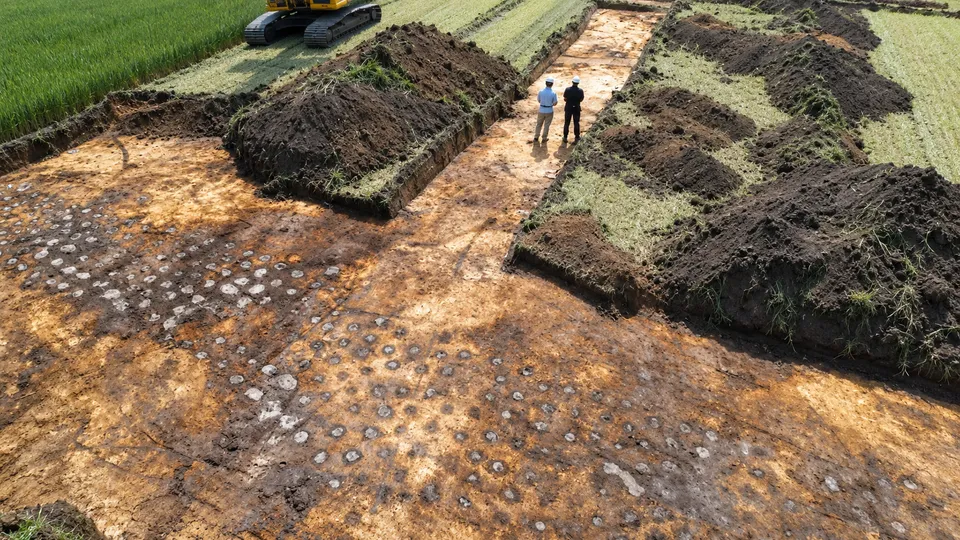
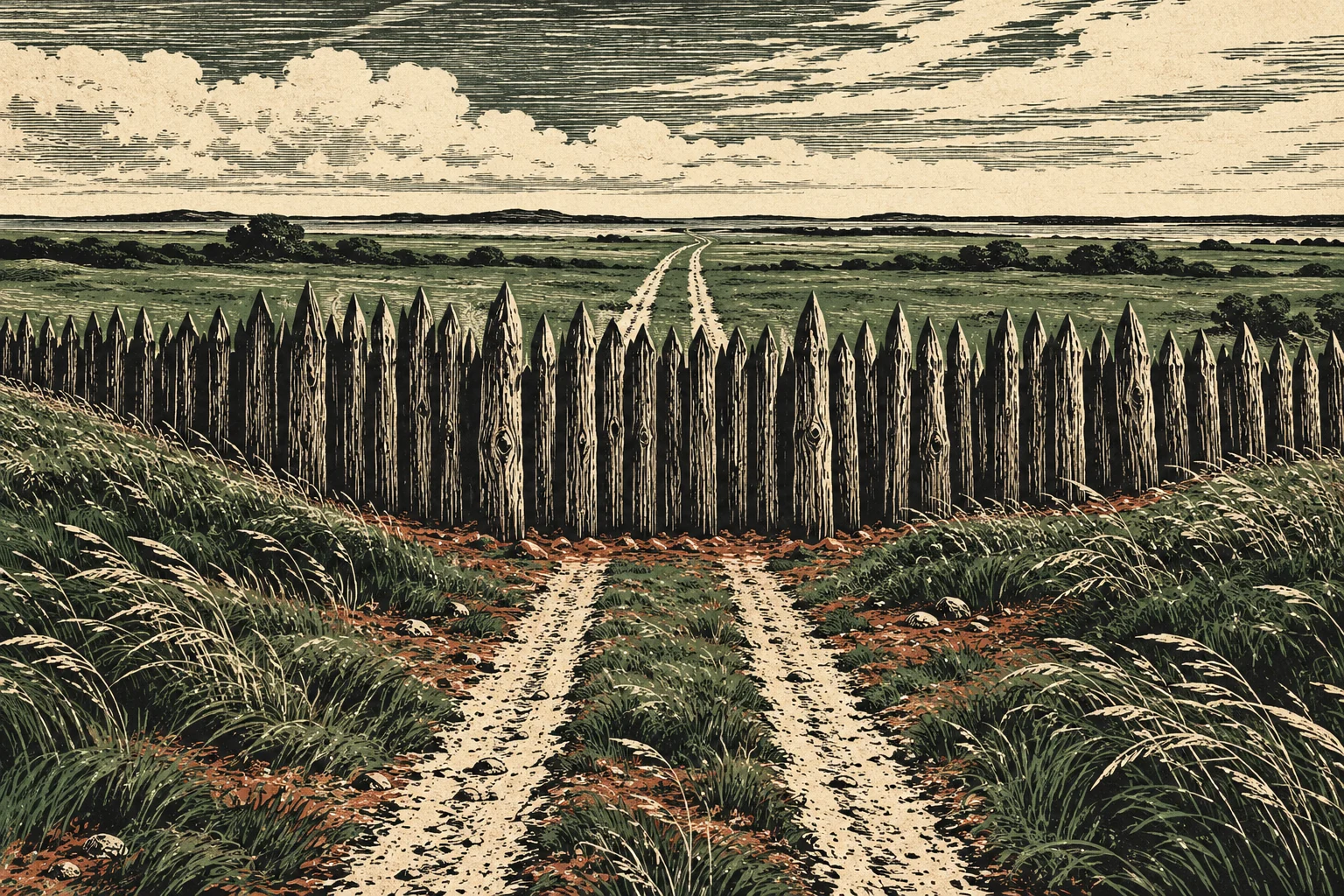
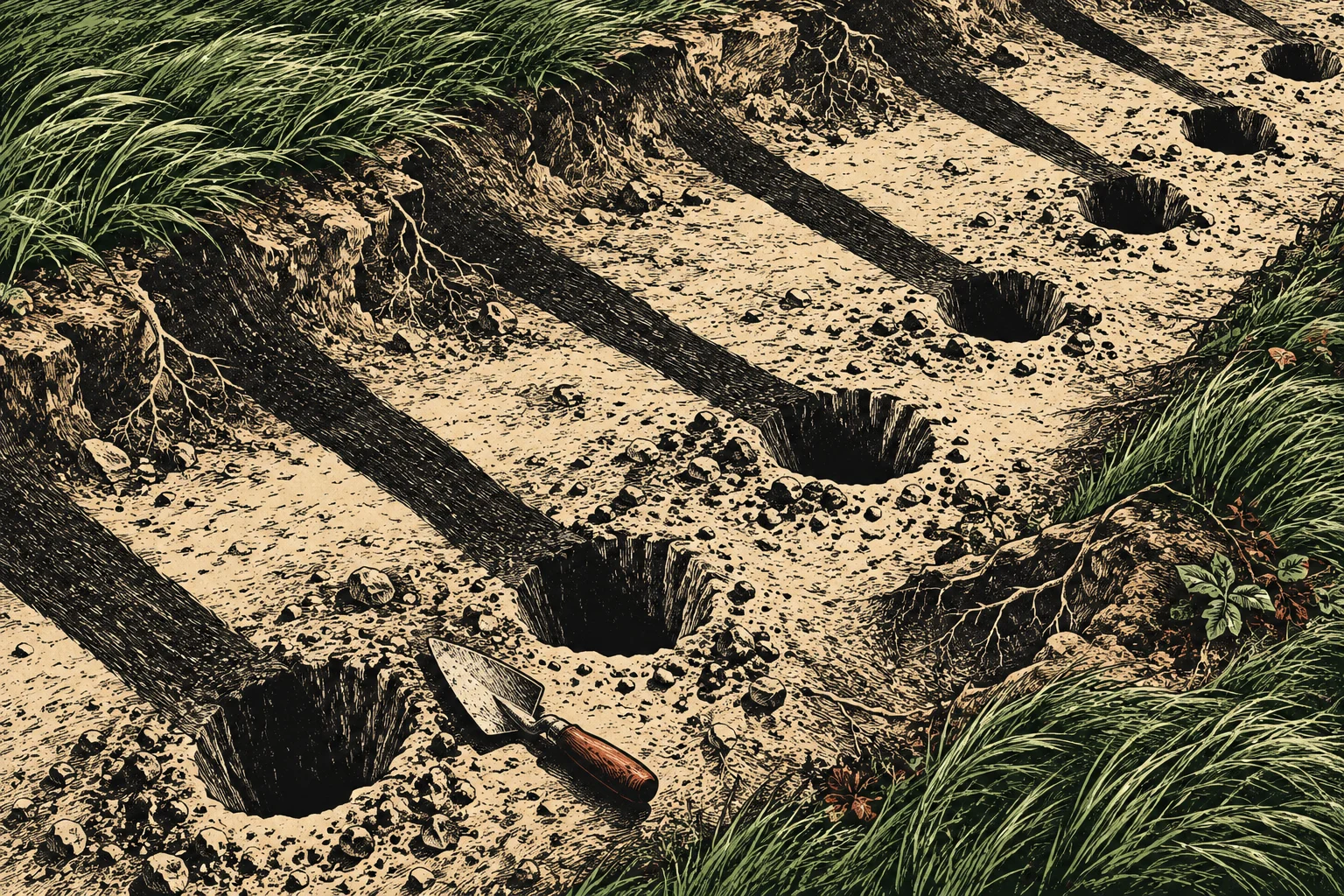
Archaeologists from Museum Vest have been opening the fields along the road, and as Arkeonews reported, what started as the routine survey that comes before construction has grown into something larger. Beneath a field near Schæfergårde, close to Korskro, they found a long row of postholes set tightly together. They think the holes once held sharpened wooden stakes. A row of stakes like that is a palisade, and a palisade exists to stop people passing.
It dates to about 500 BC, the very start of the Iron Age in Denmark. Its position is the strongest clue to its purpose. The line ran across Drivvejen, the ancient route that served as the main corridor through western Jutland for centuries and probably for much longer. Much later, the road’s network carried herds of cattle south to markets in northern Germany and the Netherlands. Today, as a hiking trail, it runs for about 200 kilometres through Tønder, Ribe, Varde, Skjern and Holstebro.
An enemy without a face
Michael Alrø Jensen, an archaeologist and curator at Museum Vest, calls the find entirely unexpected. He says it may point to conflicts in this part of the country that no one had documented before. In the press release issued on 21 October, his best guess is that the people living here feared an army coming down Drivvejen from the north, and tried to control the passage and block it.
That reading is a reflection, not a finding, and it is an old one. A ruler, or a community that has no ruler yet, looks north and sees only the road: the direction danger will come from, the shortest way to its own fields and houses. The answer is wood and labour. Somebody had to cut the trunks, sharpen them, and dig the holes close together across a route that everyone used. It costs a society something to close its own door.
How little is known matters as much as what was found. The archaeologists cannot say who built the barrier or whom it was meant to stop. Nothing shows that a battle was ever fought there. The museum plans to keep searching the surrounding ground for more stretches of the posthole line, and hopes it will show whether the barrier was one part of a larger defensive system.
For now there is a wall with no name and an enemy with no face.
The axe in the grave
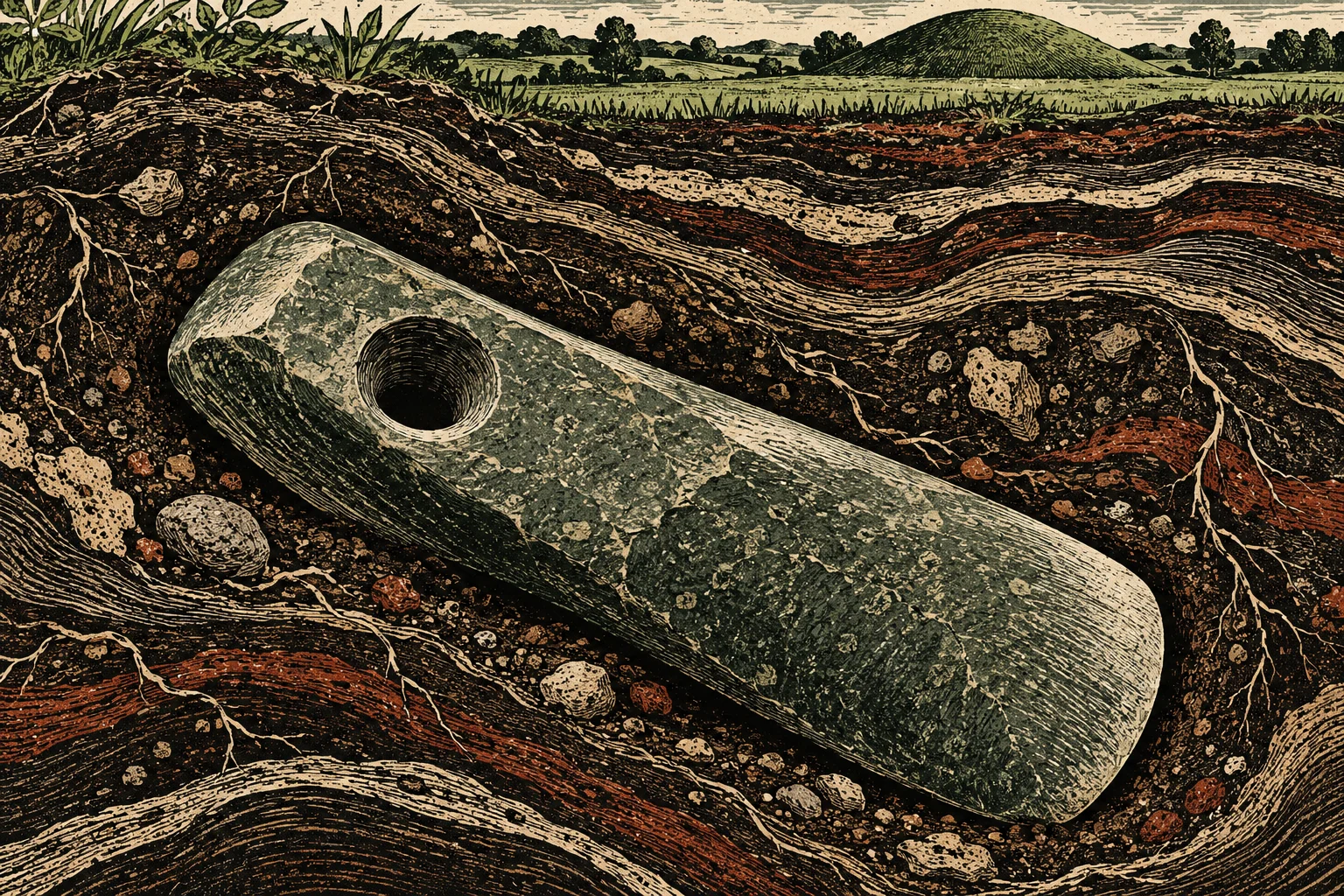
The second surprise came from much deeper in time. Near one of the area’s protected burial mounds, in a Stone Age grave that is still being excavated, the diggers found a battle axe about 4,500 years old. The researchers believe it was put in the grave on purpose, as an offering for someone who may have been seen as a warrior. They stress that this interpretation is tentative.
It would be easy to tie the axe and the stakes into one story of war in the west. They do not belong together. The axe is roughly 2,000 years older than the barrier, and the two come from separate periods that have nothing to do with the same conflict. What links them is only the ground: a small piece of western Denmark where people kept coming back to live, to farm and to bury their dead.
What the road turns up
The excavations have also uncovered houses, farms, graves and burial urns. They run from the first Stone Age farmers through the Bronze and Iron Ages to the Viking Age. Very few digs had been carried out between Varde and Korskro before, and Museum Vest says the finds have greatly expanded what is known about the area’s history. The farm buildings may help researchers follow how scattered farmsteads gradually gave way to more organised villages. With so many periods in such a small strip of land, the archaeologists have a rare chance to piece together an unbroken history of who settled here and who passed through.
The work will continue through the autumn, including around further burial mounds where urns have already been found. Under the Road Directorate’s plans, about 10 kilometres of the road will be turned from an ordinary two-lane road into a 2+1 road with an added lane, and a new cycle path will be built alongside. The directorate says construction is expected to begin in early 2027 and end in 2028.
The modern state is widening the road so that traffic flows more freely and more safely. Twenty-five centuries ago, someone on the same route drove stakes into the earth to stop whoever might come down it.