
Mohammed Abu Hijleh still finds it hard to believe that his mother is gone. She died just over a week ago; she had suffered from nothing more than diabetes. Zahriya Abu Hijleh, 66, was at her niece’s wedding reception in her hometown of Deir Istiya, northwest of Salfit, on September 20, when she suddenly felt dizzy and collapsed, Al Jazeera reports.
Her death comes as the accounts of ordinary Palestinians and of human-rights monitors converge on the same point: the restrictions Israel imposes on movement between the cities, towns and villages of the occupied West Bank can alter a Palestinian’s life in an instant. Al Jazeera’s reporting links the tightening of movement restrictions — road blocks, closed gates, checkpoints that open late or not at all — to delayed medical care across the territory, with journeys that used to take minutes now stretching into hours.
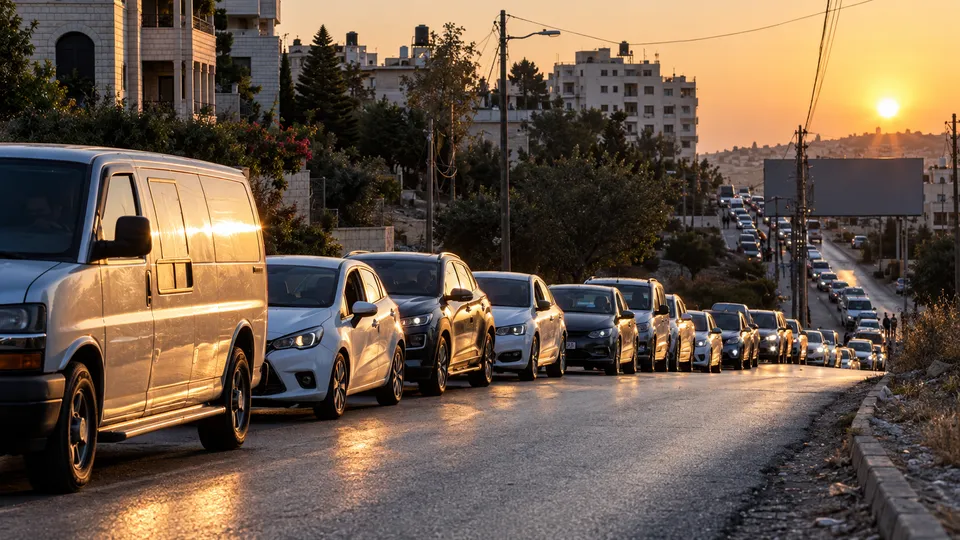
The immediate backdrop is the Jewish holiday of Sukkot. Middle East Eye reported on September 28 that Israeli forces had stepped up restrictions across the occupied West Bank during the holiday, blocking roads, limiting movement and causing hours-long waits at checkpoints. Around Ramallah and al-Bireh, military closures left thousands of Palestinians stranded for hours at major checkpoints, disrupting travel, work and access to medical care, according to Türkiye’s A News.
The scale of the barrier network is itself a number worth pausing on: 942 Israeli obstacles — checkpoints, gates, roadblocks and earth mounds — now segment the West Bank, according to a report by the Palestinian Information Centre, which cites recent UN documentation of how movement restrictions have hardened into a system of isolation affecting daily life: work, school, farmland, hospitals. Between a village and the next town, or between a house and its agricultural land, an iron gate decides the route, the length of the journey, and the price of getting anywhere at all.
For the families caught inside that system, the abstraction resolves into single mornings. A woman at a wedding feels dizzy and falls. How quickly an ambulance can move, which road is open, which gate is manned — these become the medical questions, ahead of any question a doctor might ask. Israel says such closures are security measures, tightened further around Jewish holidays; Palestinians living under them experience a geography that changes by the day, in which a diabetic collapse at a family celebration can become, in her son’s disbelieving phrase, a death.
Zahriya Abu Hijleh’s family is now mourning her. The checkpoints that shaped her last evening remain where they were.