
The phrase was offered as a programme, not merely as a description of the age. After meeting Vladimir Putin in Shenzhen on Wednesday, Xi Jinping said China and Russia should “lead and advance the trend towards a multipolar world”. The two presidents held bilateral talks on the sidelines of the Asia-Pacific Economic Cooperation summit in the southern Chinese city.
The setting gave the words a particular weight. APEC was created around the practical business of a vast region: trade, growth and the management of economic proximity. Yet the language emerging from Shenzhen concerned rank, authority and the right to shape international relations. According to Al Jazeera’s report, Xi placed Beijing and Moscow at the head of a movement rather than presenting them simply as participants in an already changing order.
The former rulers
Putin supplied the harsher vocabulary. He called Western powers “former hegemons” and described Europe as being in a “humiliating decline”. In the Guardian’s live coverage, he also said the anti-Russian sanctions imposed after his invasion of Ukraine had backfired and had instead made Russia stronger.
These are claims of political fortune as much as economic measurement. A government under sanctions has an interest in presenting endurance as vindication; a government seeking partners has an interest in presenting the old distribution of power as finished. The record supplied here establishes Putin’s assertions, not an independent verdict on either Europe’s condition or the full consequences of sanctions.
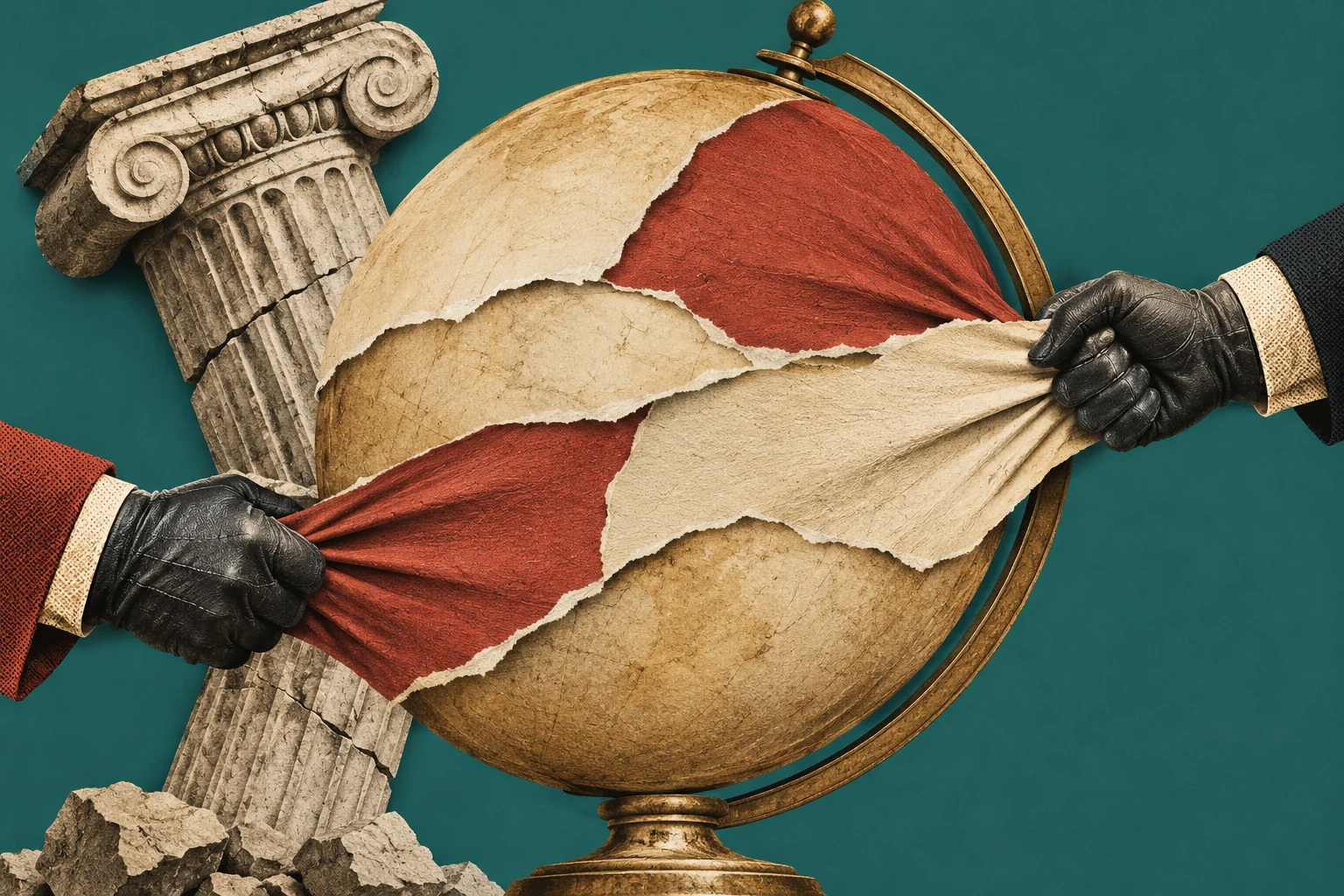
Xi’s formulation was more architectural. Where Putin spoke of hegemons receding into history, Xi spoke of leadership in constructing what would follow. Together, the statements joined two propositions: that Western predominance is weakening, and that Beijing and Moscow should help organise the successor system. That second proposition is the larger one. Multipolarity can describe the existence of several centres of power; the demand to lead its advance assigns particular states a role within it.
A crowded stage
The bilateral meeting was not taking place in an empty theatre. Deutsche Welle reported that Xi, Putin and US President Donald Trump greeted one another at the Shenzhen summit, a day before trilateral talks between them. Thus the call for a world of multiple poles came while the representatives of three principal powers were preparing to sit together.
That proximity is the useful fact beneath the rhetoric. The old language of leadership has not disappeared; it has been multiplied. In Shenzhen, Xi and Putin did not demonstrate that Washington or Europe had ceased to matter. They asserted, before an audience that included the United States, that the authority to define the international order should no longer be treated as Western property.
A summit communiqué can measure agreements in trade and protocol. A phrase such as “former hegemons” measures something less tangible: the confidence with which rulers now pronounce an era finished. For the smaller states watching, the practical question remains how a multipolar order would allocate room for those whom none of the poles consults before speaking.