
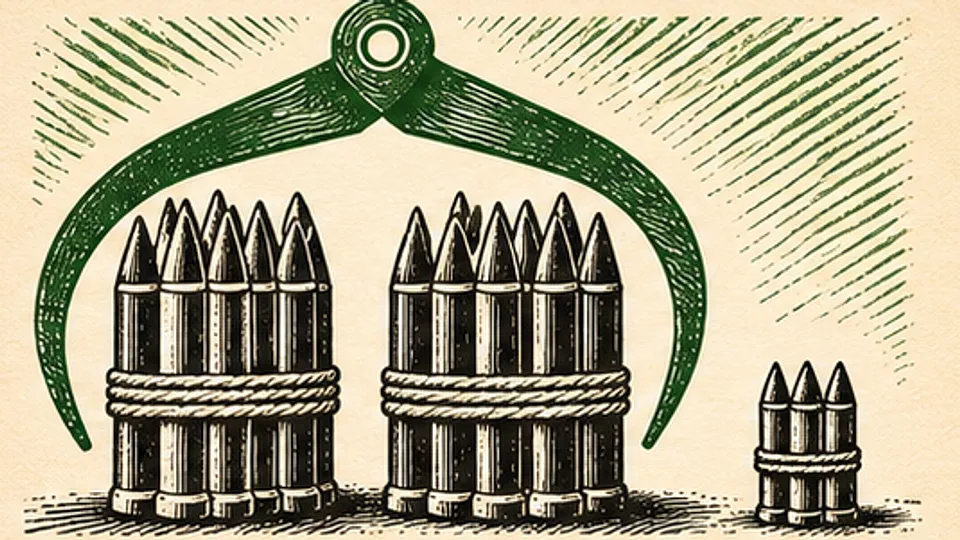
On Thursday, 19 November, in Shenzhen, the southern Chinese city of factories and screens that is hosting this year’s Asia-Pacific Economic Cooperation summit, three men will sit at one table for the first time. Donald Trump, Xi Jinping and Vladimir Putin command the three largest nuclear arsenals on earth. The White House announced the meeting on Friday, the Kremlin confirmed it on Saturday, and China’s foreign ministry confirmed it on Monday. Each capital spoke on a different day.
The American president wants a new nuclear arms treaty, and he wants all three countries in it. As Urooba Jamal sets out for Al Jazeera, the host of the summit is the country least willing to sign one.
The treaty that lapsed
For more than half a century, Washington and Moscow lived under written limits. The first START ran from 1991 to 2009. START II was signed in 1993 and never took effect, and Russia walked away from it in 2002. SORT lasted from 2003 to 2011. Then came New START, signed in 2010 by Barack Obama and Dmitry Medvedev and extended for five years in 2021 under Joe Biden. It capped each side at 1,550 deployed strategic warheads and 700 long-range missiles and bombers, with up to 18 inspections a year.
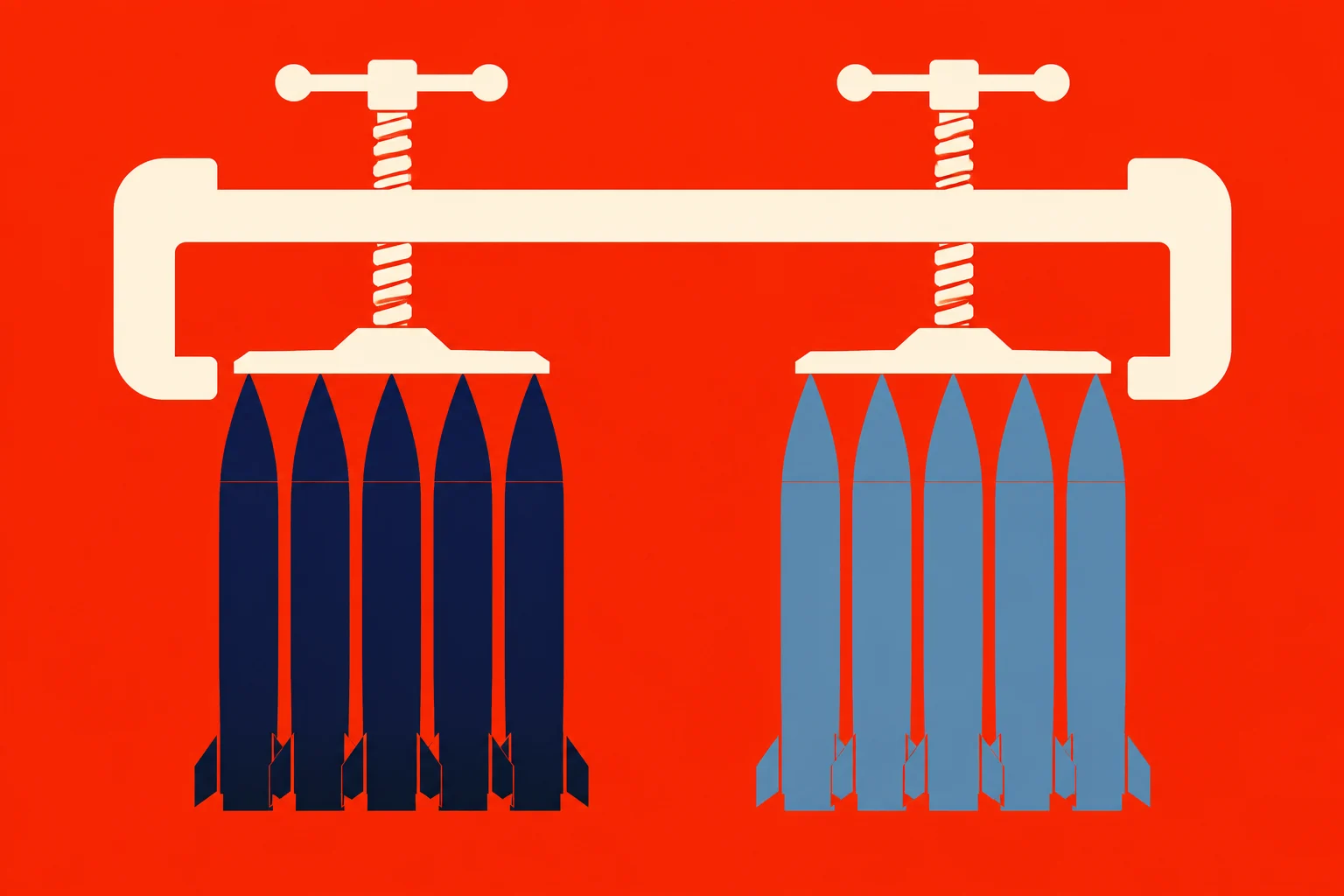
The inspections stopped first, in 2020 because of COVID-19, and the 2022 invasion of Ukraine kept them stopped. The treaty itself expired in February 2026. Russia offered to extend it. Trump said no, holding out for something “new, improved and modernised”, with China inside.
So for most of this year the two powers that together hold about 86 percent of the world’s nuclear warheads have had no treaty limiting their arsenals at all.
Washington’s arithmetic
The American argument is plain. Thomas DiNanno, the State Department’s undersecretary for arms control, said in February that a two-party treaty “is simply inappropriate in 2026 and going forward.” He wants any successor to cover Russia’s new weapons systems and what he called the “breakout growth of Chinese nuclear weapons stockpiles.” Secretary of State Marco Rubio pointed to China’s “vast and rapidly growing stockpile.”
Seen from Washington, the old two-way arrangement now counts only two of three.
Beijing’s arithmetic
From Beijing the numbers look different. The Stockholm International Peace Research Institute estimates that China holds about 620 warheads, against more than 5,000 each for the United States and Russia. It is also adding them faster than anyone: roughly 100 a year since 2023. Both facts are true at once, and each side picks the one that suits it. Beijing has said no before, and it has kept saying no.
In February, foreign ministry spokesperson Lin Jian said China “will not participate in disarmament negotiations at this stage.”
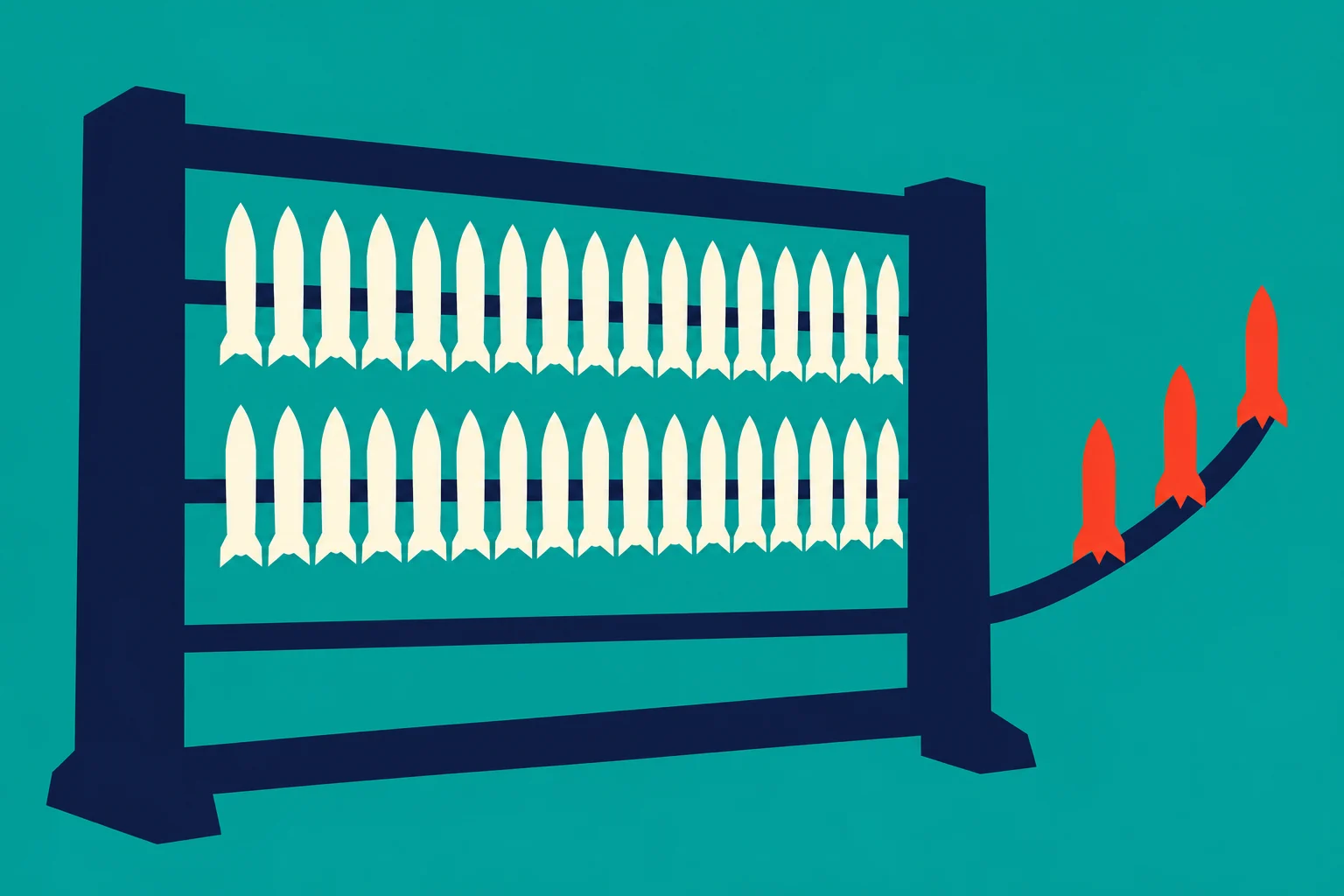
Zhao Minghao of Fudan University describes a “structural asymmetry”. China’s doctrine rests on no first use and “minimum deterrence”, and a treaty, he argues, “would cap its insurance while imposing intrusive verification.” He also raises what he calls a “credibility problem”: the United States left the Anti-Ballistic Missile and Intermediate-Range Nuclear Forces treaties. Why trust a signature from a country that has taken its signature back twice?
Sun Chenghao of Tsinghua University says Beijing’s worries reach beyond warheads, to American missile defences, precision-strike weapons and new technologies. William Yang of the International Crisis Group says Beijing would see a treaty “as a mechanism designed to limit its nuclear modernisation.” From the University of Hong Kong, Alejandro Reyes puts the question from the other side: China’s build-up, he says, raises “legitimate questions about where Beijing intends to stop.”
One could reflect that this is an old pattern among states. The strong offer to freeze the world as it stands, and the rising power reads the offer as a freeze on itself. Whoever is still climbing does not want a ceiling put in.
An entry point
Nobody in Washington is promising a deal on Thursday. “We do not expect to get to any kind of agreement,” a senior US official said. “I would characterize this as the entry point, the first conversation, certainly at the leader level, between these countries.” White House spokesperson Olivia Wales said the president would discuss “the reduction of nuclear weapons in the world”, adding: “This proliferation, President Trump believes, is very dangerous”.
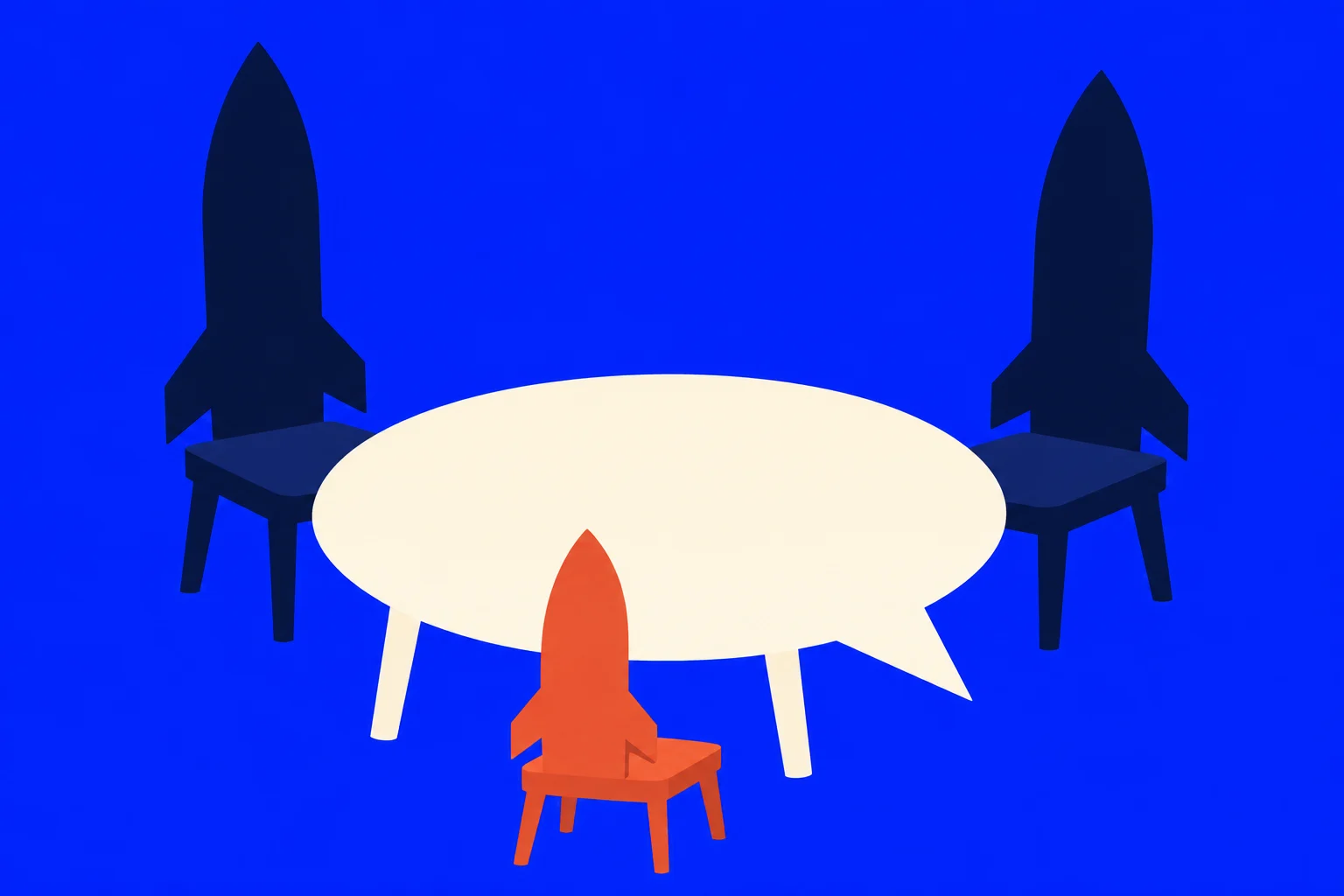
The table will hold other business too. According to the agenda the White House has described, Trump intends to raise the war in Iran with Xi and Putin, but not the war in Ukraine. On the day itself he is scheduled to attend a multilateral meeting with APEC leaders, then a bilateral meeting and working lunch with Xi, with the three-way session near the end of his visit. No separate Trump-Putin meeting is planned.
Analysts say China would join a treaty only once Washington and Moscow have cut their arsenals toward “genuine” parity, and that is a long way down from 5,000. Until then they offer smaller steps. Zhao suggests a US-China stability dialogue, test moratoria, data exchanges and advance notice of major exercises. Sun prefers “differentiated obligations and phased verification”, along with three-way talks on crisis communication, nuclear doctrines and keeping human control over AI-enabled nuclear systems.
“The fundamental obstacle is political trust,” Reyes said.
With war in Ukraine, tension over Taiwan and American deployments across the Asia Pacific, Zhao expects “informal restraints” in the near term rather than a treaty. That means no inspectors and no signatures, only what each side chooses to hold back and whether the others believe it.