
For decades, Richland Parish was the kind of place where the skyline held nothing taller than a grain silo. A scattering of rural towns and unincorporated communities in Louisiana’s northeast corner, winding back roads, farmland in every direction. Monroe, the nearest city of any size, sits thirty minutes west and holds more than twice the parish’s population. It is the kind of place, Business Insider reports, where everybody claims to know everybody, or at least to have heard of them.
Then, in December 2024, Meta announced it would build its largest data center to date there, near Holly Ridge, an unincorporated community that local outlets say has fewer than 2,000 residents. The project is priced at $50 billion. It is expected to support roughly 7,500 jobs at the peak of construction and about 1,000 operational jobs after. The arithmetic does not require emphasis: the workers outnumber the town several times over.
Angel Crawford noticed them arriving last year. She lives in Delhi, a town about ten minutes west of Holly Ridge, and she and her husband, Bryan, had lately left the nursing industry. Empty nesters, 2024, a pivot into real estate. They started buying older homes and fixer-uppers and had already purchased land for a mobile home park when the news about Meta came through.
“We understood there wasn’t enough housing for residents, and our dream of building more multifamily houses was right in line to do that.”
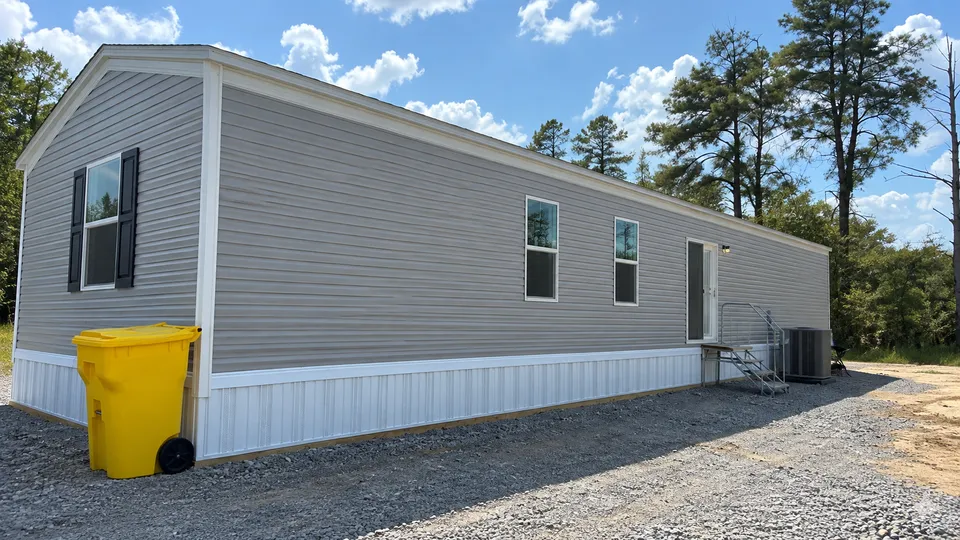
That year the couple founded Parish Line Properties, which now operates 18 homes in the area. Fourteen of them count as workforce housing. Their mobile home park, Antley Pines, opened in December 2025, fifteen minutes from the construction site, and the demand preceded the product: every home, Angel Crawford told Business Insider, was secured by deposits from Meta workers before the homes were even in the park. Many of the tenants are subcontractors. Electricians, mostly.
Antley Pines offers fully furnished four-bedroom, two-bathroom homes with amenities, at an average of $3,000 a month, utilities included. Workers can room with colleagues or bring family. Crawford has no trouble filling them at that price. She is precise about what the number means: before Meta arrived, an unfurnished house in the same area, utilities not included, would have gone for $1,200 to $1,500 a month. The median household income in Richland Parish was about $53,000 in 2024. These figures sit next to each other the way figures do in a boomtown, which is to say, uneasily.
Crawford says she has assured her long-term local tenants that their rents will not rise. “That’s not what we’re about,” she told Business Insider. “We’re not going to put local tenants in a bind.” New workforce housing, she said, will come from new properties.
Location, she explains, is everything to these tenants, and she explains it in their terms: they work six to seven days a week, twelve-plus hours a day, out the door around 4:30 in the morning, not home until 7 at night. Thirty miles in Dallas is thirty minutes; thirty miles on rural back roads, through the little towns, can be an hour. The closer to the job site, the better.
What they want when they get home is consistent enough to list. The WiFi password — that is the first question, always, because some have no family along and want to FaceTime. Quiet, because they are with a lot of people all day and do not want to come home to noise. Month-to-month leases, because none of them knows how long the job lasts. “Most of them don’t know how long they’re going to be here,” Crawford said. “They hope they’re going to be here long-term, but in construction, they don’t get told until it’s done.”
The parish, in this telling, is a small-scale version of the national argument over data centers — the promised jobs and revived economies on one side, the environment, the grid, and whatever AI does to the labor market on the other. Crawford says opinion in the area runs to one pole or the other, no in-between. She counts herself among the optimists.
“I see it as an opportunity for us to have more experiences in our area and jobs for our children, so they can stay here instead of moving away.”
Some of that is already visible. Young men from the area who would normally work offshore on oil rigs — long stretches away from home — are working at the construction site instead, she said. And the secondary economy has arrived on schedule: laundromats, RV parks, mobile home parks. The local contractors who install electrical systems, septic systems, plumbing, gravel — all of them busy, she said, because Meta is here.
The housing itself has gone half-underground. Not every local rental appears on Realtor.com or the other listing sites, Crawford found, so in 2025 she built StayNELA, a third-party site connecting tenants with property owners. Her research method was analog: months of driving the parish, photographing the hand-lettered signs in yards and at four-way stops, the ones you could not quite read, keeping a log in a folder on her phone, saving whatever surfaced on Facebook. The calls and texts now come almost daily, mostly referrals from her own tenants.
It will not last, and everyone involved seems to know it. Construction is expected to run several more years; then the data center goes operational, construction wanes, and the workers leave. The Crawfords have considered the after and say they are not worried. Each home at Antley Pines sits on a quarter of an acre. “After Meta’s gone,” Angel Crawford said, “we can sell them individually or rent them out.”
For now the tenants keep arriving, and the first question stays the same. What’s the WiFi password.