
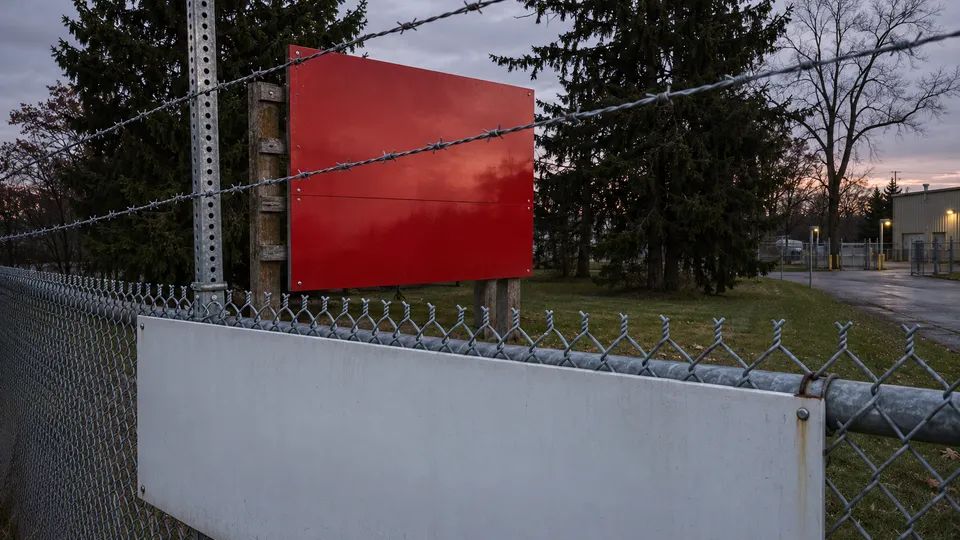
Middletown is a small place in southeast Iowa, home to about 400 people, near Burlington and the Mississippi. On the grounds of the Iowa Army Ammunition Plant, inside concrete bunkers covered with earth, stand 68 barrels of lead azide. The Army calls the bunkers earth-covered magazines. Lead azide is what the military puts in detonators, the small charge that sets off the big one. The barrels hold roughly 9,700 pounds, about 4.4 tons, of it, kept wet in a mix of water and ethanol so that it stays quiet.
It has not stayed quiet. Temperature swings, the Army has explained, let the compound dissolve into the liquid and then crystallize again as needles or platelets. In those forms it reacts to almost anything: a jolt, friction, heat. In March the Army found that the Iowa stockpile had degraded in exactly this way. It described what it found as a “catastrophically hazardous condition,” as Beth Mole reported for Ars Technica.
Choosing which explosion
The Army’s reasoning goes like this. The material has become too unstable to move and too unstable to treat chemically, as Ellyn Lapointe wrote in Gizmodo, so the safest choice left is to set it off where it sits, on purpose, before it goes off by itself. The cold coming in makes an accidental blast more likely.
The Army’s environmental assessment spells out the alternative. “An accidental detonation would result in the sudden, uncontrolled release of vaporized lead, particulate matter, and toxic combustion gases (such as nitrogen oxides and carbon monoxide),” it states. With no weather planning and no atmospheric modeling, the plume could sit over the site or drift straight into towns and farmland, “causing severe health impacts.”
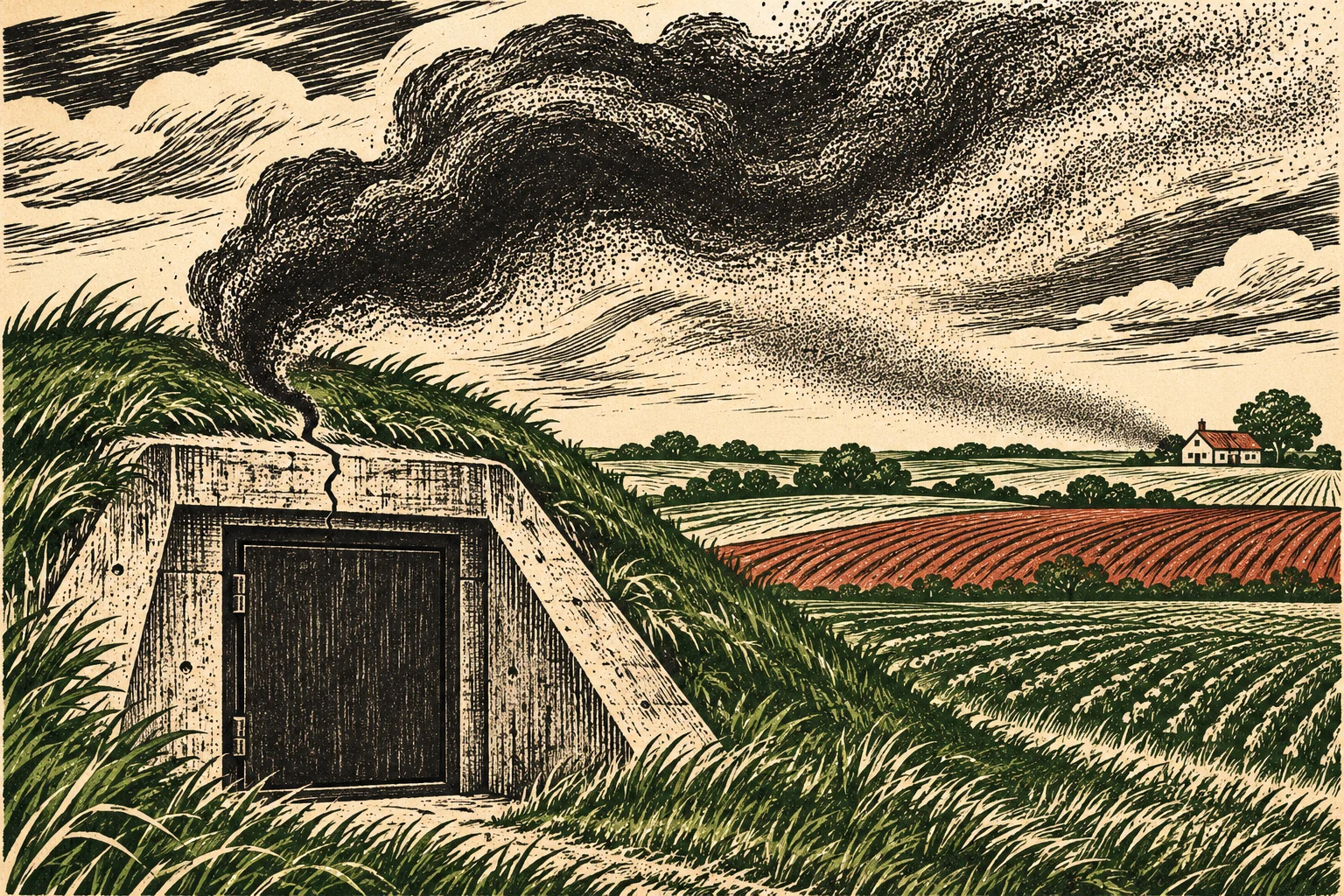
So the choice is between two explosions, one with a date on it and one without. The planned version was two simultaneous blasts inside the magazines at about noon on Friday, November 20. Army modeling predicts higher lead levels in the air, with some particles falling to the ground, but staying below the Environmental Protection Agency’s threshold for protective action. The same modeling, released this week, has the plume possibly reaching 100 miles north of the plant. The Army has warned that lead particles could drift for miles across parts of Iowa and Illinois. Windows could break in homes near Middletown City Park and Butterfly Park, and people living there have been asked to leave while it happens. A public advisory issued Sunday told everyone inside the mapped zone to stay indoors with doors and windows shut.
The public hears last
The Army knew in March. Iowans say they found out this week. Among the officials who learned of the plan only in the last few days, KCRG reported, was the governor. That is eight months between the military’s diagnosis and the people downwind hearing about it.
This is an old habit of large institutions, offered here as reflection rather than evidence: what the institution knows is its own property, and the public is told when it can no longer be avoided. It is not the first time a branch of the armed forces has asked civilians to live next door to its old explosives. The Air Force has argued for continuing to detonate old bombs on a beach in Guam.

At 7:31 pm Eastern on Thursday, Acting Secretary of the Army Adam Telle posted on social media that the blast would move to Monday, November 23. “Public communication is essential to public trust,” he wrote, and he promised the Army would keep working with state and local officials to share accurate information. He also said there was no room for a longer wait: “This will delay the detonation until the latest possible moment prior to a forecasted temperature drop, which would risk further destabilization of the material.”
A court, a permit and a way around it
That same Thursday the Iowa Environmental Council and the Sierra Club went to court against the EPA’s emergency permit, which was approved the week before. Their petition says the permit lets the Army set off the material in the open, “thus creating a plume of lead dust that will blanket homes and communities, possibly as far away as 100 miles or more.” It adds: “The Army intends to do so with less than a week’s notice to the full public of the scope and potential impact of the planned detonation.”
The groups argue that no level of lead exposure is safe, least of all for children. The Centers for Disease Control and Prevention links lead to damage to the brain and nervous system, slowed growth and development, learning and behaviour problems, and hearing and speech problems in children.
Late Thursday night the Eighth Circuit Court of Appeals issued an administrative stay of the EPA permit while it considers the groups’ emergency request. Iowa Public Radio puts the stockpile at 9,500 pounds rather than 9,700.

On Friday the EPA answered. Its lawyers told the court the material is growing more likely to explode on its own. They pointed out that the stay covers only the EPA’s permit, and that the Army is not a party to the case. They also cited federal hazardous-waste rules that let the Army, in a qualifying emergency, go ahead “to implement waste treatment activity without an EPA permit” once it finds “an immediate threat to human health, public safety, property, or the environment.” In other words, the court has paused a document that, by the EPA’s own account, the Army may not need. On Friday evening Governor Kim Reynolds activated the State Emergency Operations Center.
Wally Taylor, legal chair for the Sierra Club, has said plainly what he wants. “We don’t want the explosion to take place at all,” he told the Associated Press. “There are ways to do it without all the air quality problems and potential health problems.” He has also said Iowans deserve an environmental and health impact statement and a review of alternatives. Sarah Green of the Iowa Environmental Council asked for “more time to keep our communities and vulnerable groups safe, like children and pregnant women.”
Time is the one thing nobody has to give. The Army says the barrels are getting worse. The forecast says the cold is coming. The Army has given no hour for Monday. Which farms and towns the dust reaches will depend on the wind that day.