

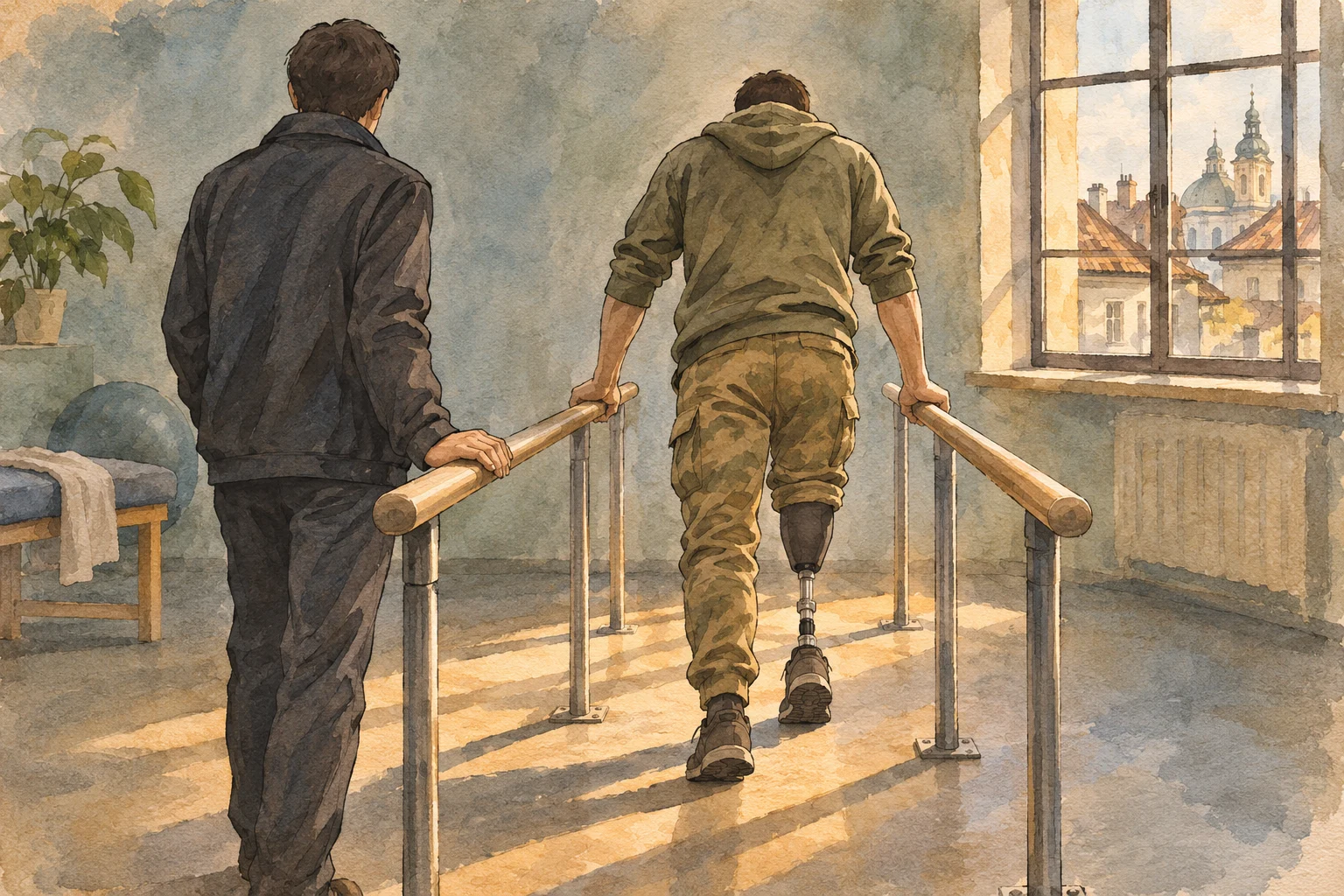
Lviv sits in the west of Ukraine, a long way from the trenches, and it has become a city where the war’s wounded come to be put back together. There is a clinic there called Superhumans, which treats injured soldiers and civilians and fits the prostheses they will walk on for the rest of their lives. Last weekend it had a visitor whose arrival was announced only once he had gone.
Prince Harry, 42, made his fourth trip to Ukraine since Russia’s full-scale invasion in 2022, Al Jazeera reported. On Saturday he attended Ukraine’s National Invictus Games and a conference for medics, both organised by Superhumans. News of the visit came out only after he had left the country, according to the Kyiv Independent. That is how a prince has to travel in a country at war: unannounced, and gone before anyone knows he came.
He said as much himself. He had “taken a risk to come here,” he said. And: “Every single time I come back to Ukraine, I feel welcome, I feel warmth.”
Five hundred for sixty
The Invictus Games, which Harry founded in 2014 and still serves as patron, are a competition for wounded and recovering service members and veterans. The next one will be held in Birmingham, England, in 2027. Its events include alpine skiing, archery, track and field, cycling, wheelchair basketball, rugby and tennis.
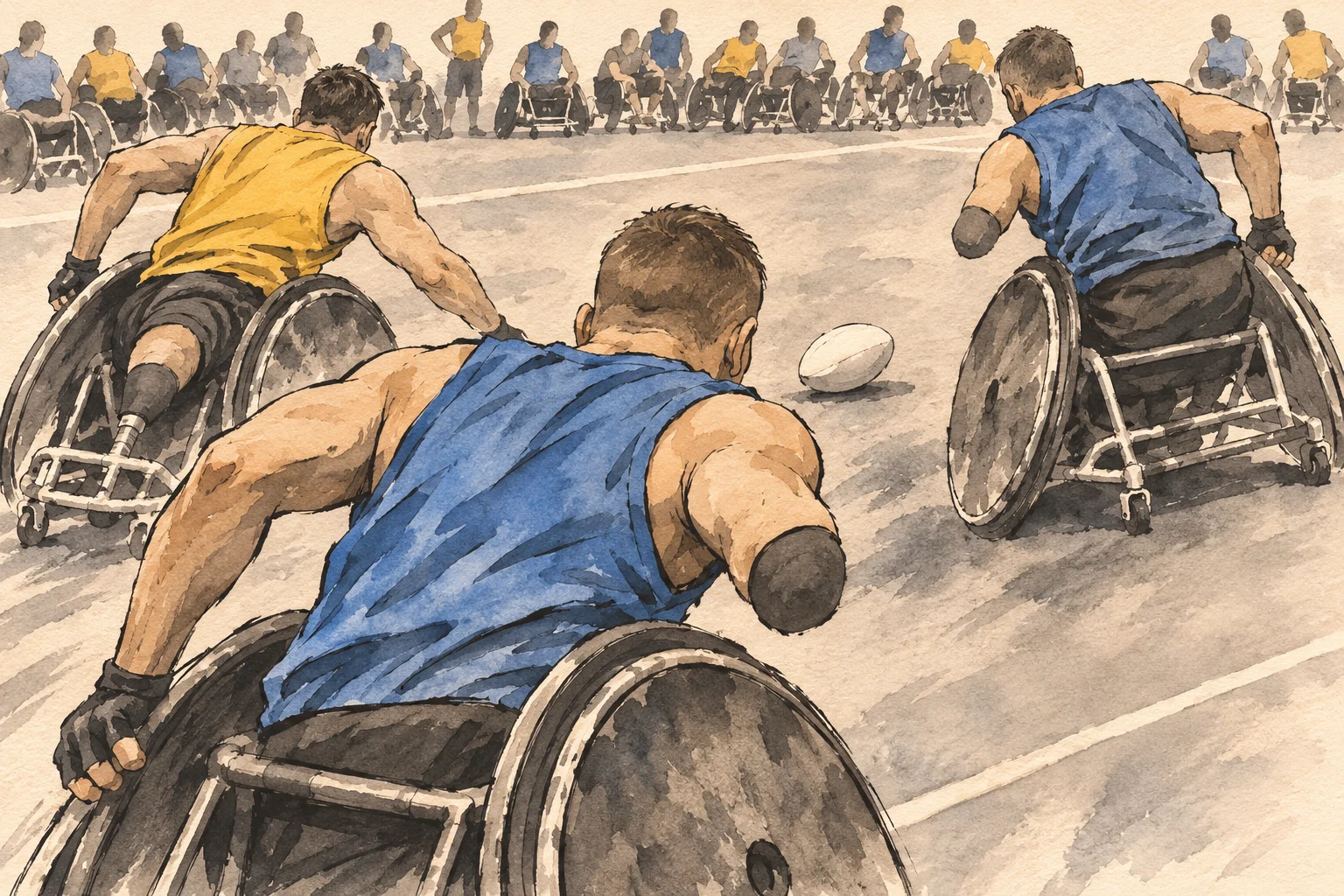
In Lviv, the qualifying was under way. About 500 people have signed up to try out for Ukraine’s squad of 60, which would make it the biggest team the country has ever sent. Harry watched wheelchair rugby players fight for those places. The Associated Press, in its account of the weekend, reported that he also watched pickleball players, many of them on prosthetic limbs, competing for the same chance. According to Reuters, these were Ukraine’s sixth national Invictus Games, and he handed a medal to one veteran.
Five hundred applicants for sixty places. In most sports that would just mean the competition was fierce. Here it is also a measure of how many bodies the war has broken, and of how many of their owners still want to win something.
Odainyk
At the rugby, Harry embraced Valery Odainyk, 41, who competed at last year’s Games in Canada. Odainyk has lost a leg and is still serving in Ukraine’s armed forces. The prince asked him: “So when do you find time to train?” It is a fair question to put to a man who is still in uniform, with a war going on, on one leg.
Odainyk said his life in disability sport “all started and continues with the Invictus Games.”
The arithmetic
Ukraine has about 1.4 million combat veterans, and more than 10 percent of them have disabilities. That means more than 140,000 people. Those figures are not about trying out for Birmingham. They are about the rest of the country’s life: who will employ these people, house them, fit and refit their prostheses, and pay for it all.
The prince seemed to understand that the sport was only the visible part. On Sunday, the AP reported, he called wounded Ukrainian veterans society’s role models and said they must go on receiving support from Kyiv. Medals are handed out once. Rehabilitation goes on for the rest of a life, and the bills land on a ministry somewhere.
His earlier trips followed a similar pattern. The Kyiv Independent lists a visit to the Superhumans centre in Lviv in April 2025, another trip to Ukraine that September, and a visit in April 2026 to Kyiv and Bucha, when he attended the Kyiv Security Forum. Each time he arrived without warning, and each time the wounded were waiting.
A promise with a condition
Addressing the medics’ conference, Harry told his audience: “You’re going to win the war and then you’re going to be set up for success.” Then he made a promise:
“When the war is over and when Ukraine wins, we will be ready to support you in holding an Invictus Games.”
The promise is generous, and it comes with two conditions. The war has to end, and Ukraine has to win it. Neither is in Harry’s power or his foundation’s. Both will be settled on the battlefield and at negotiating tables far from any rugby court, the kind of US-brokered talks Kyiv was talking about this autumn.
Until then, sixty of them will go to Birmingham. The rest will train for the next selection, in a country where new candidates keep arriving.