
Mazraat Yachouh is a village about twenty minutes by car from Beirut. Lena Kouyoumjian went back there, to her parents’ house, after her husband died of COVID-19 in 2020. By the account published by Al Jazeera’s Alex Milan Durie and Daniel Khalili-Tari, she is energetic and outgoing, and the return was hard for her. She made it anyway, because she needed help raising her daughter. Vana is 20, autistic and non-verbal. Lena first saw the signs when Vana was two. Eighteen years later Vana still cannot say how she feels, and her mother still works to understand her without the words.
Lena trains children with disabilities for a living. So when Israel escalated its attacks on southern Lebanon in March, she knew what would follow before it reached her home. “Any sudden change in routine, loud noises, fear, or uncertainty can increase their anxiety,” she said. Since then she has watched Vana grow more anxious and more sensitive.
A country where no day repeats
Lebanon has been at war since October 2023, and it was sinking into economic crisis before that. The long arithmetic of that war has been counted in fighters and ruins. A US-brokered ceasefire came in June, and Israeli attacks in the occupied south went on regardless. Inflation may reach 17 percent this year. About 80 percent of Lebanese live in poverty. Trained professionals are leaving the country.

Wars are usually measured in the dead, the displaced and the buildings brought down. There is another ledger, and nobody keeps it. It records the people for whom the world was already too loud, and for whom routine was the only wall. Autism and ADHD often bring sensory difficulties and trouble regulating emotion; when the two occur together, clinicians call it AuDHD. One might put it this way: a person who needs each day to resemble the last has no defence in a country where no day does.
The hidden remote
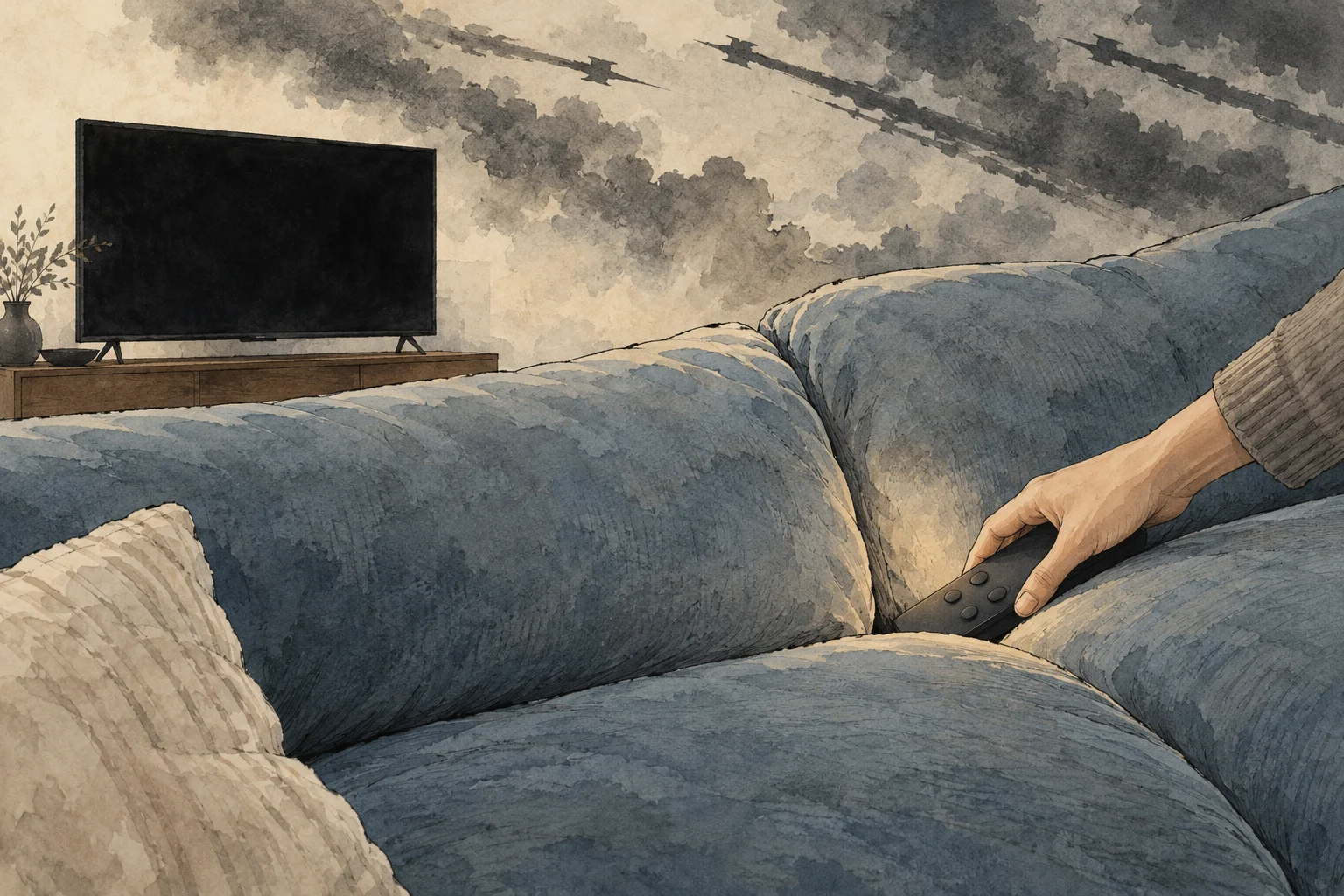
Ghada Hayek Makhoul’s son Anthony is 27, calm and non-verbal. When sensory discomfort turns into pain, he covers his ears. The drones, the bomb blasts and the sonic booms of warplanes have affected him deeply. He now switches off the television news and hides the remote. He no longer wants to go into the swimming pool, which he used to love, and his mother does not know why.
The state cannot stop the drones. A young man who does not speak has found the one source of noise within his reach that can be switched off, and he switches it off.
In 2015 Ghada and other parents founded the Autism Awareness Association (AAA) in Antelias, north of Beirut. Neurodivergent people in Lebanon carry a stigma, and they are especially exposed because they depend on routine and steady support. “Many people don’t know what autism really is. They don’t know the spectrum,” Ghada said. Lena put it more bluntly: “Being a parent of an autistic child isn’t something every parent can handle.”
Vana has attended the association for six years. Rising costs, transport among them, have made her attendance irregular. A place at AAA costs $700 a month for five days a week. Ghada says the association needs to pay better salaries to keep its staff, but it cannot ask parents for more. “Things are in crisis mode for everybody during the war.”
The arithmetic of care
Private therapy can cost more than $100 for a 50-minute session, although many NGOs offer therapy free. Nour Toukan, a public health researcher at Enmaeya, calls autism and ADHD care “very much an out-of-pocket expense.”
The state’s answer is the National Disability Allowance. According to UNICEF, the Ministry of Social Affairs launched it on 26 April 2023 with the European Union, UNICEF and the International Labour Organization as Lebanon’s first social grant for people with disabilities. It initially paid $40 a month to at least 20,000 people. The ILO reports that the government has since begun paying for it from the national budget, allocating $10 million in 2025 to cover about 30,000 Lebanese with disabilities. The figure that matters to a family is still $40. At that rate, one month at the Antelias association costs seventeen and a half months of the allowance.
The allowance also depends on a ministry card. Autistic people can get the Ministry of Social Affairs disability card. People with ADHD cannot. So the bureaucracy has drawn a line through the middle of a spectrum that the doctors treat as overlapping.
Dr Rabih El Chammay founded and directs the National Mental Health Programme, set up in 2014 under the Ministry of Public Health. He says a national strategy for children and adolescents is being finalised, informed by national studies on autism and ADHD. War, he said, “can increase support needs while disrupting the services people depend on.”
What slips away
Adham Faraj, 23, studies psychology at the Lebanese American University and was diagnosed with ADHD in 2024. When the war moved classes online, he found them “less engaging, especially if you struggle with attention.” He also worries about the price of medicine: a box costing $11, he noted, is not something everyone can afford.
In Beirut, the psychologist and psychotherapist Rim Ajjour works with young autistic people. She sees skills they learned before the war being lost as access to therapy shrinks. Clinics like hers have frozen their consultation fees even as their own costs rise. What she fears most is that the full war comes back. “I don’t know how we’ll be able to take it again.”