
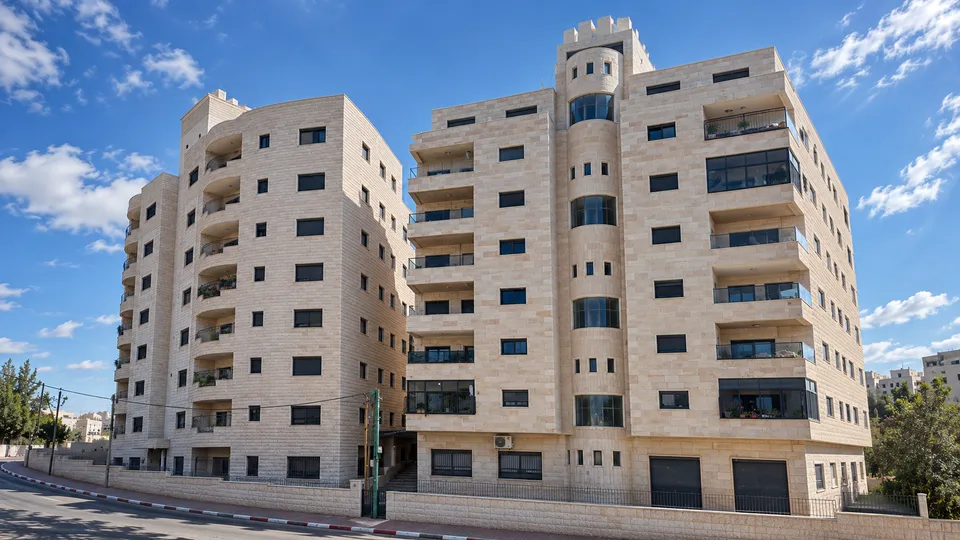
In 2013 Amjad al-Qawasmi, with his father and his brother, put up an eight-storey residential building in the heart of Hebron. It cost more than 18 million shekels, about $5.6m. Now, as Fayha Shalash reported for Al Jazeera, he stands looking at it and cannot grasp how thirteen years of concrete could become rubble in a few moments.
On the morning of Sunday, 15 November, the Israeli army posted demolition notices on his building and on a second one in Dairat al-Seer, in the north-west of the city. One holds 25 apartments. The other holds 40, and a neighbouring house was included with it. The owners were given one week to file objections.
Both buildings, Al Jazeera reports, stand in Area A.
A line on a map
Under the Oslo Accords the West Bank was cut into lettered zones, and Area A was the one handed to full Palestinian control: the cities, the dense neighbourhoods, the places where the Palestinian Authority was meant to issue permits, lay water pipes and decide who builds what. Both buildings carry full permits from the Palestinian Authority and Hebron Municipality. Al-Qawasmi says he obtained his from the Ministry of Local Government and connected every utility. He did, in other words, everything the Palestinian side of the arrangement asked of him.
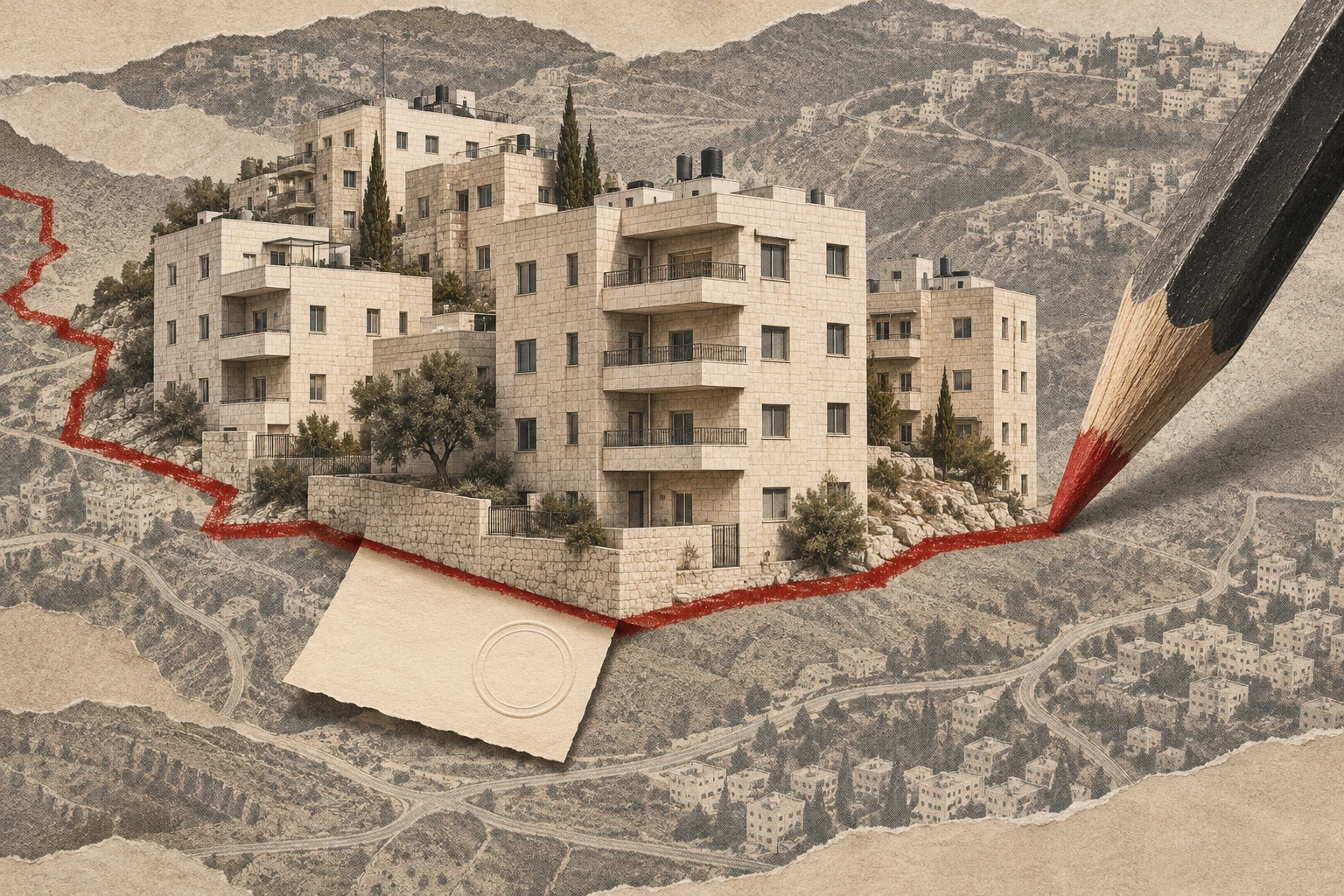
A reflection, not a finding: a map drawn between unequal parties tends to bind the weaker one more tightly. The stamp of the ministry in Ramallah turns out to weigh less than a notice taped to a wall by a soldier.
The reason given is a road. The notices refer to the buildings’ proximity to what Al Jazeera calls “Settler Road 35”. According to Middle East Monitor, municipal council member Mutaz Irfa’iya said the orders were issued under an Israeli military order that cites security concerns over how close the buildings stand to Route 35, an Israeli bypass road. He said a petition to suspend the decision was expected to be filed with Israel’s Supreme Court on Tuesday.
Two versions of the same line
Accounts of where the line actually runs differ. Palestine Chronicle quotes Hebron council member Muammar al-Oweiwi as saying only one of the buildings is in Area A, and that the other now falls in Area C because Israel unilaterally redrew the boundaries of an area once classified as Area A. That outlet reports the authorities cited a lack of permits rather than security, puts the buildings in the Bir al-Mahjar area of north-western Hebron, and says about 66 families could be displaced.
If that account is right, the dispute over the zoning is itself the story. When the side holding the pen can redraw the line, an Area A home can wake up one morning in Area C.

Instalments
Al-Qawasmi’s relatives live on the lower floors. Most of the other apartments were sold to buyers who are still paying instalments, which has grown harder since salaries were cut and since Israel barred Palestinian workers from entering after 7 October 2023. His explanation for what is happening is short: “this is an occupation, anything is possible.” Families in the building have begun packing their belongings into boxes. They do not know whether they will have time to get the furniture out.
Samer Abu Hadid bought his land five years ago and built a villa of 1,165 square metres for his family of eight, worth about $3m. Soldiers came into the house to serve the notice, which cited “security grounds”. He remembers the officer telling him: “Look at the document carefully, the reasons are security-related.”
What can I possibly do in one week against an already-issued demolition order?
“We literally cannot sleep any more,” he said. “We think about this constantly.”
The ledger
Area A has never been entirely safe from demolition. The UN human rights office counted 97 Palestinian structures in Area A demolished or served with orders between November 2024 and October 2025. In the same period it counted 46 in Area B, 1,390 in Area C and 240 in occupied East Jerusalem. Ninety-seven is a small number next to 1,390. In the zone that was meant to be exempt, it is still 97 more than the map promised.

The Palestinian Commission Against the Wall and Settlements counts 9,518 demolition or stop-construction notices from 2015 to September 2026, 344 of them this year. Hebron governorate tops its list, with 2,697.
Hebron is a divided city: a larger area run by Palestinians and a smaller central zone where Israeli settlers live. In recent weeks that centre has been under lockdown, with Palestinian homes turned into barracks. Further south, in Masafer Yatta, families whose homes were razed have moved into caves. The notices in Dairat al-Seer carry that pressure into the part of the city that was supposed to be beyond its reach.
A precedent
Al-Oweiwi, quoted by Al Jazeera, calls the Area A notices a precedent. Separate orders have been issued in Farsh al-Hawa, which is in Area C, against a family guesthouse and another building. The municipality’s lawyers have asked Israeli courts for an immediate freeze. Israel had not answered when Al Jazeera published, and the municipality wants the orders cancelled outright, not paused.
He warns that the move threatens investment, investor confidence and the city’s stability, and he rejects the security argument: the buildings sit in residential neighbourhoods, he says, and pose no danger to the roads. In his words it is “a policy of collective punishment and pressure on the Palestinians.”
Counted from that Sunday morning, the week for objections ends on Sunday, 22 November. In Dairat al-Seer people are packing their boxes, and buyers are still paying instalments on apartments that may not be standing much longer.