

Generals draw the borders and ministers sign them. Nobody asks the songs first. In the Gurez Valley of Indian-administered Kashmir, which according to its census-based profile lies in Bandipore district right against the Line of Control, facing the Astore and Neelum districts on the Pakistani side, a people called the Dard Shin were split in two by that line. Their language, Shina, went on being spoken on both sides of it. On the Indian side it survived in a few valleys, in a few households, and in the voices of a few singers who would not stop.
The numbers show how small that remnant is. Shina has about 1.1 million native speakers, most of them in Pakistan. In India only a small community speaks it, in Gurez and in the Dras valley of Ladakh. The 2011 census counted 12,705 Shina speakers in Gurez, roughly a third of the valley, against 17,865 who spoke Kashmiri. The language is mostly spoken rather than written. Anything that is never written down lasts only as long as people keep saying it.
The library of elders
Yousuf Naseem, who is 53, has spent three decades keeping Shina alive in music. He was born in Dangithal, a village near the Line of Control in Gurez, and he remembers long winters there, family storytelling, and songs handed down by older relatives. He told Ishtayaq Rasool, writing for Al Jazeera, that his family had no other archive.
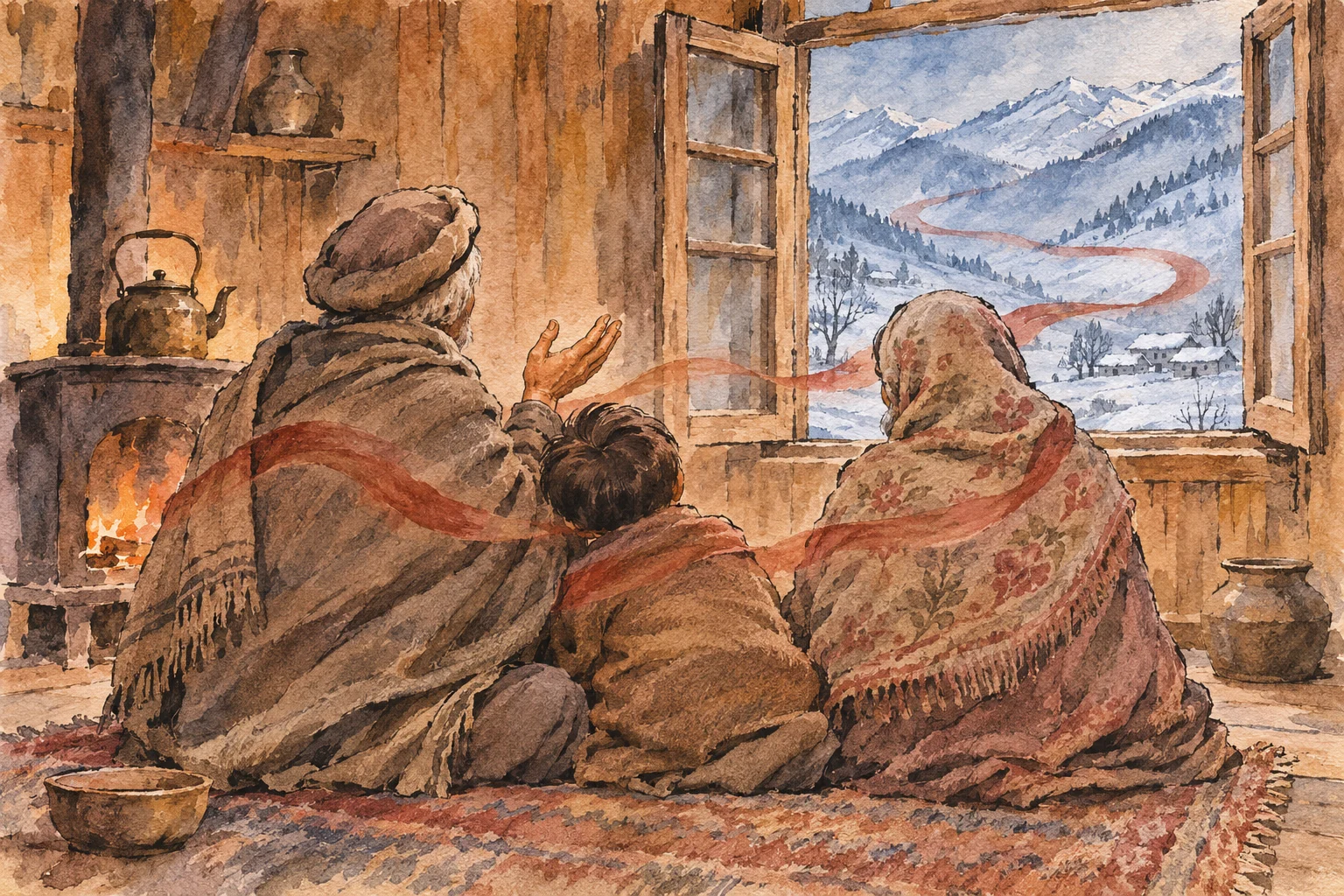
“The elders in our house were our library. Whatever they hummed, we sang.”
Then came 1999 and the Kargil conflict. Gurez, by the account of the Indian outlet Article 14, took the war’s first artillery shelling, and families were evacuated from villages along the line. Naseem’s family was among those forced out. They settled in Kangan, in central Kashmir. The valley had been bleeding people even before the war: in July 1998 the Tribune reported that more than 500 families had fled Gurez for Bandipore.
“We lost everything,” Naseem says. “But the songs travelled with us.”
The government had a word for people like the Naseems: displaced. The songs had no word at all. They simply went along.
A cassette in Bohri Kadal
Naseem took the music to people who had never heard it. In Srinagar’s old city lies Bohri Kadal, a historic market where many Dard families work as wazas, the chefs of Kashmiri feasts. He handed a shopkeeper there a copy of his first cassette, Dardistan, and asked him to play it every morning. Over time his voice became part of the market’s mornings.
“People would ask what language it was,” he says. “It was Shina. For many, it was the first time they had heard it.”
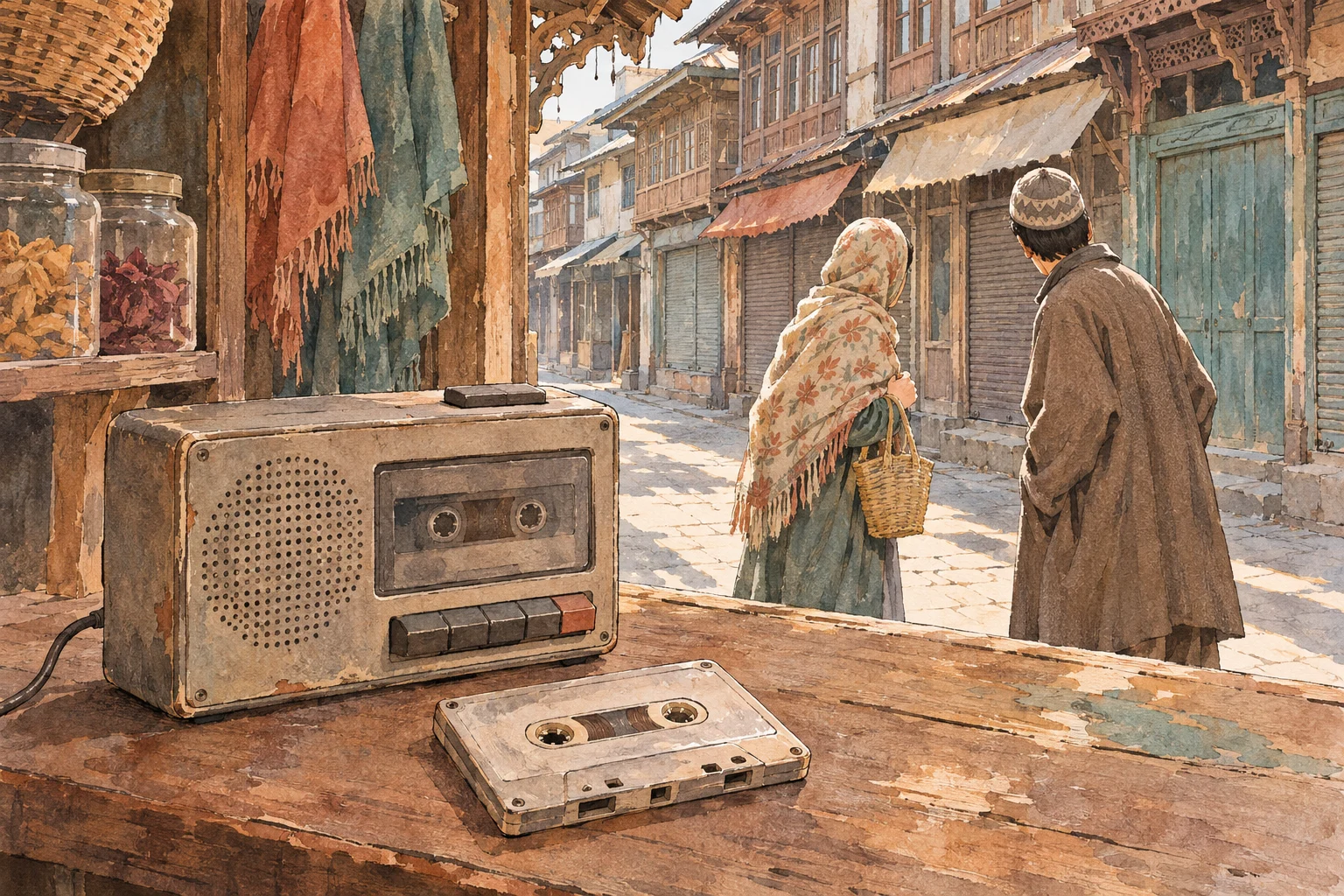
Think about what that means. A language spoken a short drive from the city was strange to the city’s own ears. A border does more than separate people from their kin on the far side. It also leaves them nearly unseen by the neighbours on their own side.
The man who stayed
Naseem carried Shina out of Gurez. Fareed Ahmed Kaloo kept it alive inside. He is 67 and leads the Habba Khatoon Dramatic Club, founded in 1976 to preserve Shina folklore in Gurez. At the Shina Cultural Centre near Dawar, Al Jazeera reports, young musicians gather around him as he tunes his harmonium. He wears the traditional shoka and a white pakol cap. His song names the places the line divides:
“Gilgit, Kargil, Gurez, Drass – our pride, our own, This is our Golden Garden: Dardistan, our home.”
Kaloo puts the damage down to Partition, not to one war. “After Partition, our culture faded,” he says. “Kashmiri music dominated, and our Dardic roots went silent.”
For years he walked from village to village with a harmonium and a tumbak naari, a clay drum. He played at weddings, fairs and gatherings, and was paid with a meal, a bed for the night, or a small honorarium.
“We didn’t do it for money,” he says. “We did it because someone had to, and no one else would.”
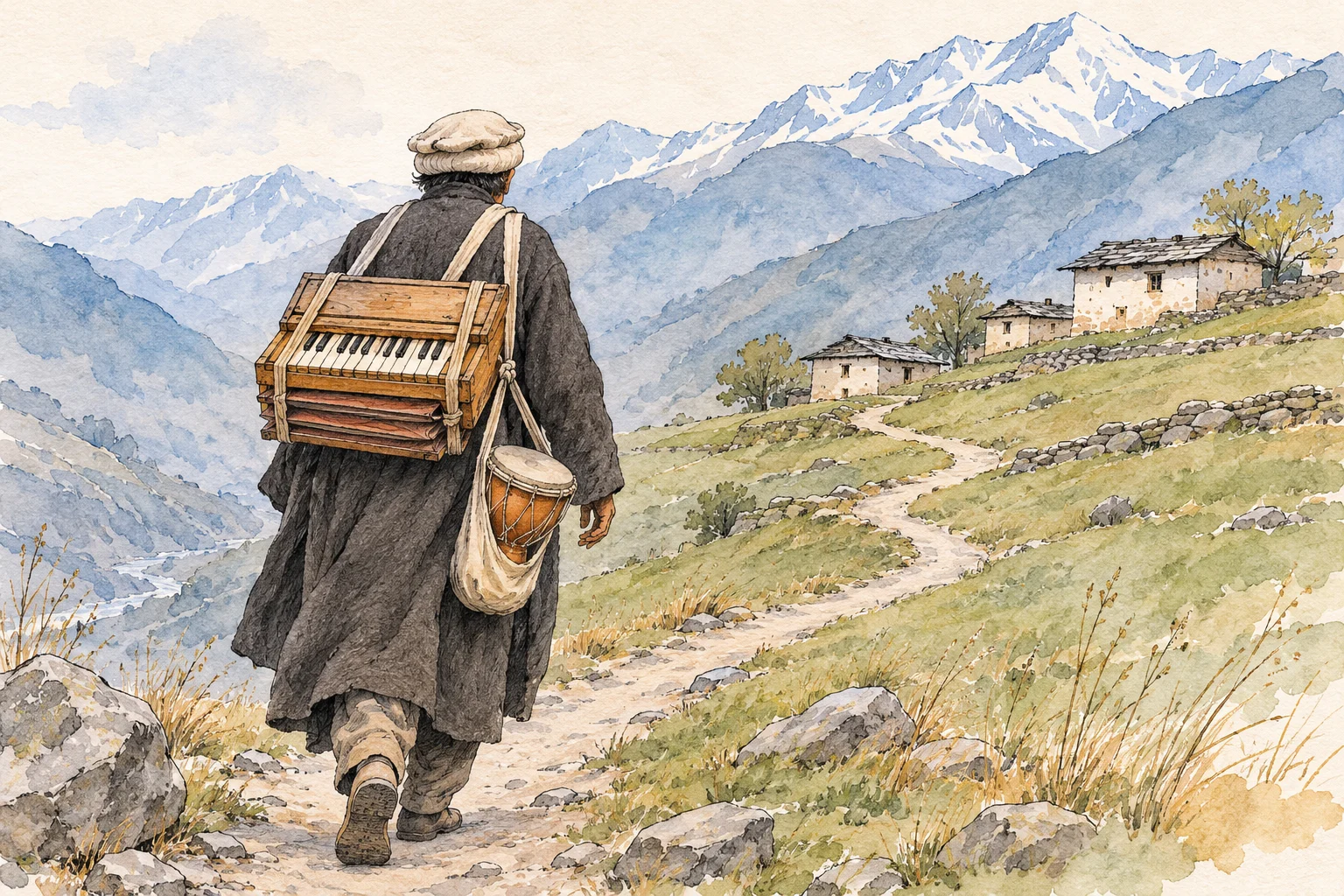
It is a plain sentence, and it says something about who preserves a culture. Usually it is not a ministry or a cultural academy. It is a man on foot with a harmonium on his back. Some of the club’s first members have died. Others left during cross-border shelling and never came back. The shelling has not stopped for good: Article 14 reported that in May 2025 residents of Dawer took shelter in a crowded bunker some twenty years old before leaving for a displacement camp 90 km away. People have also left for gentler reasons. The People’s Archive of Rural India has described Dard Shin families, driven out by harsh winters as well as shelling and drawn by jobs, schools and hospitals, settling in Bandipore, Kangan, Ganderbal and downtown Srinagar. Kaloo stayed and taught the old songs to younger singers.
Gilgit on a telephone
Something new has started to cross the line in recent years. In Al Jazeera’s account, Shina songs shared online are rebuilding ties among Kashmir, Ladakh and Gilgit-Baltistan. On his phone Kaloo listens to new tracks from Gilgit, on the other side, and admires how the musicians there have built their own sound while keeping parts of the old Shina music.
“They’ve gone far ahead of us,” he says, smiling. “As they should. Our songs must evolve, but never lose their roots.”
For decades the line has kept soldiers and shells moving across it, and families have lived on either side without being able to visit. Now, at a cultural centre near Dawar, an old man in a pakol holds up a telephone and hears his language played from Gilgit by younger people.