
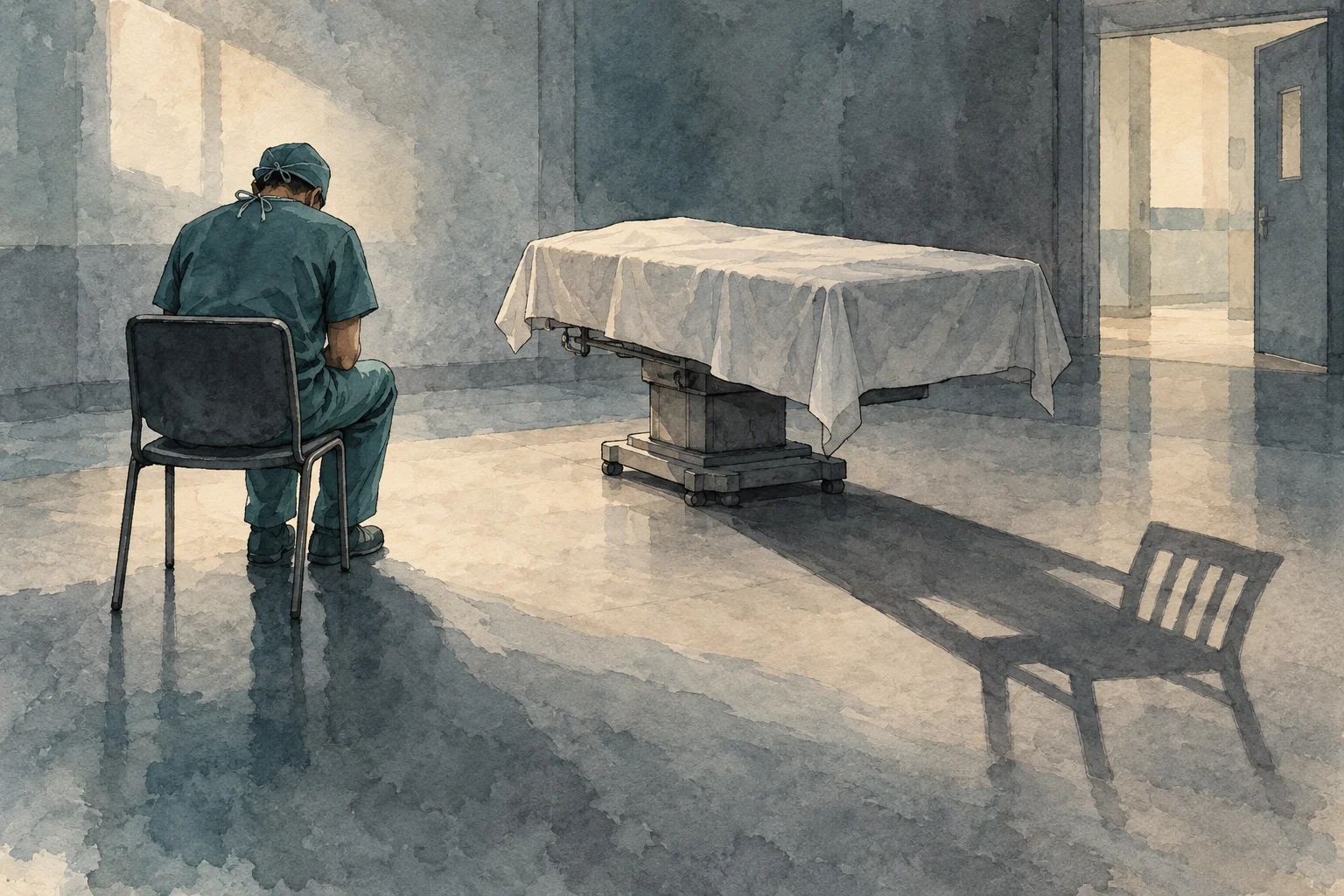
On December 27, 2023, an Israeli air strike killed a 34-year-old man named Shadi. In Deir el-Balah, in central Gaza, Al-Aqsa Martyrs Hospital called its anaesthesiologist Manar Fayyad to put a critically injured man under before emergency surgery. He recognised the clothes first. Then he uncovered the face. The man on the table was his brother. Fayyad is 29 now, and as Eyad Qatrawi reported for Al Jazeera, this is how he describes that moment: “He died before I could reach him.”
He has not practised medicine since.
In his mind the hospital and the memory became one building, and he could not go back into it. He copes on his own, without professional help. He keeps away from people and from noise. Sitting by the sea brings some relief, and so does writing. He hopes to leave Gaza.
Wars are counted in their dead. They are counted less often by the people whose job was to keep everyone else alive, and who have to keep doing that job while their own families are carried in through the emergency doors.
Human resources
Gaza’s Government Media Office says at least 1,700 medical personnel have been killed and that 83 health workers are still held in Israeli detention. Two years ago the count was much lower. A study in PLOS Global Public Health, published in September 2025, cited the Palestinian Ministry of Health’s figure of 986 health workers killed as of September 2024.
The paper surveyed physicians and nurses who worked in Gaza in 2023 and 2024. Forty-one participants recorded personal losses. Of those, 17, or 41 percent, said a family member had been killed. Thirty-two, or 78 percent, said a close colleague had been killed. Nineteen, or 46 percent, had suffered a personal loss and had also been displaced from their workplace. The authors acknowledge that the sample is small. One peer reviewer noted that questionnaires cannot measure the full size of what Gaza’s health workers have been through. Al Jazeera’s report adds that at least 78 percent of health workers had no access to mental health services. It also quotes official reports that speak of a “loss of human resources” and a “diminished capacity in the healthcare system.”
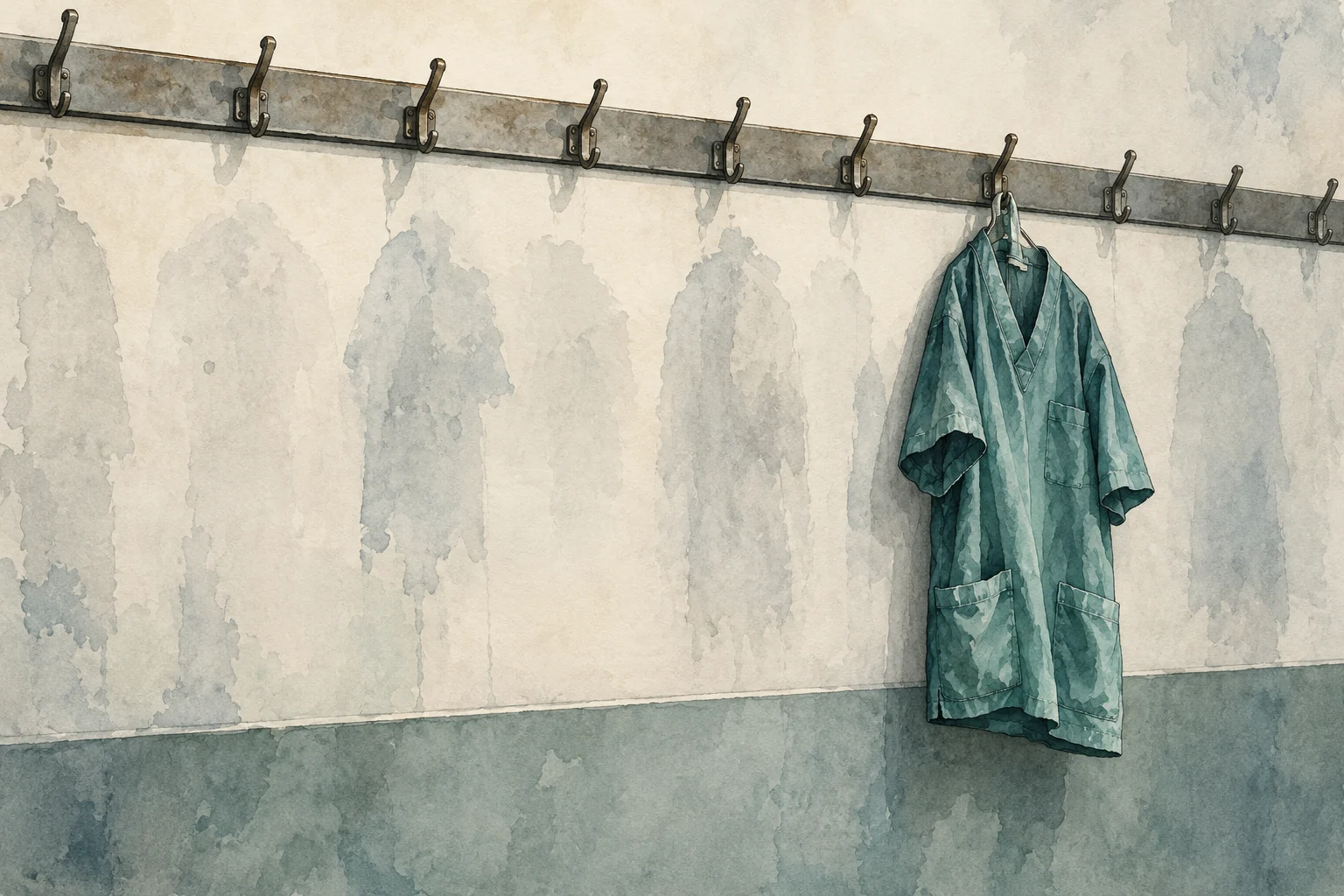
“Loss of human resources” is the kind of phrase an office uses when it reaches the end of a stocktake. Every unit in that count is a person, and many of them, like Fayyad, are still alive.
October 18
Khaled Raafat, also 29, is an emergency nurse at Al-Aqsa Martyrs Hospital. On October 18, 2023, eleven days into the war, he was at the hospital treating other people’s wounded when an air strike hit his home. It killed his wife, his children, his mother and several of his siblings. After that, he said, the hospital “became a reminder of personal pain that was beyond what I could bear.”
He took extended leave and worked on his recovery. He remarried, started a new family and went back to the hospital.
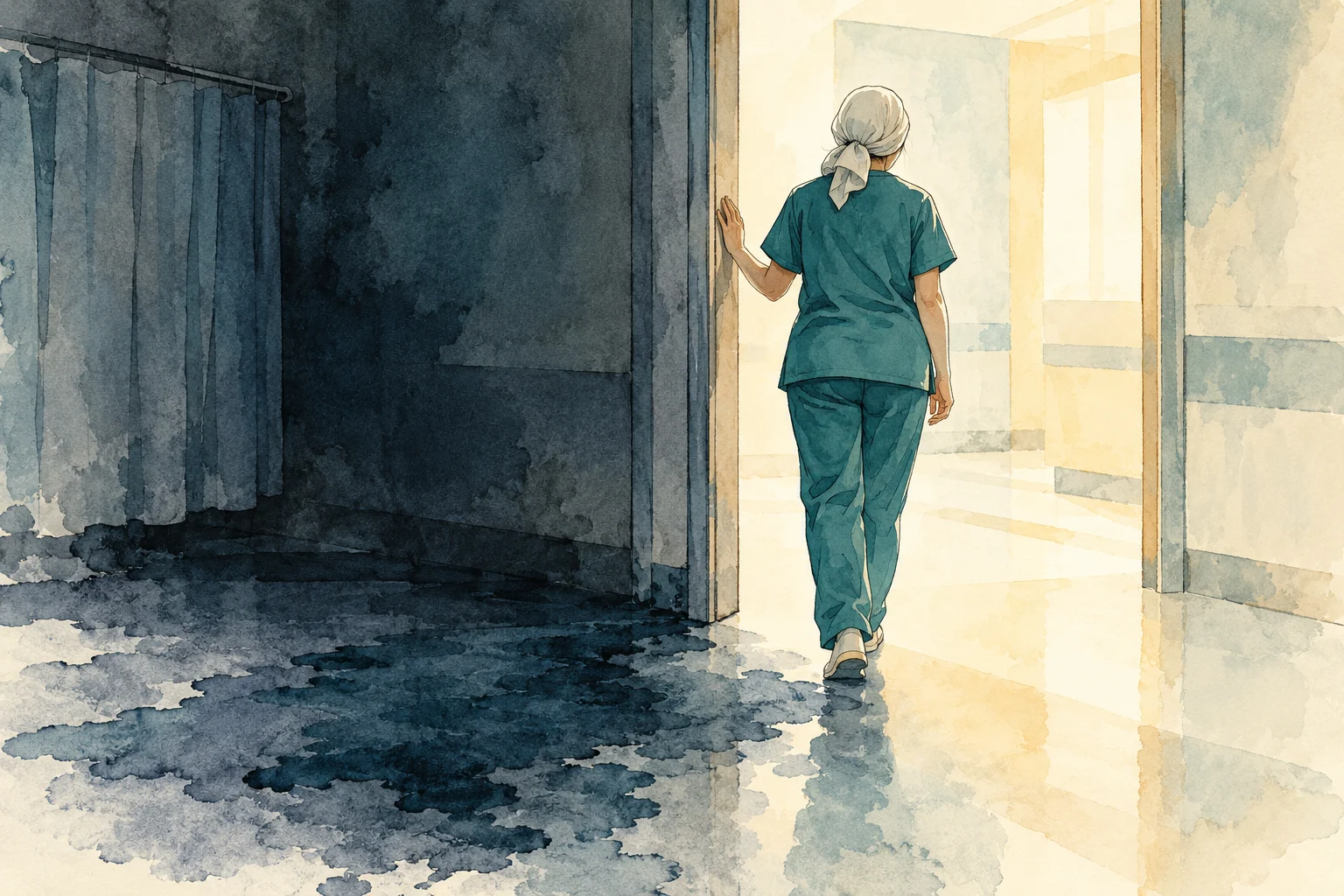
Hiba al-Tawil, 39, is a nurse at Nasser Medical Complex in Khan Younis. She watched her brother die in the intensive care unit where she worked. Staying on in that unit, she said, “made it harder to cope with the loss.” What helped was moving to another department. The war is still there, but she no longer works in the room where he died.
Who heals the healer
Munir al-Bursh, director general of Gaza’s Ministry of Health, said health workers “find themselves treating others’ wounds while struggling to heal their own.” In his view, protecting staff means looking after their mental health and giving them rest, as well as supplying medicines and equipment. He also listed why rest is so hard to give: too few staff, patients who never stop coming, missing equipment and no one to take over a shift.
That is the trap. A nurse can only rest if someone replaces her, and every name on the list of the dead is one fewer person who could.
Nasser Medical Complex runs a psychological clinic for staff traumatised by bereavement and by what they have seen in the war. The psychologist Reham Abu Rokba described how it works. Treatment begins with assessment and diagnosis, and then a plan is drawn up. For post-traumatic stress disorder, that can mean cognitive behavioural therapy, usually about 12 individual sessions, with medication when needed.
Recovery requires time and ongoing participation in psychological support sessions.
Time is the hardest thing to find in Gaza. The ceasefire turned one year old in October, and people were still being killed. In the south, one doctor now works from a tent after three clinics were destroyed in 13 months. Twelve sessions with a psychologist can be arranged. The harder part is finding someone to cover the shift while a nurse attends them.