
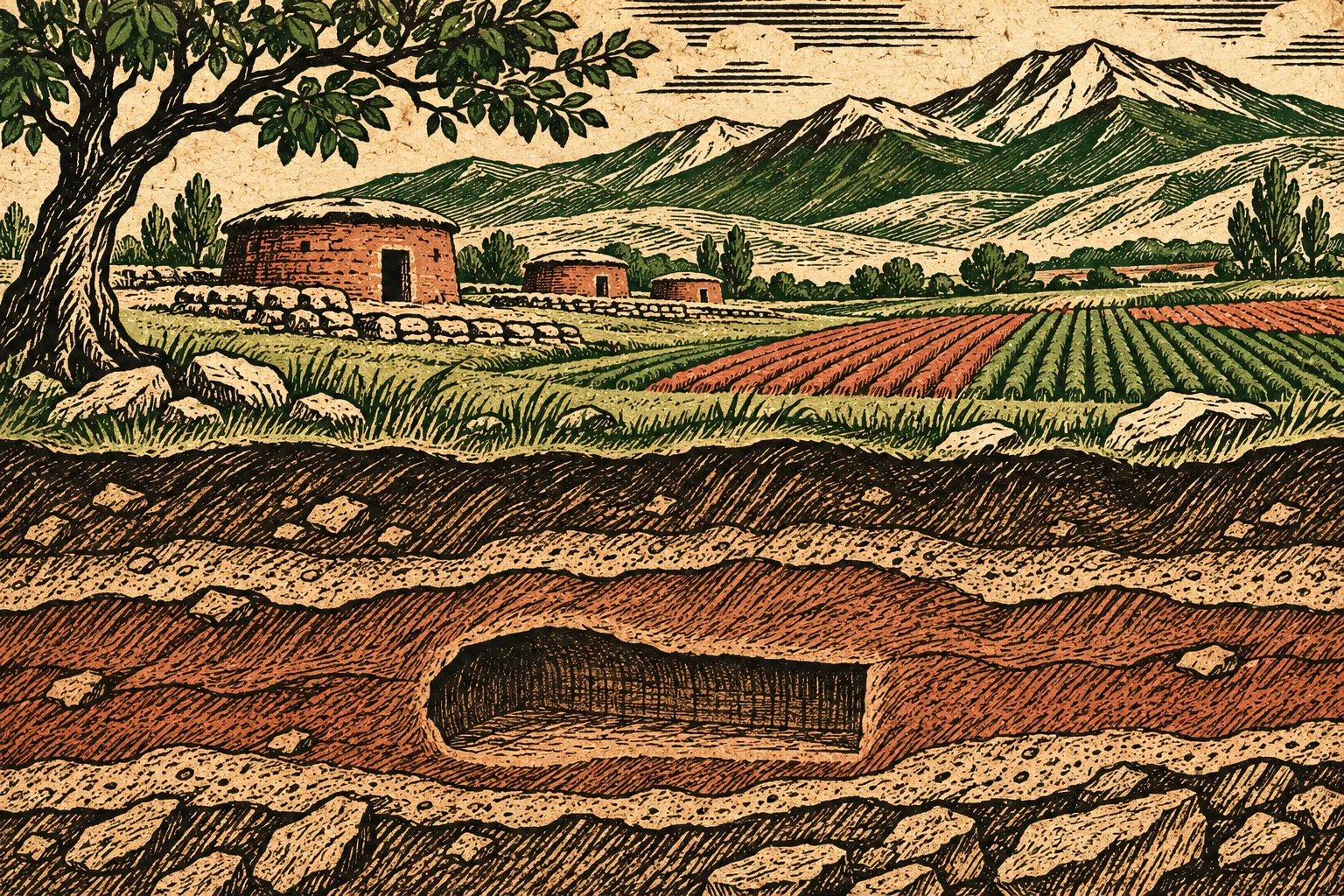
In the Bolnisi municipality of southern Georgia the Mashavera river runs into the Khrami. On a low rise near that meeting point, in the sixth millennium BCE, people built round houses of mudbrick, kept animals, sowed fields and stayed put. They belonged to what archaeologists call the Shulaveri-Shomutepe culture. The name comes from two sites, Shulaveris Gora in Georgia and Shomutepe in Azerbaijan, a border drawn thousands of years after these villages had fallen silent. They were among the earliest settled farmers in the South Caucasus.
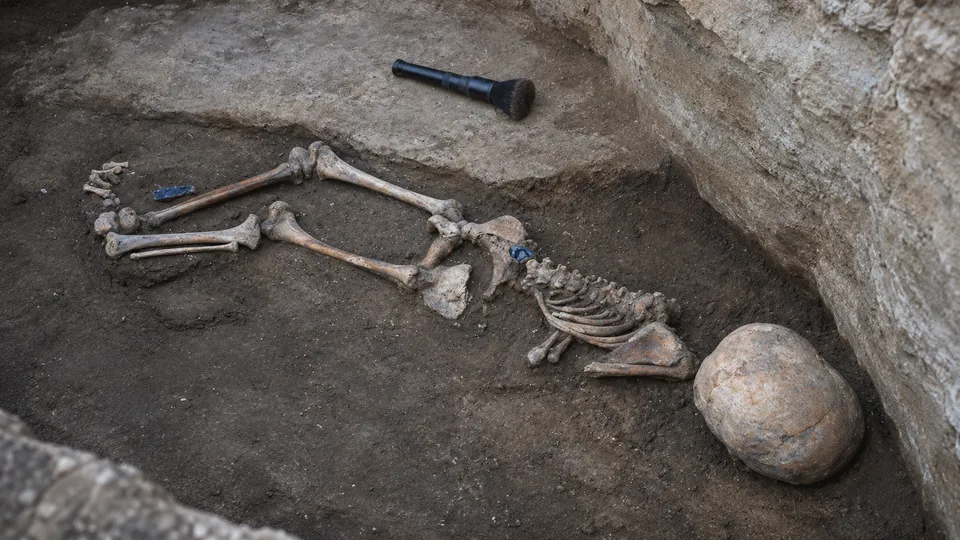
On November 25, Georgia’s National Agency for Cultural Heritage Preservation announced that excavators at this settlement, Mashavera Gora, had found the grave of a child. The grave may date to the Neolithic. If laboratory work confirms it, it will be the first known Neolithic burial in the country, as Leman Altuntaş reported for Arkeonews. Archaeologists have mapped many villages from that age across Georgia, and until now not one of them had given up a securely dated grave.
Note how carefully the announcement is worded. It says the grave may date to the period, not that it does. Everything depends on the proof still to come.
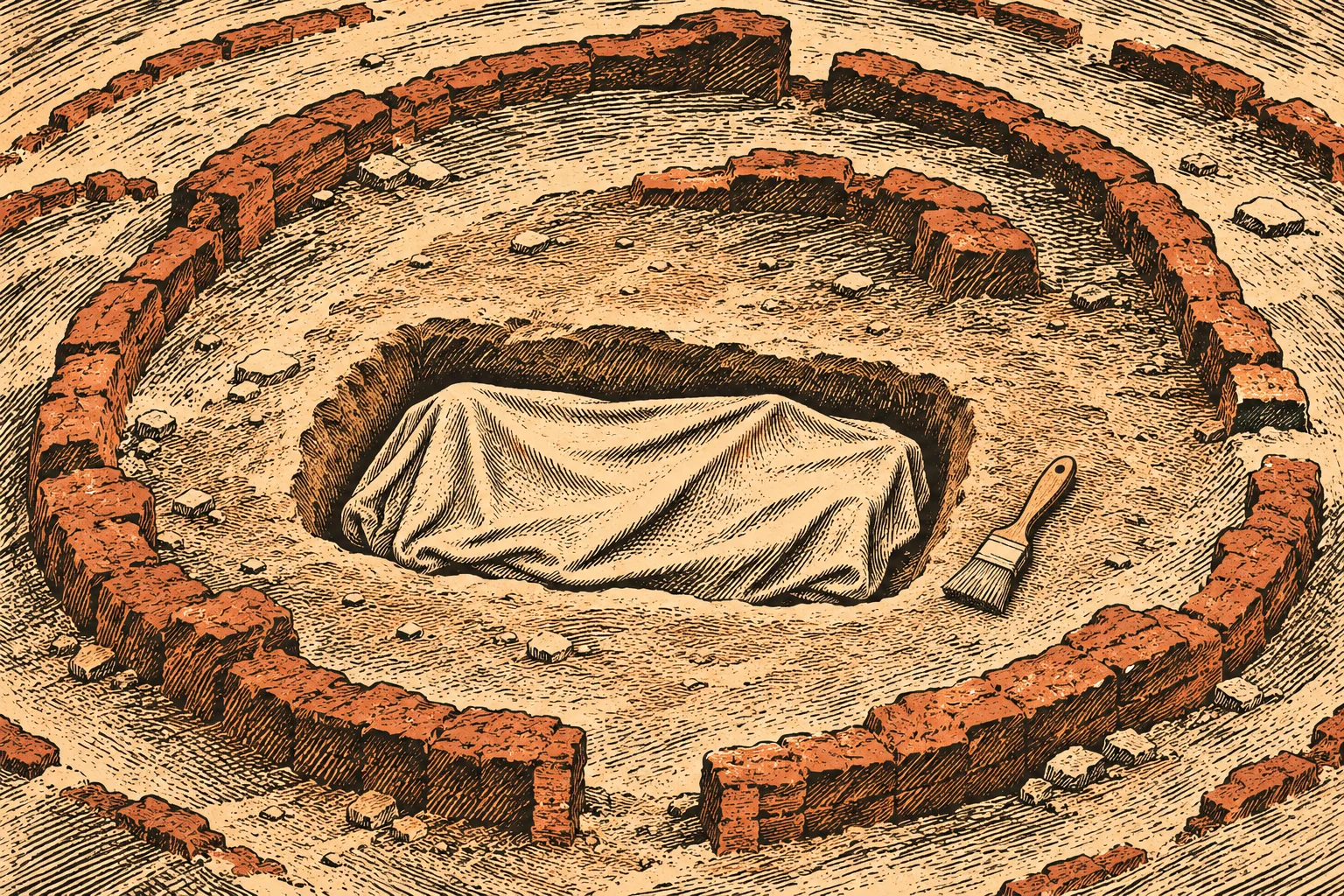
The dig is led by archaeologist Joni Abuladze for the Georgian National Museum and paid for by the heritage agency. According to Georgia Today, Abuladze briefed a group of visitors on how old the burial might be and why it matters. The group included Tea Oniani, the agency’s deputy director general; David Lordkipanidze, director general of the museum, with his deputy Mikheil Tsereteli; Bolnisi’s mayor, Zamur Chitanava; and the deputy mayor, Aleksandre Zabakhidze. So the officials of a modern state gathered at the edge of a small pit to look at a child whose name, language and parents are lost for good. Governments like to stand beside their deep past. In this case the past had shrunk to a single small skeleton.
What the living left behind
Much is known about these people while they were alive. Their villages are recognised by round mudbrick buildings, handmade pottery, tools of bone and antler, and blades knapped from obsidian, the black volcanic glass. Metal objects from some of their sites point to early metalworking in the region.
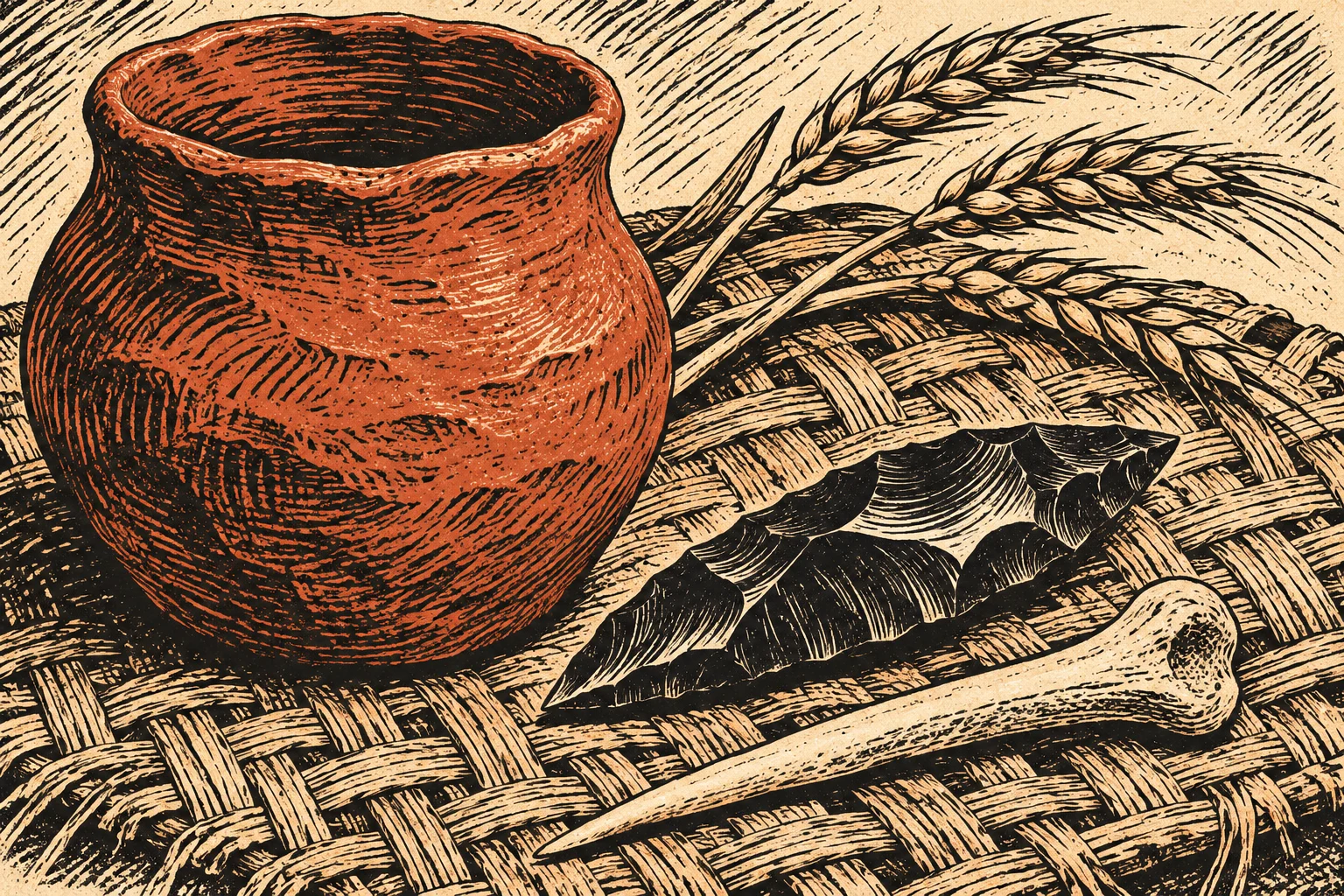
They also drank. A 2017 study in the Proceedings of the National Academy of Sciences found tartaric acid, the chemical marker of grapes and wine, along with malic, succinic and citric acids, in residues from jars at Shulaveris Gora and Gadachrili Gora. The study dated the residues to about 6000–5800 BC. That is roughly 8,000 years ago, among the earliest evidence of grape wine anywhere. The authors were cautious, though. They wrote that no single region could be named the birthplace of winemaking until there had been more excavation and more DNA work on wild vines. Plant remains also suggest that Georgia may have been an independent centre where bread wheat developed.
Mashavera Gora itself was dug only briefly in 1988. Then it lay untouched for decades, until the Georgian National Museum went back in 2020 and began what its team has published as a new investigation of the settlement. The renewed digging turned up round dwellings, small storage structures and building features not seen at other Shulaveri-Shomutepe sites. These farmers shared one tradition but still built to suit their own patch of ground.
What the dead did not leave
Here lies the strange gap in the record. We know how these farmers stored grain and fermented grapes, how they shaped clay and split stone. We know almost nothing of how they said goodbye to one another. The villages survive. The graves, in Georgia, have never been found.
Across the border in Azerbaijan, the Neolithic settlement of Mentesh Tepe held a collective burial. Its human remains later allowed researchers to trace the genetic ancestry of the region’s early farmers. A confirmed grave at Mashavera Gora could open the same door in Georgia. Bones keep records that pots and walls cannot: what a person ate, what illnesses they lived through, who they were related to.
A child’s skeleton has a particular value here, because it can show how children grew and how healthy they were in a farming society. The grave’s placement and the position of the body matter too. They may show how this community treated its dead, and whether it buried them among the houses of the living or somewhere apart.
Two possible ages
The difficulty is that Mashavera Gora was not lived in only once. The site also holds medieval deposits, so a grave dug into its soil might belong to the first farmers or to people who came thousands of years later. Bolnisi Municipality’s official announcement says the material needs further scientific study. The authorities have not given the child’s age at death, the cause of death, or any details of the burial.
Radiocarbon dating and anthropological examination should settle where the grave belongs and may say something about the child’s life and health. The answer will come from a laboratory and a measurement, not from officials. For now the child could belong to either age, the Neolithic or the medieval, and the carbon in the bones will decide which.