
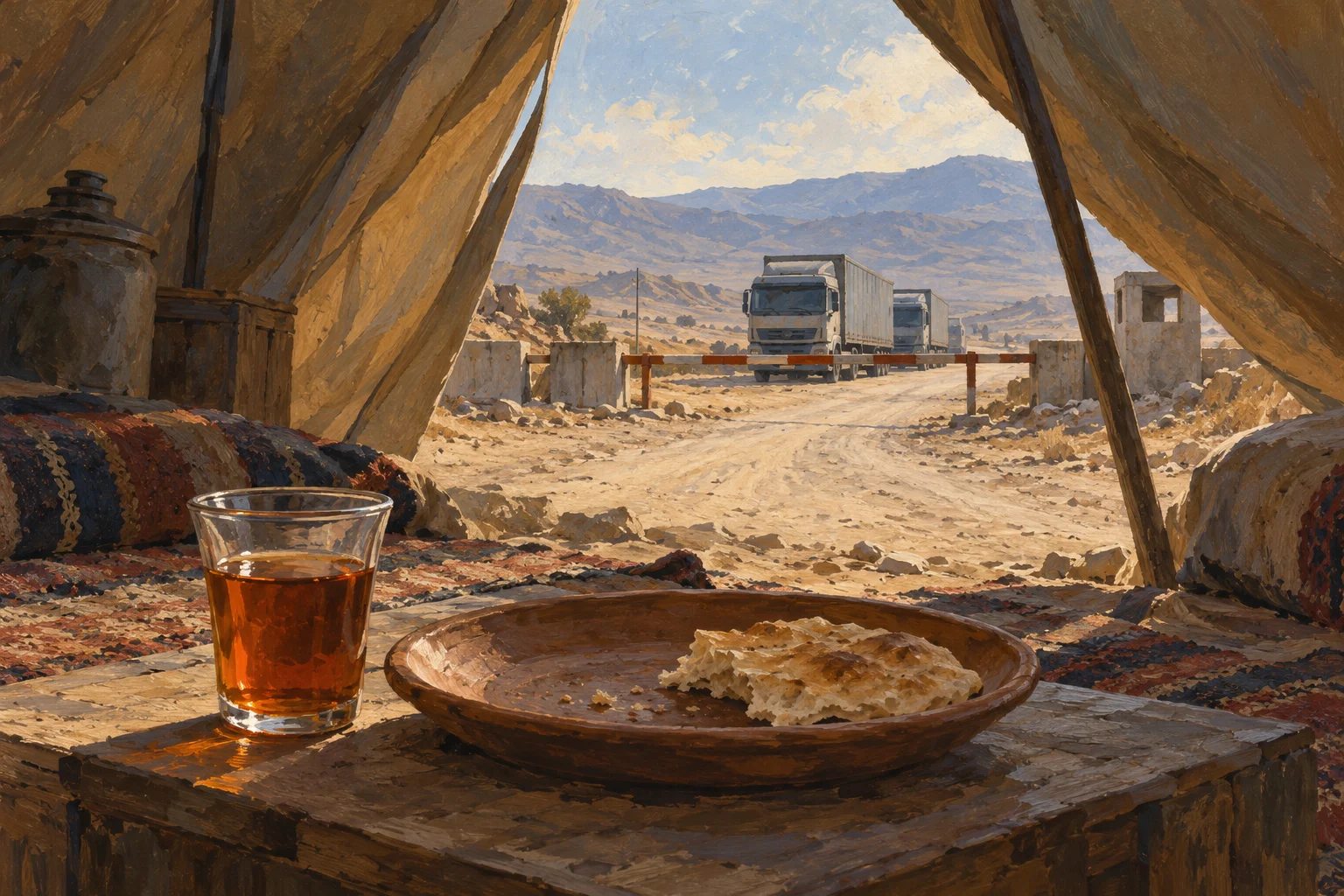
In a tent in western Gaza City, Huda Abu Leila, 30, has gone back to a breakfast she had managed to leave behind for months: tea and bread. She has five daughters, the youngest 18 months old and the eldest 10. This week, as Maram Humaid reported for Al Jazeera, that is all she could give them in the morning.
Her husband was wounded in the war and cannot work. She earns a little by baking bread for other people. On ordinary days the family eats canned beans with duqqa or za’atar. On harder days they dip the bread in the tea. “We couldn’t find eggs or milk, and we don’t have the money to stock up on food,” she said.
She shops about once a week and buys only small amounts. A tray of eggs was quoted to her at 60 shekels ($19.40), and she suspects some shops are holding stock back. Onions cost about 10 shekels a kilo. Tomatoes cost 10 to 15.
A fee at the gate
What changed her menu happened a long way from the tent, in a quarrel over money. On October 14, COGAT, the Israeli military body that controls civilian access to Gaza, announced that commercial goods would stop entering. Its explanation, reported by Al Jazeera at the time, was that the merchants had made this decision themselves. COGAT said they were reacting to a fee of 10,000 shekels that Hamas had imposed on each truck and to a demand that 30 percent of all sales be made in cash.
Gaza’s government media office called this a “blatant disinformation campaign and false statement”. It said the fee was a voluntary payment into a fund for people in need, such as widows and orphans. It also said cash payments had been encouraged because of a severe cash shortage but had never been required. Importers rejected Israel’s account as well. “The merchants are not the ones who stopped the shipments,” one told the Associated Press, and Palestinian importers gave The Washington Post the same denial.
On October 19, Israel said shipments would gradually resume. COGAT said merchants had reported that Hamas withdrew the demand. Hamas has continued to describe the payment as a voluntary contribution for people affected by the war. One version of events stopped the trucks and another version is meant to restart them. Neither has been settled.
Sieges seem to follow an old rule: the authorities argue in communiqués, and families pay the cost in what they can eat. By October 18, Al Jazeera was reporting that flour, eggs and onions had become sharply more expensive. Families who could afford it were stocking up, and families who could not afford it were falling further behind.
Half a ration
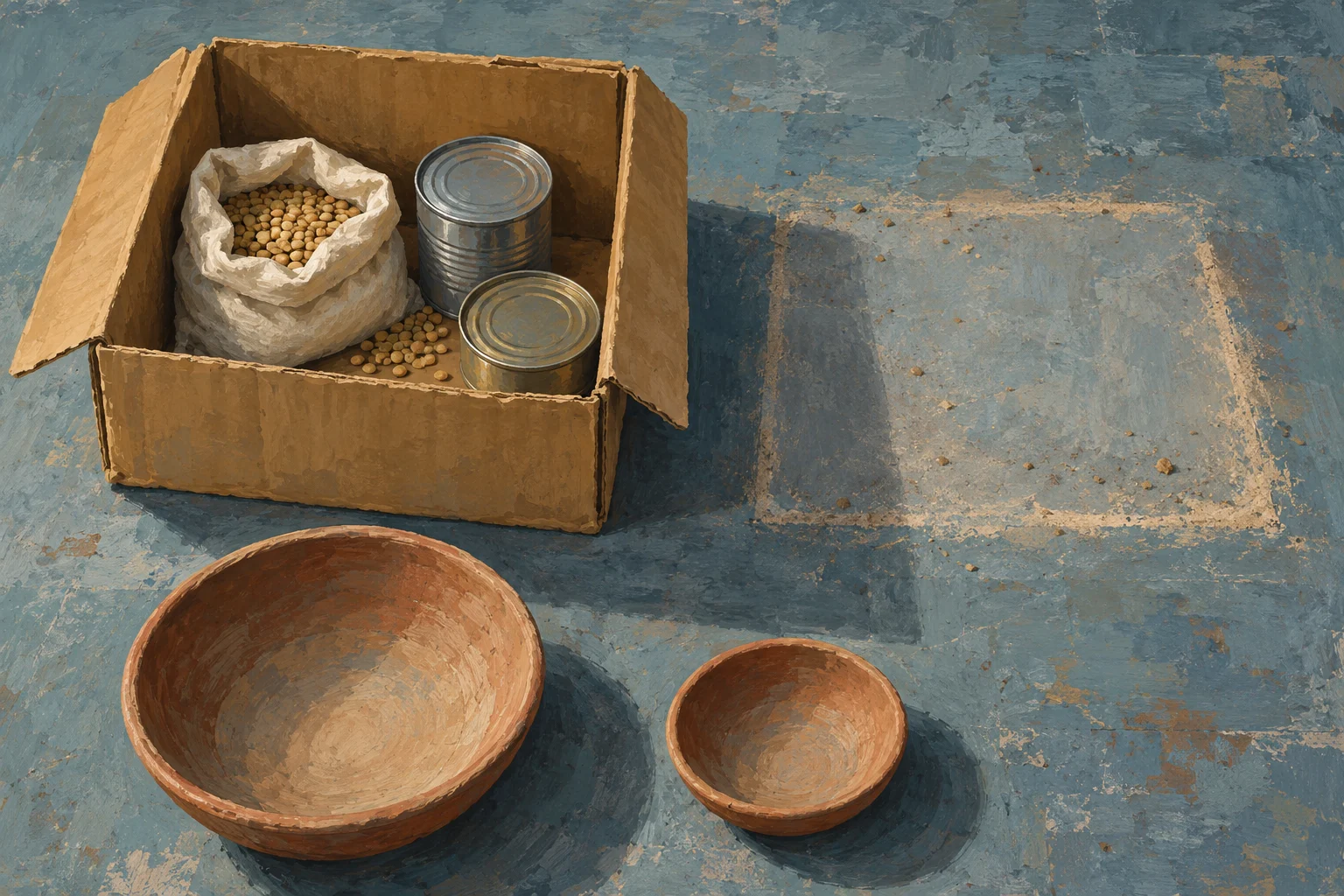
The closure came in the same week that the food agency’s money ran out. On October 19 the World Food Programme said funding shortfalls had forced it to cut assistance. The number of people it supports fell from 1.6 million in September to 1.1 million in October. Rations were halved, to one food parcel instead of two plus a smaller bag of wheat flour. Daily hot meals dropped from 250,000 to 150,000. The WFP said about 1.4 million people, roughly two-thirds of the population, face crisis-level food insecurity or worse.
Famine was declared in Gaza City in August 2025. In December 2025 the UN-backed IPC said famine had receded after the ceasefire that began two months earlier. That improvement rested on two supports: aid, and a market where people could buy food. Both have weakened in the same week. Most of Gaza’s people have no work, because of the war and because of Israeli limits on rebuilding. For them, even a market full of goods would offer little.
The tekkiya
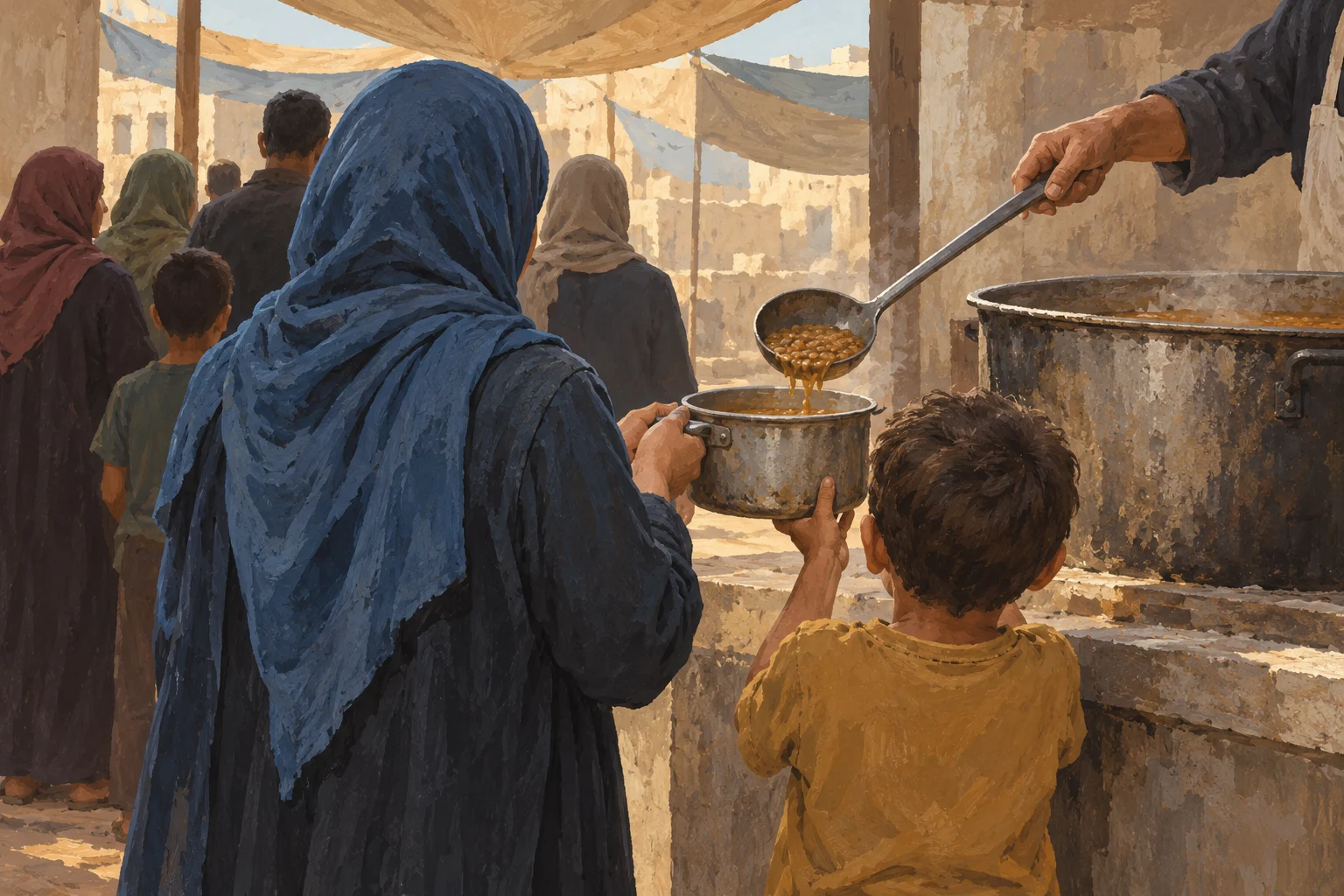
Raeda Soboh, 40, was displaced from Beit Lahiya and now lives in Gaza City with her family of nine. They have depended for a long time on the tekkiya, the community kitchen. “When a kitchen has food, we eat from it,” she said. Breakfast is tea and lunch comes from the kitchen. Some evenings there is falafel, rice, lentils or pasta. The family has had no milk, meat, eggs or cheese for about eight months. She last bought vegetables about a month ago. “I don’t buy good-quality things. I buy only what we need and what we can manage to pay for.”
Her children are weak and sleep for most of the day. One of them can carry a water container once but not a second time. The family has no reliable income. The place where they live is not recognised as an official camp, so they do not receive the aid vouchers and hygiene supplies that some camps get. Because their shelter is missing from a list, they are missing from the aid that follows the list.
What the hospitals count
In its report of October 19, the UN humanitarian office OCHA said more than 2,800 children were admitted for malnutrition treatment in September, more than 360 of them with severe acute malnutrition. About 3,000 children aged six months to five years are admitted every month. In a UNICEF-supported survey in August, 12.2 percent of children under five in accessible areas were stunted.
Dr Mohamed B Alraee is a paediatrician and nutrition specialist in Gaza City. He warns that prolonged restrictions could push those numbers higher. Hospitals are still receiving moderate and severe cases, he said, and not only among small children but also among those aged 5 to 17. Some children have swollen legs, a sign of serious protein deficiency. He links this to families who can afford only one meal a day, made up mostly of carbohydrates.
Children do not recover from malnutrition in a month or two. Some cases need three to six months to recover.
Huda’s daughters find it hard to concentrate and often feel dizzy and exhausted. Her eldest, Salma, has follow-up appointments at al-Rantisi Hospital, where a doctor told Huda to improve the girl’s diet. “I worry that my daughters will get sick if I cannot provide them with enough nutritious food,” she said.
Across the city, Raeda Soboh also measures her hopes by the crossings. “I hope the war ends, the situation improves and the crossings open, so prices can come down.”