
IBM said on Wednesday that it plans to connect two of its next-generation Nighthawk quantum processors into a single 1,040-qubit system in 2027, roughly double the size of the largest quantum machine the company has offered to date, Ars Technica reported.
Each processor in the paired machine, called Nighthawk r3, would carry 520 programmable qubits. If the chips keep the current ratio of computing qubits to supporting hardware, each would be built from about 2,000 individual qubit-like devices.”In 2027, IBM plans to connect two Nighthawk r3 processors into a single 1,040-qubit system,” the company said in its announcement.
The coupling plan marks a shift in how IBM intends to grow. Earlier versions of its road map promised rising gate counts on the same 120 hardware qubits, reaching 10,000 operations by 2027, and called for chaining three Nighthawk processors into a 360-qubit machine in 2026. That three-chip machine has not materialized. The Nighthawk r2, released in September, shipped as a single chip instead, though IBM says it delivers a large performance gain over its predecessor.
The gain comes from hardware devoted to resetting qubits to their ground state. The r2 contains 458 physical qubits, only 120 of which are programmable; the rest are extra devices — “dissipative reset gadgets,” in one piece of company terminology — that drain energy from the computing qubits.
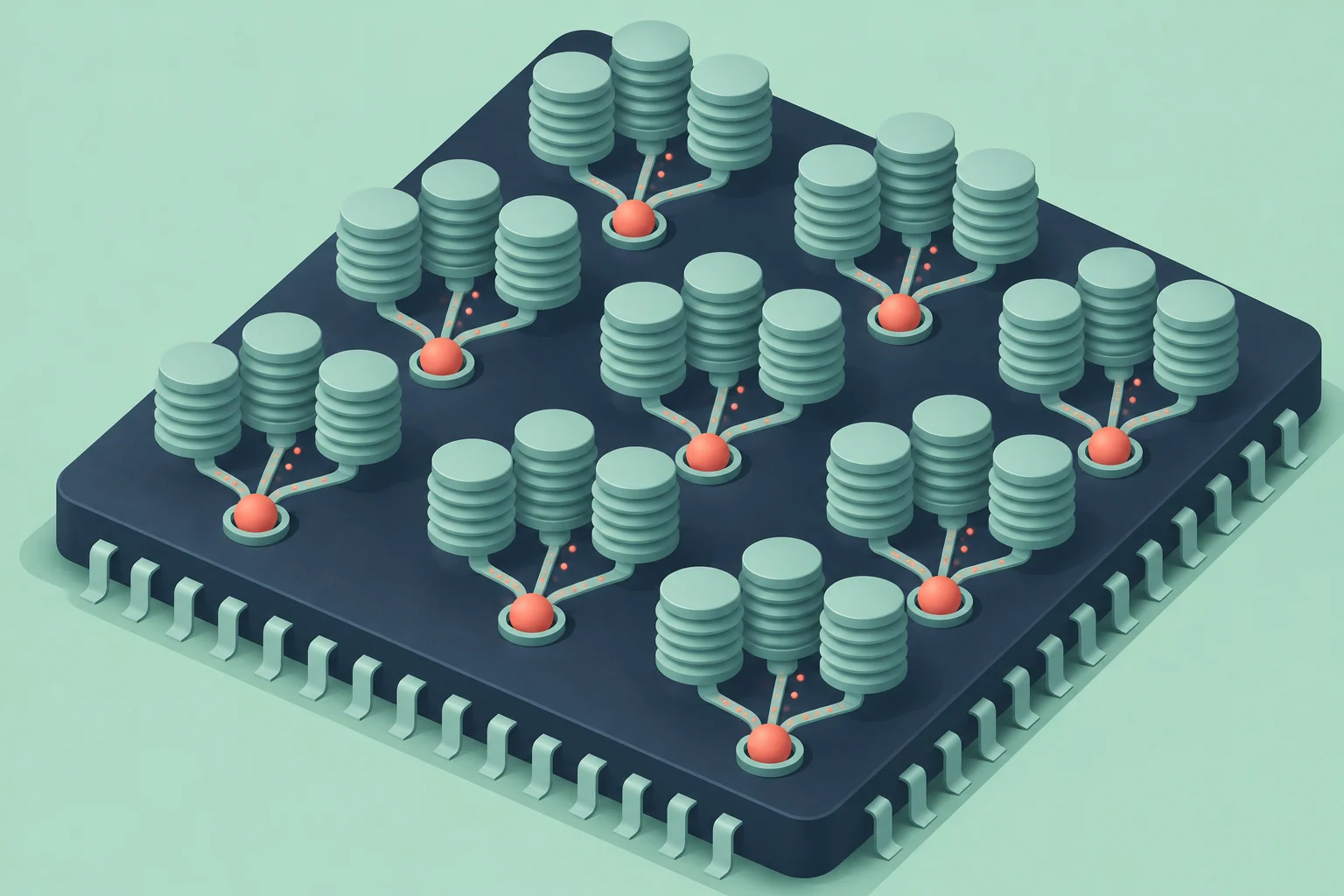
“This is an extra physical qubit that we include on the chip for each programmable qubit that lets us quickly remove the energy from one of our programmable qubits, returning it to the ground state,” Oliver Dial, a vice president of quantum systems, said. “That capability lets our users run circuits on this chip faster than was ever before possible.” Not every operation needs it, but IBM reports accelerations of up to 19-fold on some.
For 2027, the plan is to keep that reset technology, add further hardware improvements to raise the number of operations that can run before errors pile up, and push the programmable count to 520 per chip. IBM’s published road map has future Nighthawk iterations reaching up to 7,500 gates by the end of 2026, 10,000 in 2027 and some 15,000 two-qubit gates by 2028, the last on systems of 1,000 or more connected qubits, according to the company’s earlier announcements.
Chaining chips is also a matter of necessity, not just ambition. IBM will eventually have to link processors to field a useful number of error-corrected qubits, since qubits given over to error correction cannot also run computations.
Whether the 2027 target holds is the open question: the 360-qubit machine that was due this year did not. IBM has said the paired Nighthawk r3 system will be offered to users before the end of next year.