
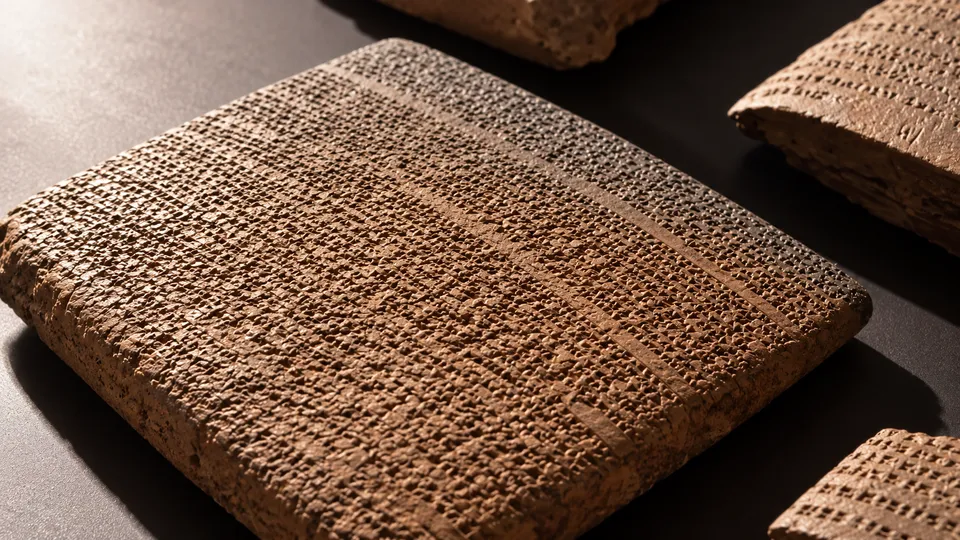
Archaeologists digging in central Türkiye this season uncovered 131 cuneiform tablets and fragments from a 3,400-year-old Hittite royal archive that records an epidemic, the death of an infant princess and generals’ pleas for troops.
The finds come from Kayalıpınar, in Sivas Province, the site of the ancient Hittite city of Šamuḫa, and date to the reign of King Tudhaliya II in the 14th century B.C., Arkeonews reported. With 53 tablets already dug up last year, the archive now runs to 184 tablets and fragments, written in Hittite and Hurrian.
Mehmet Nuri Ersoy, Türkiye’s culture and tourism minister, announced the discovery in a post on X and called it the most extensive Hittite-language archive found this century.
Several tablets describe an epidemic marked by high fever that passed from city to city and fell hardest on infants and children. One follows a princess who sickened in a city called Ziulila, whose location is unknown. The child was still nursing when the illness struck, and the surviving texts trace her decline, her death and the funerary rite held for her.
Other records show the royal household tracking the health of young princes and princesses, and of the children of high officials, with religious specialists casting divinations over the sick. What disease caused the epidemic, the tablets do not say.
The archive also holds a letter from Hittite generals in western Anatolia begging the king for more soldiers, horses and chariots. Without them, they warned, enemy forces could destroy their army — and they would not accept the blame. The letter reached the king at Šamuḫa, which shows the city was then a seat of military decision-making.
Šamuḫa, near the Kızılırmak River, began in the days of the Old Assyrian trading network and grew into an administrative and religious center. When enemies pressed the Hittite heartland in the 14th century, Tudhaliya made it a royal stronghold, and his successor Šuppiluliuma I later based campaigns in the region. The city was tied to Šauška, a Hurrian goddess identified with Ishtar, and ceremony was part of daily life there.
A third set of tablets follows Hittite bird diviners, who read omens in the flight and behavior of birds. The new texts record the routes they traveled, where they stopped and what they saw on the way — enough for researchers to rebuild the working organization behind the omens that kings consulted on war, illness and divine favor.
Earlier discoveries at Kayalıpınar first fixed the site’s identity as Šamuḫa. Fieldwork over the years has turned up administrative buildings, religious structures, seal impressions and earlier tablets, and the new collection adds the people behind the stones: generals waiting on reinforcements, specialists logging the flight of birds, a family burying a child.
Excavations at Kayalıpınar continue under the direction of Çiğdem Maner, an associate professor of archaeology at Koç University.