
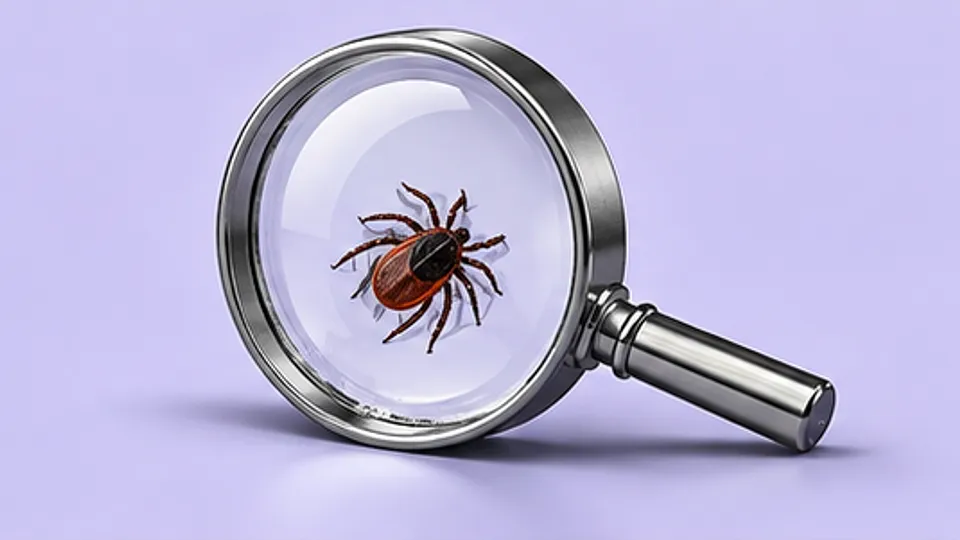
The Department of Health and Human Services announced $3 million this week for new research aimed at reducing tick populations, targeting Lyme disease, alpha-gal syndrome and other tick-borne illnesses.
“Tickborne diseases are spreading across America, and HHS is taking action to stop them at the source,” Robert F. Kennedy Jr., the health secretary, said in a statement. “Our goal is clear: fewer ticks, fewer bites, and fewer Americans suffering from Lyme disease, alpha-gal syndrome, and other tickborne illnesses.”
The money, from the Centers for Disease Control and Prevention and the National Institutes of Health, will go to two of the C.D.C.’s Centers of Excellence in Vector-Borne Diseases. One project would feed deer acaricide-treated food to keep ticks from completing the blood meal they need to produce eggs; another pursues next-generation bait systems aimed at rodents. Deer carry adult blacklegged and lone star ticks, while rodents host juvenile blacklegged ticks and the bacterium that causes Lyme disease. Nearly 31 million people in the United States may be bitten by a tick each year, according to the agency, and more than half a million Americans are diagnosed with tick-borne diseases annually.
“This effort is designed to move tick control forward by evaluating large-scale deployment of wildlife-targeted interventions,” said Dr. Lyle Petersen, director of the C.D.C.’s Division of Vector-Borne Diseases. “The ultimate goal is simple but ambitious: reduce the number of ticks to stop tick bites and tickborne diseases.”
In Pennsylvania, health officials announced the state’s fifth measles-related death, in an unvaccinated resident of Lancaster County, which has become the nation’s measles hot spot. It was the third death in Lancaster County; Jefferson and Mifflin counties have each confirmed one. The state Department of Health released no other information, citing privacy. The C.D.C. has confirmed only two measles deaths nationally — presumably in Pennsylvania, though it has given no details.
The state recorded 40 new measles cases in two days, raising its total to 943. Of those patients, 176 have been hospitalized, about 19 percent, twice the national average of 9 percent in C.D.C. data. Only four cases have been recorded in vaccinated people. The outbreak has driven vaccinations up: more than 53,000 measles, mumps and rubella doses were administered statewide in September, more than double the 25,000 of a typical month, after more than 49,000 in August. “People who have two documented doses of MMR do not need another,” the health department said, advising adults with one dose or missing records to talk with a provider or pharmacist.
Separately, women with uncomplicated urinary tract infections got symptom relief as early as 24 hours after taking gepotidacin, a new antibiotic, according to a single-arm, nonrandomized trial published in JAMA Network Open. The Food and Drug Administration approved the drug in March 2025; it was developed by the British drugmaker GSK with the Biomedical Advanced Research and Development Authority as an added option amid rising drug resistance.
Researchers enrolled 97 female patients aged 12 and older with at least two symptoms to take the drug twice daily for five days. Among the 90 patients evaluated, 49, or 54 percent, showed improvement at 24 hours; the share was 80 percent at 48 hours, 90 percent at 72 hours and 87 percent at 96 hours. Full symptom resolution rose from 3 percent at 24 hours to 90 percent by day 10. “Together these findings support gepotidacin as an option to address the unmet need for new oral antibacterials in uUTI treatment,” the authors wrote. No serious adverse events were reported.