
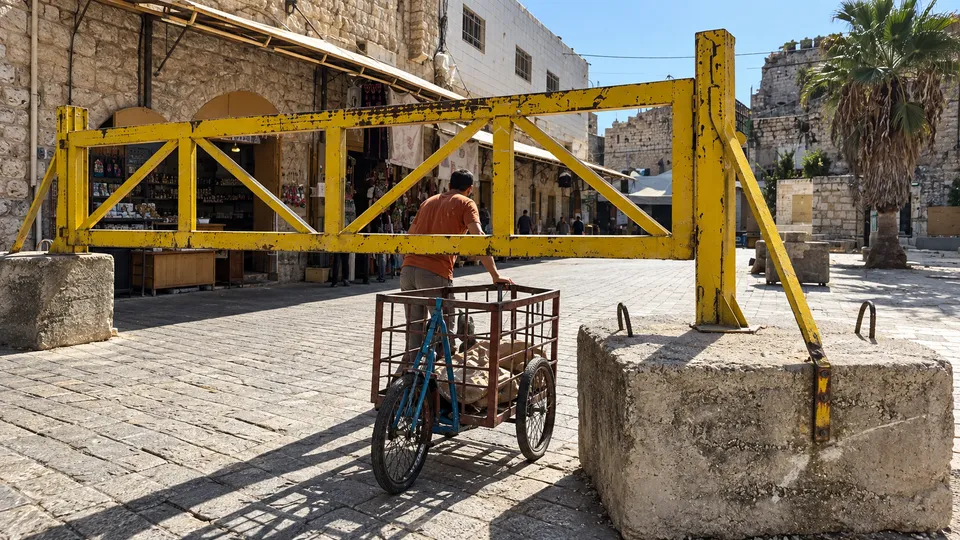
Badr al-Tamimi is 60. He has lived all his life in the al-Sheikh neighbourhood next to the Ibrahimi Mosque, and he keeps a shop in Hebron’s Old City. As Fayha Shalash reports for Al Jazeera, getting through an ordinary day there now means checkpoints, iron gates and closed roads. “Our presence in the Old City is a matter of steadfastness,” he said. Put plainly, staying where he already lives has become a political act, because it can no longer be taken for granted.
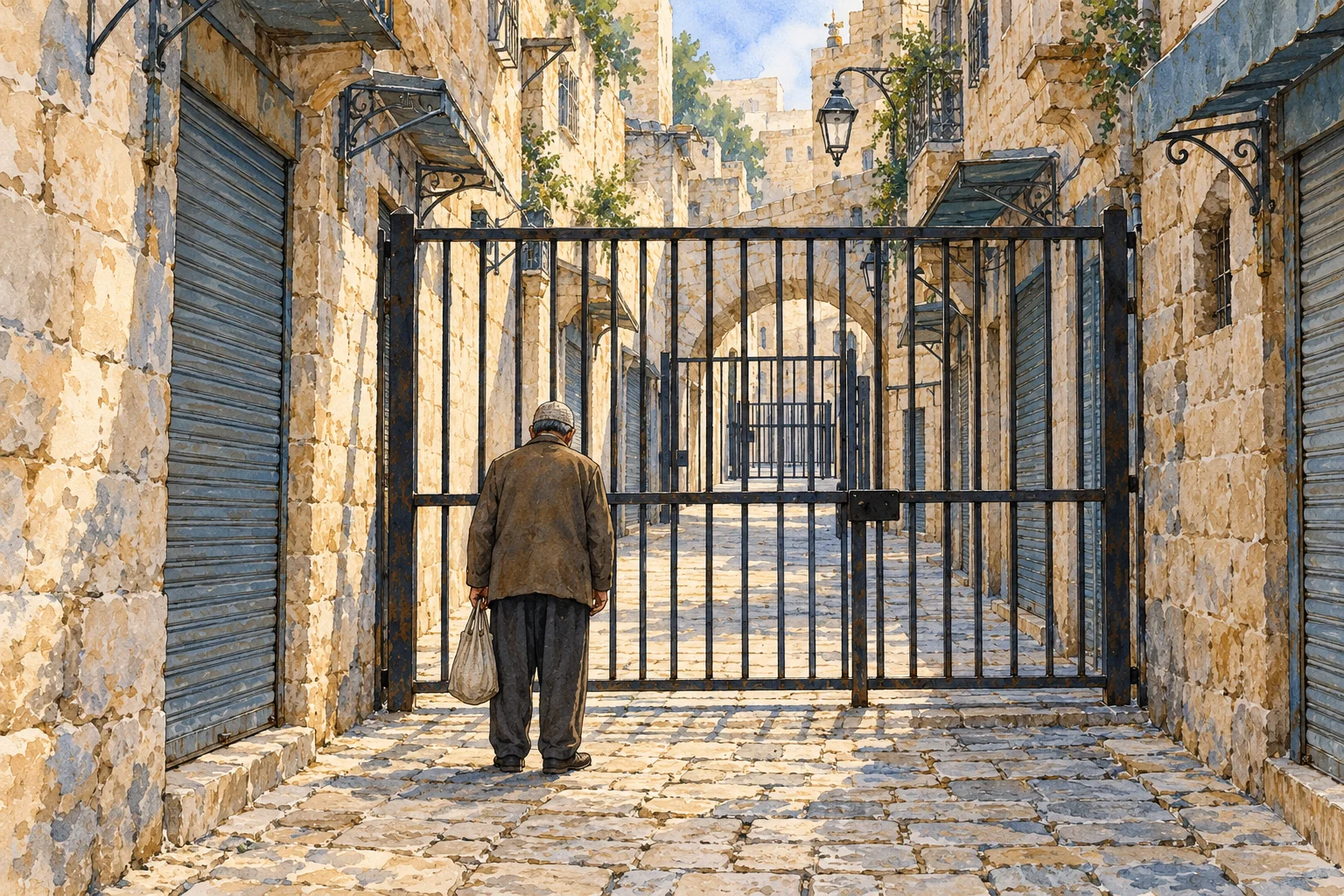
The latest additions are three iron gates, installed recently along a 200-metre stretch. That works out to about one gate every 67 metres. One is on al-Zahid Road, the only route vehicles can take to the Old City entrance. The other two are on al-Shalala Street, which runs toward the shops and Bab al-Zawiya. A gate doesn’t need a new law, and it doesn’t need a press release. It sits there, and the people on the far side of it have to plan around it.
How the city is divided
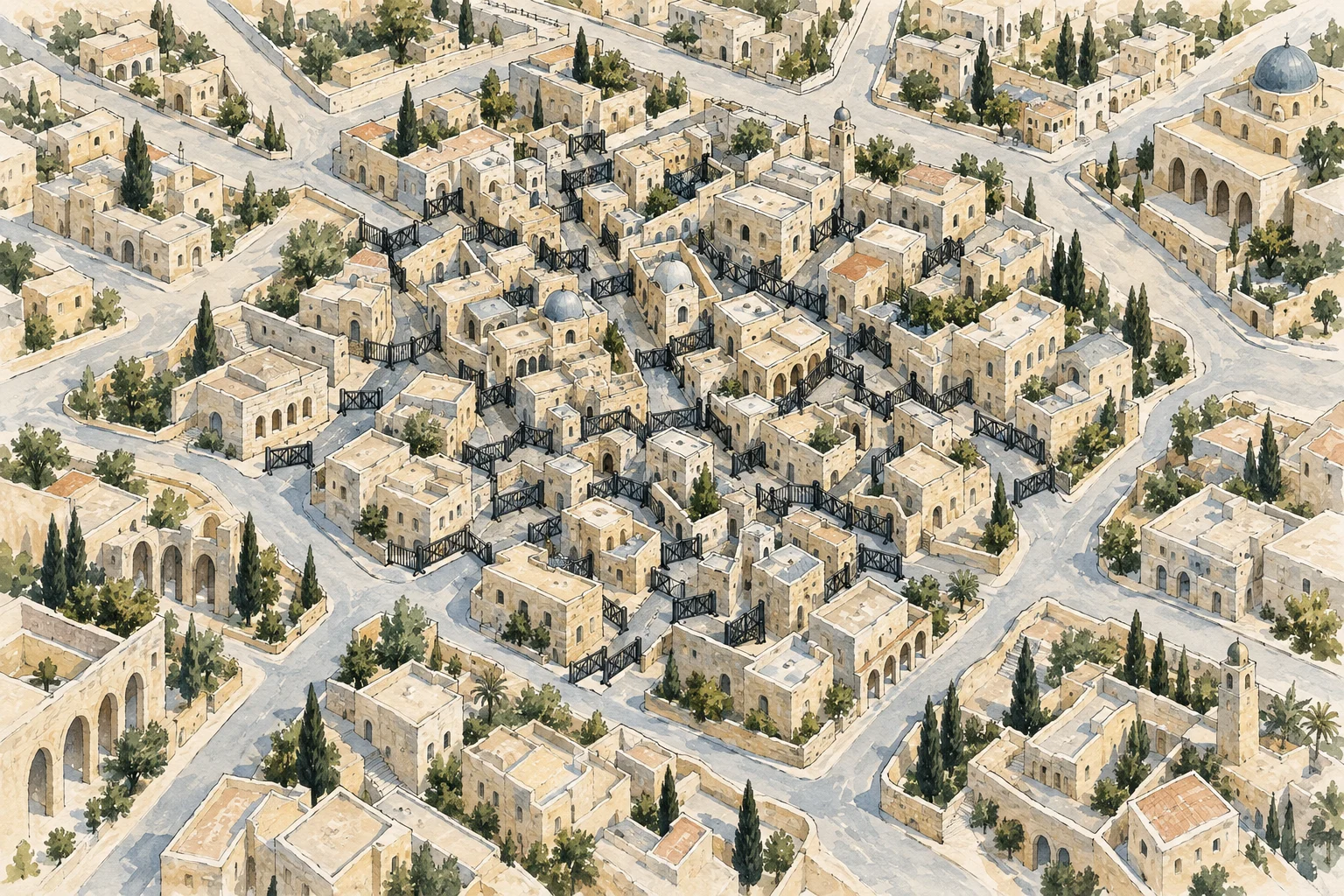
The arrangement goes back to the 1997 Hebron Protocol between the PLO and Israel, which split the city in two. H1 came under relative Palestinian jurisdiction. H2, which takes in the Old City, the mosque and the settlements, stayed under Israeli security control. In practice, Palestinians in H2 live under the military’s rules. Al Jazeera says about 7,000 Palestinians live in the most restricted area, alongside a few hundred settlers. Hebron’s mayor, Yousef al-Jabari, puts the number affected across the Old City and the closed zones at about 10,000. How many people count as living in the closed zone depends on where the line is drawn. An earlier UN humanitarian office report counted some 1,000 Palestinians in the tightest pocket, around Ash Shuhada Street, with a single shop that sold a few basic foods.
The numbers make the concentration clear. According to UN OCHA figures cited by Al Jazeera, about 40 percent of the West Bank’s 89 checkpoints and 11 percent of its 925 movement obstacles are in H2. That is roughly 35 checkpoints and about 100 obstacles in one district of one city. Al Jazeera also reports that since October 7, 2023, the number of checkpoints in the area has risen to 32, with more than 130 other obstacles. The counts don’t match exactly, but they point the same way.
Living by permission
The access rules are where the system really bites. Since October 2023, getting into the area has required a specific ID number. Either you are on the list or you are not. The checkpoints are usually open only from 7am to 8pm, and curfews are imposed two or three days a week, usually at weekends. Since 2015, Israel has also capped how many closed-zone residents can pass through. Waits can run to hours and often depend, residents say, on the mood of the soldiers on duty. Worshippers trying to reach the mosque are held up as well. Issa Amro, coordinator of the group Youth Against Settlements, described the result bluntly: “The movement restrictions are effectively holding residents as hostages.”
Ayat al-Jabari, a 40-year-old science teacher, taught for a year at Qurtuba School. Her commute should have taken five minutes and often took an hour. She detoured through a cemetery, sometimes in the dark, where settlers and soldiers blocked or abused people. She now teaches at Al-Fayha School. On Jewish holidays, she said, the area goes into total lockdown, with residents “even forbidden from opening their front doors.”
How it got this way
Israel occupied Hebron in 1967, but for decades afterwards the city stayed a busy commercial centre. The break came in 1994, when a US-born Israeli settler killed 29 worshippers at the Ibrahimi Mosque. After the massacre, the Old City was cut off from the rest of Hebron. “They committed the crime, yet they continue to punish us for it,” al-Tamimi said. Restrictions tightened again during the second Intifada in 2000, when large areas were sealed, shops were forced to close and residents were often confined to their homes or neighbourhoods.
More than 500 shops have since been shut, and Shuhada Street, once the city’s main route for traffic and trade, is closed. The Oakland Institute counts 304 shops and warehouses closed by the ban on Palestinian movement along Shuhada and the streets around it. B’Tselem lists the al-Mahkamah checkpoint at the street’s entrance as permanently staffed, with soldiers turning Palestinians away. And on February 9 this year, the Palestinian news agency WAFA reported that Israeli forces closed the street again, blocking residents from reaching their own homes.
Israel justifies all this on security grounds. The obvious problem with that explanation is that it applies to only one group: Al Jazeera notes that settlers face no comparable restrictions. Restrictions that fall on one population and not the other are hard to describe as neutral. The mayor goes further, suggesting the government may be courting settlers ahead of this month’s Israeli election. He offers that as his own reading, and it fits a cabinet in which a senior minister has openly called to do in the West Bank what was done in Gaza.
The municipality is suing in Israeli courts, even though it doubts the judiciary is impartial. That tells you something: when the institution you distrust is the only place left to complain, you file there anyway. The case will move at the pace of the courts. In the meantime, the gates open at 7am and close at 8pm.