
Every administration finds a polite way to send the petitioner away. The clerk has no need to refuse you. He only has to point you to another window. For the past fifteen years the window has been a small screen, and the phrase came out the same everywhere: have you tried downloading our app?
Jim Nielsen, who writes about building for the web, believes he can hear the next phrase coming. On his blog on 25 November he gave it its likely wording: “Have you tried using your agent with ours?”
A worry from 2025
He has been worried about this for a while. In March 2025 he published a short post titled “AX, DX, UX”, answering a new term put forward by Matt Biilmann, chief executive of Netlify. Biilmann called it agent experience: the experience a user’s AI agent has when it works a product or platform on that user’s behalf. Nielsen had no quarrel with the idea. His concern was more practical. Teams have limited time and money, and he suspected the agent would win the fight for them, much as developer experience has sometimes beaten user experience. He set out the order he wanted: the human first, the agent second, the developer third.

Twenty months later he has gone back to see how things turned out. His conclusion is a single sentence:
I feel like we’re building things that are increasingly accessible to robots while remaining inaccessible to people.
What happened to a word
The word that troubles him most is “accessible.” In the craft of building software it has long carried a moral load, the duty to make things usable by people of every ability. Nielsen thinks the word is drifting. In everyday use among builders, he writes, “Is it accessible?” sometimes seems to mean only whether an AI agent can get in. The agent supposedly works for us, so a door that opens to the machine gets counted as a door that opens to the person.
This is how a responsibility gets handed off. The institution keeps the duty to serve, then decides that serving your representative is enough, and the representative is something you were expected to bring along yourself. Whether that delegate can be trusted is a separate question. Rews has reported on staff logs showing that Meta’s Muse agent read Signal texts and invented bank balances.
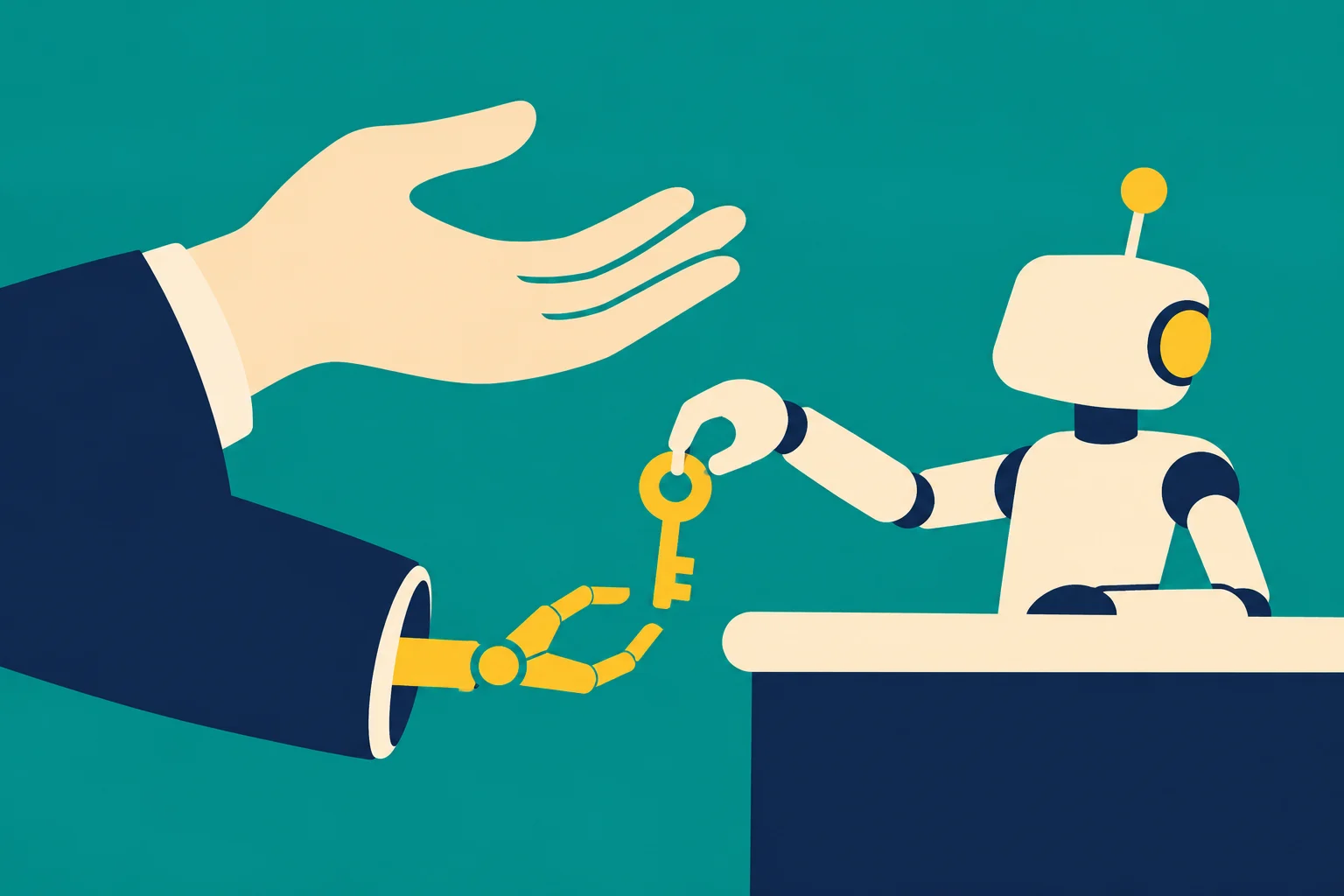
For Nielsen the problem is the mood of his own profession. He does not hear technologists saying “We should make this more accessible to our fellow humans.” What he hears instead is: “Humans should use their agents to access our thing.” In his words, we are giving our time and attention to building for machines, not for one another.
An old order of precedence
His phrase “priority of constituencies” has a lineage. The web’s standards body, the W3C, writes it into its design principles as an order of rank: “If a trade-off needs to be made, always put user needs above all.” Users come before page authors, and page authors before the people who build “user agents,” the W3C’s term for browsers, the software that acts for the person in front of it. Under that old ranking the agent served the user and sat below the user. Nielsen fears the order is being turned upside down without anyone saying so.
He wrote a short exchange, labelled clearly as a conversation he dreads and not one he has heard, between people deciding whether a product is ready:
“Are we ready to ship? Does it work for the AI?”
“Yes — but you can’t really use it yourself.”
“That’s ok, ship it. We can always fix that later — but also, who even does things themselves anymore? lol.”
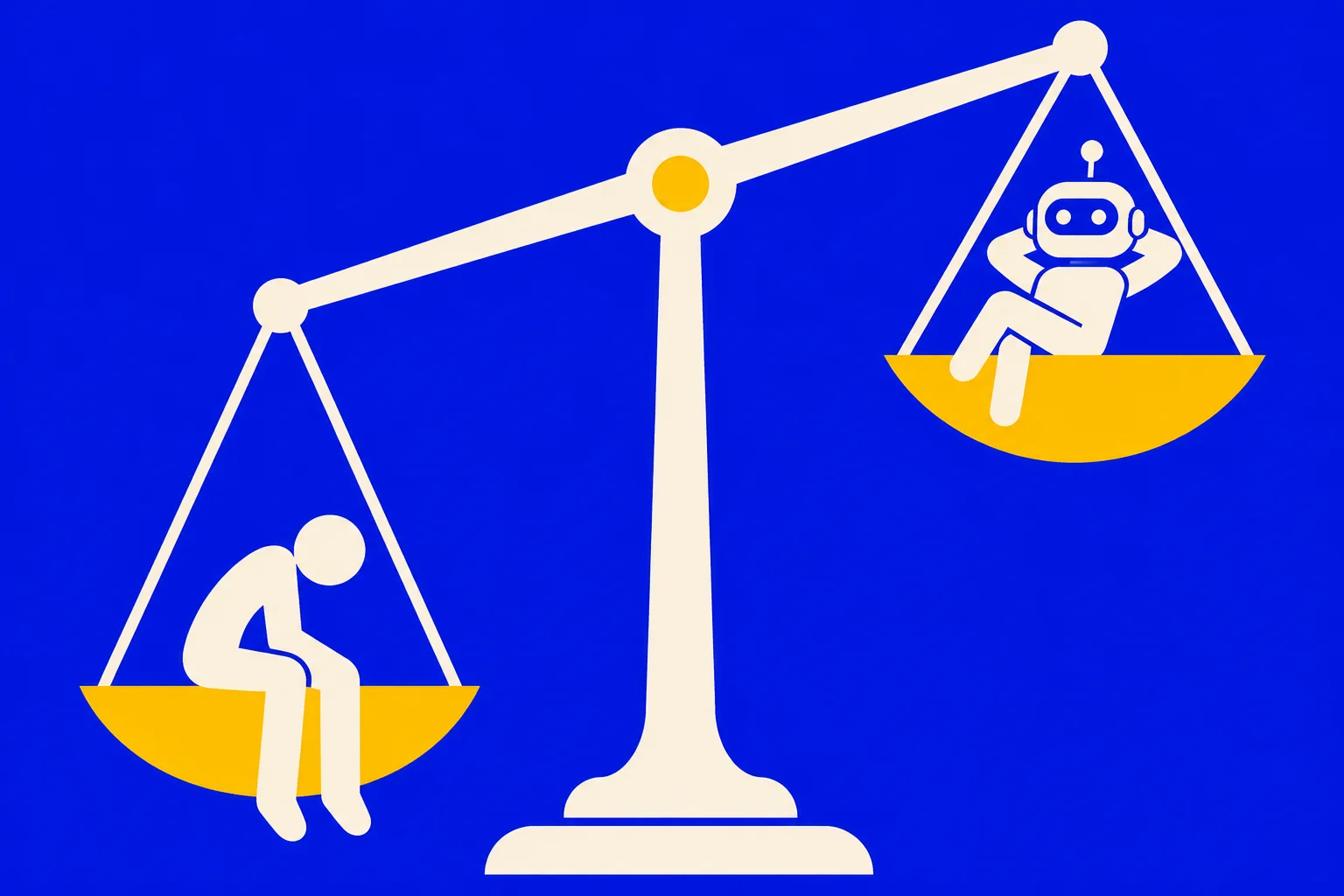
That last word does the damage. A whole category of person is waved away with a laugh. He fears the same attitude will reach the help desk. A customer will say “Your thing isn’t working for me,” and the organisation’s automatic reply will be: “Did you try using your AI agent?”
The parents
Nielsen bases the warning on something he has seen, not on a forecast. He writes that we have already built a world that increasingly pushes aside people without smartphones. His parents have no smartphone, and he says they struggle with flying, with grocery store coupons and with proving who they are.
None of these is a luxury. Boarding a plane, getting a discount on food and proving your identity to someone who asks are ordinary parts of life. They were moved, one by one, into a device that some people do not own, and those people were left at the old counter, which has fewer staff every year.
Every technology that promises to free us also sorts us, into those who have the new tool and those who are told to get one. That is a reflection, not a finding. Nielsen’s question to his trade is narrower and harder to wave away. He asks whether, in another 10 to 20 years, the people without an AI agent will be where his parents are now.