
Boston-based cooling startup Pascal is developing technology that replaces the gas refrigerants used in air conditioners and refrigerators with solid materials, and is working with South Korean companies to bring it to market.
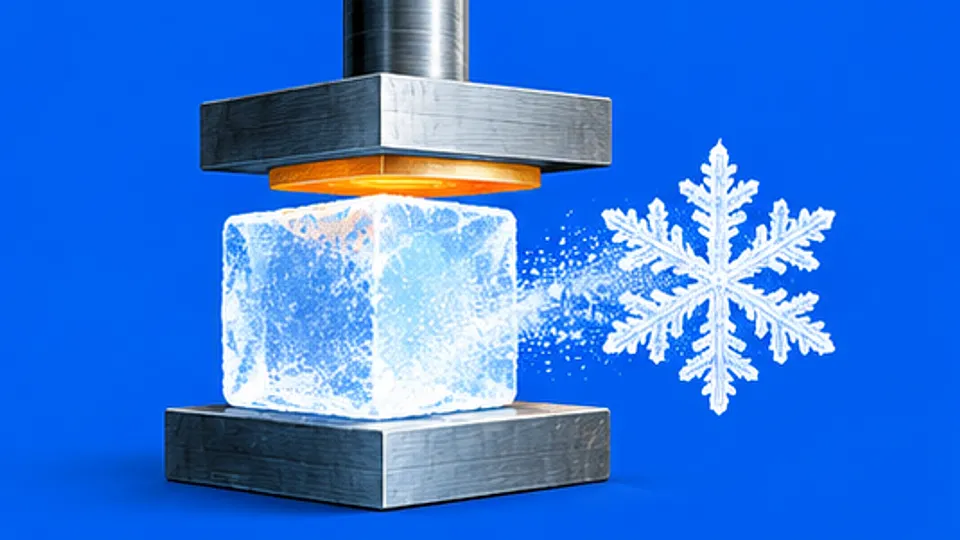
Certain solids change temperature under pressure, and Pascal uses that property to cool, Chosun Ilbo reported on Tuesday. “A refrigerant is a material whose temperature changes under pressure,” Pascal chief technology officer Jin Young Seo told the newspaper. “We use a solid that responds to pressure the same way. When you press a solid and let it expand, it gets cold, and we use that cold to cool a refrigerator or a room.”
Seo said gas refrigerants such as freon, carbon dioxide and propane carry fire risks, contribute to global warming, raise health and safety concerns and face heavy regulation. Solid refrigerants store more energy in the same volume than gases, making them more efficient, he said.
Pascal grew out of the laboratory of Harvard University chemistry professor Jarad Mason in 2023. Mason founded the company with Adam Slavney, then a postdoctoral researcher in the lab and now chief executive, and Seo, then a doctoral student.
The company raised $8 million from U.S. venture capital firm Engine Ventures in 2024, then recently secured about $6.5 million more from investors including South Korea’s LB Investment and Sazze Partners, Slavney said. In 2024 the American Chemical Society’s C&EN named Pascal one of its 10 startups to watch, and this month MIT Technology Review named Seo to its Innovators Under 35 list.
Slavney said the pair visited South Korea to build ties with its manufacturers. “South Korea is strong in this industry,” he said, adding that the country was the best fit after weighing production capacity and technical strength against the United States, China and Japan. He said they met companies making parts such as compressors, valves and ducts as well as air conditioner and refrigerator makers.
Solid refrigerants are not new, Seo said: NASA studied them extensively in the 1970s, but at the time there was no regulatory or environmental pressure to commercialise them. Pascal builds its refrigerants into modules that can be stacked to make air conditioners, heat pumps or refrigerators, he said. “Think of laptop batteries,” he said.
Data centres are “a very good market for us” because they need large amounts of efficient cooling, Slavney said, though the company has not yet built equipment at that scale. He said a small number of companies in Germany and Britain work on similar technology, and that Pascal’s advantage is cooling at low pressure, using off-the-shelf parts rather than large presses, with 15 employees handling everything from materials to finished products.
Seo, who graduated from Korea Science Academy of KAIST in Busan and majored in chemistry at Seoul National University before starting a Harvard doctorate in 2018, said Pascal is also collaborating with Korean researchers, including Sungkyunkwan University mechanical engineering professor Kim Sung-gon, with results expected next year.
Slavney said Korean firms move fast when something matters. “As a startup, time is all we have,” he said, contrasting them with American firms that he said let negotiations drag. “They are honest and communicate quickly.”
“Our technology deserves to be out in the world,” Slavney said. “If we don’t do it, no one will.”