
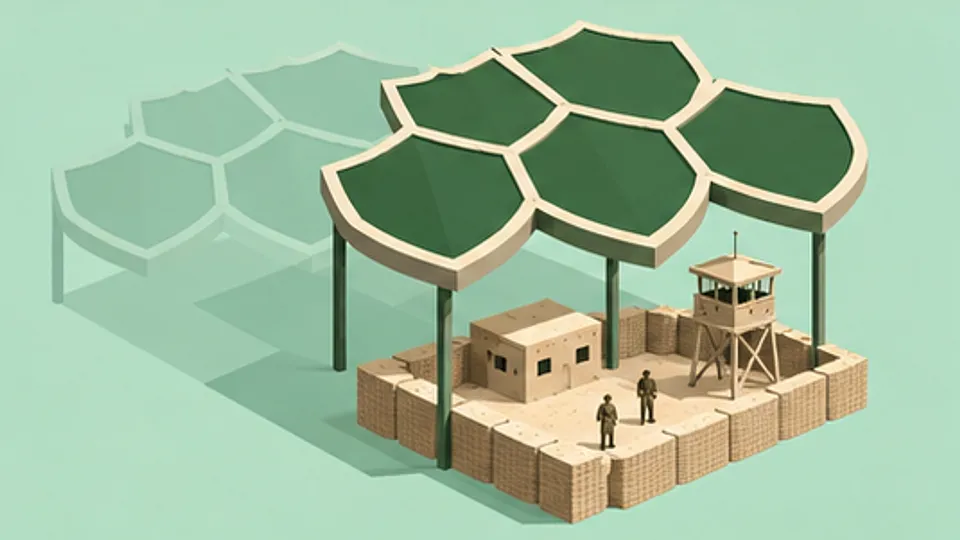
On Tuesday, 10 November, the defence ministers of six Gulf monarchies (Bahrain, Kuwait, Oman, Qatar, Saudi Arabia and the United Arab Emirates) met for the 23rd session of the Gulf Cooperation Council’s Joint Defence Council. They agreed to set up an advanced headquarters for the bloc’s Unified Military Command in Kuwait and to assign “appropriate” military forces to it, as Al Jazeera reported.
A lot rests on the word “appropriate”. Nobody has said how many troops, what kind of forces, or where in Kuwait the post will stand. The decision exists. Its size does not, at least not in public.
According to Asharq Al-Awsat, the ministers met in Manama, with Bahrain’s Minister of Defence Affairs, Lieutenant General Abdullah bin Hassan Al Nuaimi, in the chair. GCC Secretary-General Jasem Mohamed Albudaiwi described the new command as part of a drive to strengthen joint Gulf military action, carrying out orders the Gulf leaders gave at an extraordinary meeting in Jeddah in April to pool their efforts and raise readiness against shared threats. The security of the member states, he said, is a responsibility they all share.
A command that grew slowly
The institution being moved forward is not new. The Gulf states created the Unified Military Command at a summit in Kuwait in December 2013, with a mandate to plan and run joint operations and to defend members’ territory, airspace and waters. Its headquarters in Riyadh did not open until 2021. The Peninsula Shield force, the bloc’s older collective formation, has existed for decades.
Eight years from the decision to the building. A reflection, not a finding: collective defence among wealthy, cautious neighbours tends to stay on paper until something forces it into the open. This year something did.
The year the missiles came
On 28 February the United States and Israel launched their war on Iran. Iranian missiles and drones then fell on the Gulf states. Flights and shipping were disrupted, and the region’s energy infrastructure, which pays for everything else in these monarchies, turned out to be exposed. Albudaiwi condemned the Iranian attacks in strong terms, saying they had damaged numerous civilian facilities and infrastructure across the council’s members.
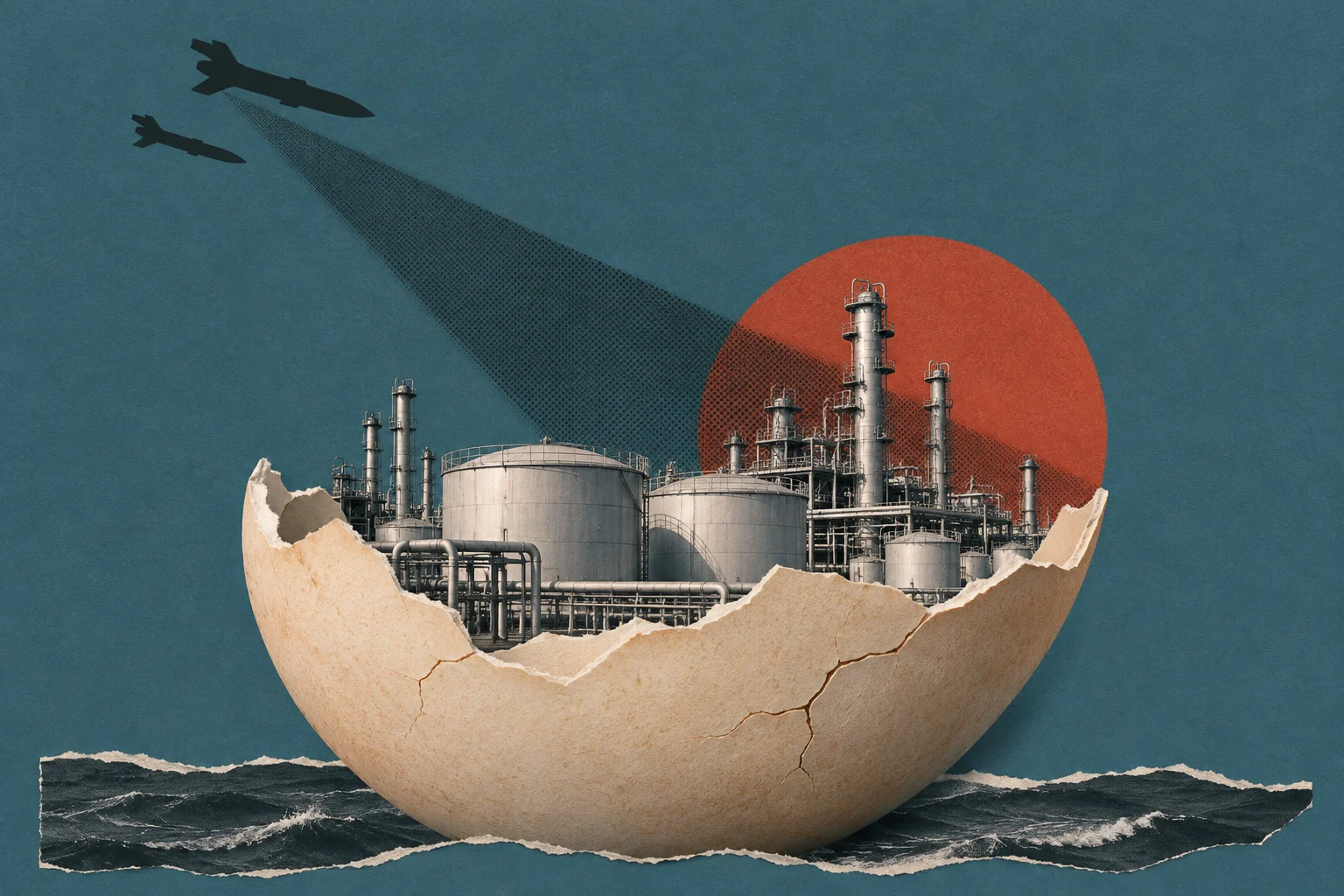
Nothing has fully settled since. The American naval blockade continues, and traffic through the Strait of Hormuz has not returned to normal, even though President Donald Trump said on Monday that further military action was unnecessary for now. Washington is still working to choke off Iran’s supply lines: on the same day, US Central Command set up a task force aimed at Iran’s land and Caspian routes.
Why Kuwait
Riyadh is the bloc’s capital of command. Kuwait is its northern edge. The new post is meant as a forward command, nearer the places threats come from, and Kuwait has its own: drones launched by Iran-aligned groups in Iraq.
Muhanad Seloom of the Middle East Council on Global Affairs told Al Jazeera that the move gives the Gulf states a permanent presence at the top of the Gulf. It “sends a message to Iran and also Iraq,” he said, and is “part of a larger GCC strategy to have enough deterrents against Iran.” In his reading it is a deterrent and does not mean a strike is coming.
There is a southern front as well. Houthi attacks on Saudi Arabia have grown heavier. On 10 October a strike on King Khalid airport in Riyadh killed 14 people and wounded more than 300. Albudaiwi called the attacks “a blatant transgression against the security and sovereignty of the Kingdom.”
Many pacts, one patron
The Kuwait command enters a crowded field. In August, Saudi Arabia, Pakistan and Turkiye signed the Mecca Joint Defence Agreement, a mutual defence pact, and Islamabad and Ankara later agreed to send forces to the kingdom under it. On top of that sits a bilateral Saudi-Pakistani treaty from 2025. Seloom said the new headquarters “complements these existing and new alliances.”
The obvious question is whether the Gulf is beginning to doubt its oldest guarantor. Albert Vidal of the International Institute for Strategic Studies said the move is no sign of a turn away from the United States, which he argued would welcome closer cooperation among the Gulf states. Seloom did not see it as a verdict on American failure either. He called it “a wake-up call for the GCC that they need to take matters into their own hands.”
Building the barracks is one half of the region’s search for safety. The other half, a security arrangement with Tehran itself, is still stuck on the question of who moves first. The announcement from Manama gave no date for the first soldiers to arrive in Kuwait.