
Every empire picks an object to be afraid of. For America at the turn of the century it was, among other things, a video game in which a man steals a car. In the week before Grand Theft Auto VI arrived on shelves, while others went back to the old games, Matthew Gault of 404 Media sat down with twenty years of television news about the franchise. What he found reads less like media criticism than like a seismograph: the needle moves with each decade’s fear. First death, then sex, and now money.
For mainstream news, Gault argues, GTA has always been the video game, the one that stands in for all the others: an open world built to look like ours, full of sex and killing, with each instalment looking more like reality. He calls it “the American id made manifest.” If that is right, the cameras pointed at it were also pointed at the country.
The assassin of youth
Rockstar released Grand Theft Auto III in October 2001 and Vice City a year later. The fear came at once, and it was about violence, sometimes also about how the games showed women. “This is the world’s most popular video game [...] and millions of kids are mastering it by learning to slaughter bystanders,” Ted Koppel told his viewers.
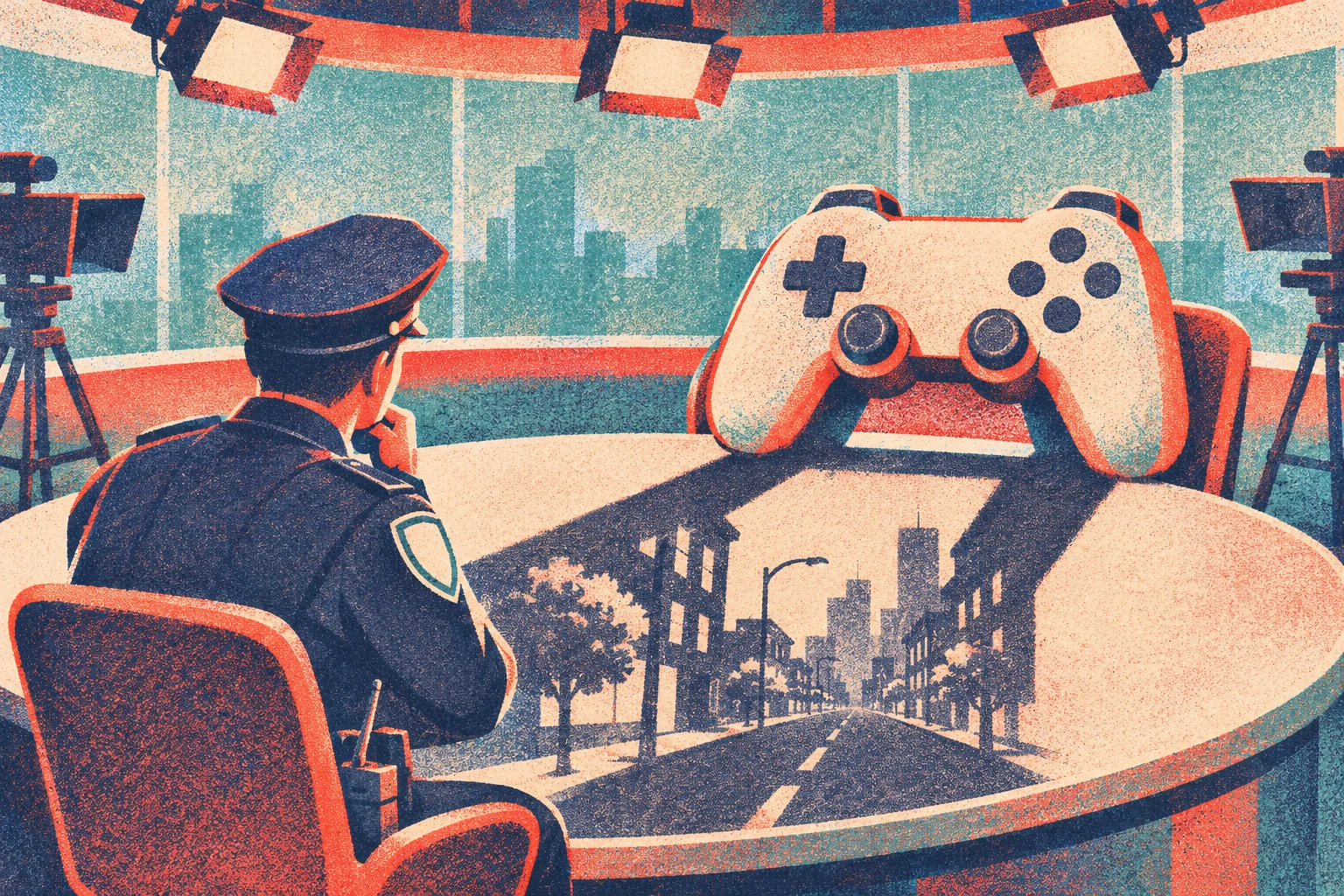
In July 2002 Nightline gave the game 20 minutes. It had all the parts of a moral panic: children grinning as they shot pedestrians, parents saying it was only a game, an expert sure it was training them to kill, a psychologist who said it wasn’t. At the end a police officer, in uniform, sat at a roundtable explaining the difference between a game and a real street. A uniform, it seems, was what it took to calm a nation about a cartridge.
Hot coffee and the Senate
Gault was an assistant manager at a GameStop in Texas when San Andreas came out in 2004. In the weeks before release, he writes, one mother looked at a stack of Game Informer magazines with the game on the cover and told him he was going to hell for “selling a gangster lifestyle” to children.
This time the news found sex. Rockstar had built and then cut a sex minigame called “hot coffee,” but the code was still on the discs sent to stores, and modders found it and switched it back on. Leland Yee, a California politician, attacked the Entertainment Software Rating Board for rating the game “Mature” rather than “Adults Only.” Cable news went wild. Rachel Maddow had her say. Hillary Clinton, then a senator from New York, called for an investigation, and Congress voted to set the FTC on Rockstar for deceiving the ratings board.
The bureaucracy did what bureaucracies do. The ESRB changed the rating to AO. Walmart, Best Buy and other retailers took the game off their shelves. Take-Two, the publisher, shipped new copies with the content removed. Then its shareholders threw out most of the board and put Strauss Zelnick in charge. He has been chief executive ever since. A scandal over a few lines of hidden code produced a reign of more than twenty years.
The ballad of Jack Thompson
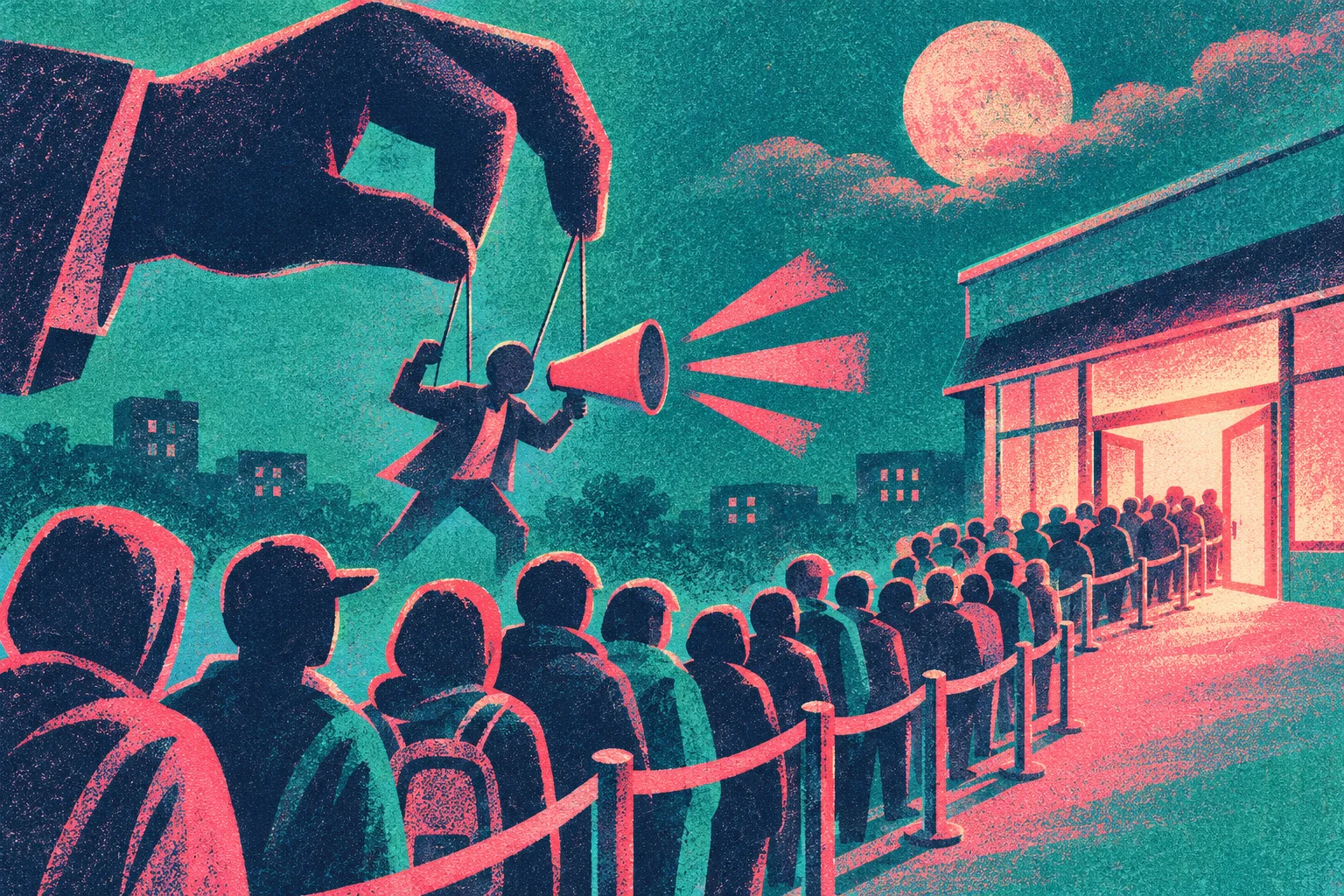
By 2008 and Grand Theft Auto IV the wind had changed. Shops held midnight launch parties, and local reporters interviewed the people queuing and wondered aloud how much money the game would make. The culture warriors still had airtime, though. Glenn Beck, then on CNN Headline News, kept inviting Jack Thompson, a lawyer convinced the game was teaching the young to kill their elders.
Thompson sued Take-Two to stop GTA IV being sold at all. The publisher countersued, he accused it of perjury, and the case was settled, with the court ruling that he could never again use the legal system to stop Take-Two from publishing a game. He did not stop. Sure that Rockstar had modelled an assassination mission on him, he filed another suit and wrote to Zelnick’s mother:
Your son, this very moment, is doing everything he possibly can to sell as many copies of GTA IV to teen boys in the United States, a country in which your son claims you raised him to be ‘a Boy Scout.’ More like the Hitler Youth, I would say. Happy Mother’s day, Mrs. Zelnick, which this year is May 11, two weeks after your son unleashes porn and violence upon other mothers’ boys. I’m sure you’re very proud.
On September 25, 2008, the Supreme Court of Florida permanently disbarred him, citing among other things false statements to tribunals, and ordered him to pay the Florida Bar $43,675.35 in costs. A crusader’s career ended not because he was defeated by the game but because he went on fighting it after the fight was over.
A billion in three days
In 2013 the money arrived and swallowed the argument. Take-Two announced that Grand Theft Auto V had passed $1 billion in worldwide retail sales in its first three days, by the company’s own estimates, which it believed was the fastest any entertainment property had ever reached that mark. GameSpot noted that Call of Duty: Black Ops II had needed 15 days and The Avengers 19. “Never has there been an opening like this in the entertainment industry,” CBS News said.

Segments about violence and sex still ran, but now inside a story about success. Anchors brought in business experts and tried to understand the game instead of condemning it. The worry that remained was about art. “It’s become such a hit-driven business,” CNET’s Dan Ackerman told Jake Tapper. “And when you have such a hit-driven business, I think people get risk averse and they don’t get as creative.”
The last heist
In 2026, Gault writes, nobody on the news talked about violence at all. Bloomberg ran a video titled “Why the stakes for GTA VI are so high.” Newsweek worried that the US economy could lose $1 billion to people taking time off work to play. A CBS morning anchor admitted he had once “lost a summer” to the series, and CNBC called it a “Billion Dollar Hype Machine.” The Washington Post asked whether the game “may be the last great heist.”
The fear has turned toward the industry itself. The game reportedly cost a billion dollars, though that is a rumour. Gault writes that a third of the industry’s workers have lost their jobs in the past 24 months, that most have not found new ones, and that studios cut staff even after a hit. The game that was once supposed to destroy the young now looks to many like the last monument of a shrinking kingdom.
The older panics have not quite gone. On Fox News, the activist Riley Gaines hoped the game’s romantic elements might raise the birth rate: “We need more babies. You can’t have babies, real babies, mouths to feed, from video games.” And when the streamer Sasha Grey played an early-access copy, YouTube shut down her stream for “nudity” over a cutscene she described as “artistic nip and some booty.” She complained on X and posted a screenshot of the moment the stream was cut.
Twenty-five years ago a police officer was brought into a studio to explain that a game is not a street. Now an algorithm decides what may be seen, and the anchors only want to know the weekend’s revenue.