
For most of its life, Android was the loose frontier of the mobile world. An app did not have to come through Google’s store. It could come from a developer’s own website or from any third-party store, and the phone would install it without asking who had written it. That arrangement now has an end date. Google will begin rolling out its developer verification requirement in every region in January 2027, as Ars Technica reported on November 19, and it is telling the developers who have still not registered to do so soon.
Google announced the scheme last year. Developers and users objected, many times over. The company kept going.
The documents at the border
Every app in the Play Store already comes from a developer Google has verified. The new rule carries that requirement out to apps from every other source. Once verification is switched on in a region, a phone there will not sideload an app unless its developer has registered with Google. Registering means handing over government identification and paying a $25 fee.
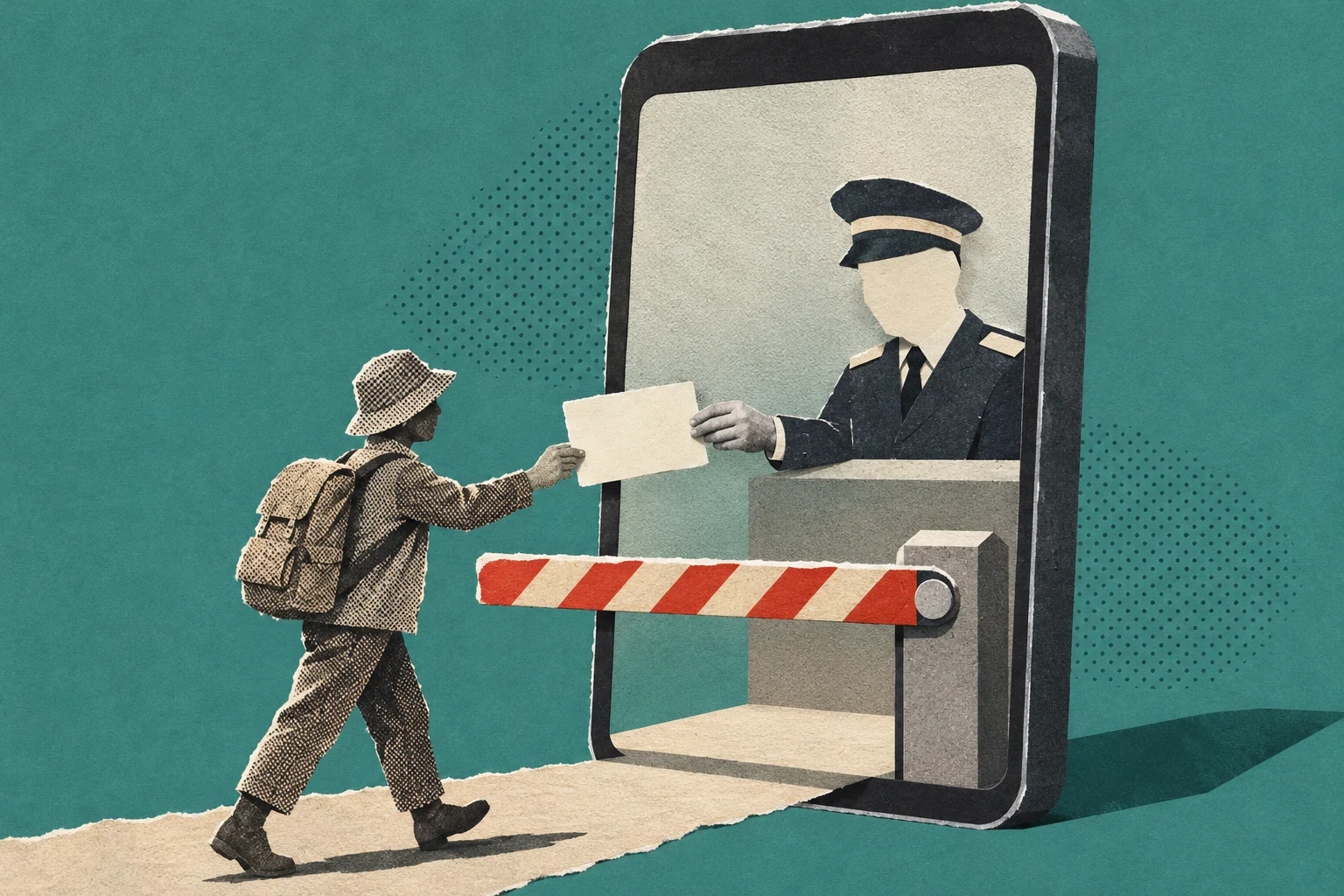
Google presents all of this as a security measure, and says it will make life harder for malicious actors trying to spread malware and scam apps. Whether it will is still a claim, not a result. Every customs post in history has justified itself by pointing at the smugglers. Sometimes the smugglers really are there. What a customs post always does, whatever else it achieves, is make the honest traveller stand in line.
The trial provinces
The new order was tested first at the edges. On September 30, 2026, verification went live in Brazil, Indonesia, Singapore and Thailand, according to Android Central. It was a trial run on several hundred million people, and as far as anyone has reported, nothing went badly wrong.
That was enough. Google had promised only that verification would go global sometime in 2027. It picked the earliest month on the calendar. The company says the requirement will reach all devices within “several months,” and its documentation, Android Central reported, expects full enforcement on March 1, 2027.
The census
Most developers had already made their peace. Google says “millions” of apps distributed outside the Play Store have been registered, and that together they make up more than 99 percent of Android app installs worldwide.

Power likes to measure its success in percentages, and this one is impressive. But a percentage of installs counts how often apps are downloaded, not how many people or projects stand behind them. A handful of hugely popular apps can fill the 99 percent. The last one percent is where the small developers live: the volunteer projects, the tools built for a few hundred users, the apps whose makers might not want to post their passport to a corporation in California. How many of them there are, the company has not said.
The machinery
The checkpoint is already in place. Google has pushed the verifier system service to Google-certified devices running Android 8 Oreo or later. That covers nearly every Android phone on Earth, except in China and Russia, where Google’s certification does not reach in the same way.
The large third-party stores have joined in: Samsung’s Galaxy Store, Honor, Oppo, Xiaomi, Transsion and Vivo, plus Google Play itself, seven distributors in all. They are where the January rollout begins. The work is divided. The verifier inside the operating system blocks unregistered installs, and once Google throws the switch, the stores will list only verified apps. The old alternatives to Google’s shop are now enforcing Google’s rules.

There is a pattern here beyond phones. Across the networked world, the price of entry is becoming proof of who you are. Even crawlers are now judged on their conduct: Cloudflare plans to score verified bots on whether they keep obeying the rules. Anonymity used to be the default. More and more, it has to be applied for.
The side doors
The objections were not wasted entirely. Google has opened a few narrow passages through the wall. Students and hobbyists can use free limited-distribution accounts to share an app with up to 50 authorized devices, without verifying their identity or paying the registration fee, according to Android Central.
Users who want to install whatever they like get an advanced option. They must authenticate the device and confirm that nobody is pushing them to change their security settings. Then they restart the phone and wait 24 hours before unrestricted sideloading switches on.
Twenty-four hours. That is how long it now takes for a person to be trusted with the machine they own.