
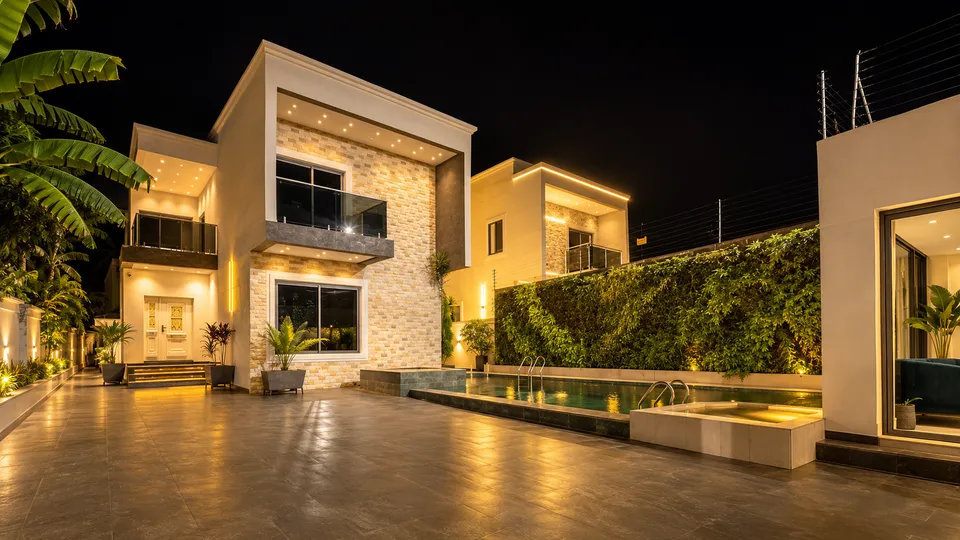
Ghana’s government is pouring money into housing, but at a real estate expo in Accra this week, developers said most homes reaching the market remain beyond what ordinary earners can pay.
The country needs more than 1.8 million additional housing units. Some 56.7 percent of Ghanaians live in urban areas, yet only about 5 percent can afford a home without state support, as Al Jazeera reported from the Africa Real Estate Conference & Expo, which brought developers, officials, investors and technology entrepreneurs to the capital.
The government has cut mortgage rates under its National Homeownership Fund to 8.4 percent from 13.5 percent and created a revolving fund of three billion cedis, about $256 million, for public sector workers repaying over 15 to 20 years. Officials are also trying to revive the stalled Saglemi Housing Project, with a first 700 units targeted for March 2027, and have announced a 200-acre Green City Project at Dedesua.
At a housing finance conference earlier this month, President John Dramani Mahama announced one billion cedis, about $85 million, for the National Housing Fund in the 2027 budget, and pressed banks to lend to informal-sector workers who earn regular incomes but lack payslips. “A system that cannot recognise these livelihoods excludes a substantial part of our nation from the opportunity to own a home,” he said. Housing Minister Ahmed Ibrahim, who represented Mr. Mahama at the expo, called for greater private-sector participation in affordable housing and mortgage finance.
The constraints run deeper than interest rates. About 90 percent of Ghana’s housing is built through personal savings and incremental construction, and mortgage penetration stands at 0.3 percent of gross domestic product, so most households finance their own building over many years rather than buying finished homes.
“Africa’s housing challenge is not a lack of demand,” Bako Ambianda, chief executive of Backbone Capital Ventures and a keynote speaker at the expo, told Al Jazeera. “It is a mismatch between the cost of delivering homes, the financing available to build them, and the purchasing power and payment patterns of households.”

Samuel Amegayibor, executive director of the Ghana Real Estate Developers Association, said borrowing costs have fallen from around 30 percent to between 9 and 15 percent, depending on the bank, but remain expensive, and land is often harder still. “Our land tenure system, you know the problems we have,” he said. “It has always been a challenge for people to get secured land.” Developers may also have to extend electricity and water lines and build access roads before construction starts, costs that end up in selling prices.
Materials add another burden. Mr. Amegayibor estimated that about 70 percent of housing inputs are imported. “Apart from sand, gravel and water, most of the things are import-based,” he said, arguing that domestic manufacturing could cut costs and offer “a business opportunity for both the supply side and the demand side.”
Tenants face their own version of the problem. Ghana’s Rent Act of 1963 limits advance rent to six months, but landlords routinely demand one to two years up front. Enforcement measures introduced in April carry fines of up to 3,000 cedis, about $257, or six months in prison; a government-backed app, FirstKey, is meant to flag non-compliant landlords, and a proposed Easy Rent program would have the National Housing Fund pay advances directly while workers repay it monthly. None of it builds homes, and about 70 percent of Ghanaians fall in the low- and middle-income bracket while much construction targets higher earners.

At the expo, 30 PropTech startups pitched tools they said would cut building and operating costs. Isaac Ayitey Chris-Quaye, co-founder of the smart-home firm NeuraHomes, cited a case in which property managers cut energy costs by 20 percent a year, with the system paying for itself in four years. “A smart home is not a luxury,” he said. “It’s human dignity.”
William Atitso Amankwah, founder of AWA Roofing Sheets, said his Cool Roof coating reflects up to 60 percent of sunlight, lowering indoor temperatures by 2 to 5 degrees Celsius and cooling-energy use by 11 to 27 percent, saving a typical Greater Accra household an estimated 330 to 810 cedis a year. Acheampong Builderman, managing partner of Builderman Estates, builds homes from sandbags and recycled materials but is still seeking financing. “People were interested, but they wanted you to fund everything,” he said.
Mr. Ambianda warned that none of the gadgets can fix the fundamentals. “A beautifully designed app will not make an overpriced plot affordable, provide a road or drainage system, lower the cost of capital by itself, or resolve an unclear title,” he said.