
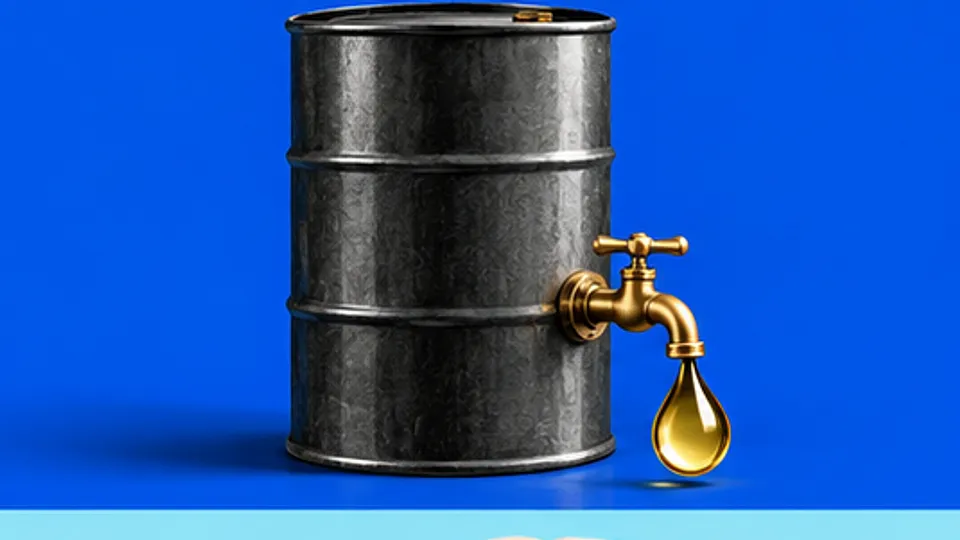
Group of Seven nations agreed on Friday to release as much as 100 million barrels of emergency diesel and crude over four months, after weeks of pressure from President Trump over soaring fuel prices.
The drawdown will be coordinated by the International Energy Agency and begin immediately, with what the G7 called a “front-loaded substantial diesel release” within the first 20 days by member countries and partners. The joint statement gave no split among crude, diesel and other products and did not say which countries would take part.
The new total may not all be new oil. The G7 said it would act “taking into account commitments that have already been fulfilled,” and a later statement suggested some barrels could count toward the 400 million-barrel release the 32-member IEA coordinated in March after the Iran war began. Fatih Birol, the agency’s executive director, said this week that members had released about two-thirds of that amount.
The agreement followed a weeklong push by the Trump administration aimed especially at Germany and France, which hold much of the European Union’s diesel reserve. Reuters reported on Thursday that Washington had told Berlin and Paris to draw down emergency inventories or face a possible American diesel-export ban, citing three people close to the discussions. Before the meeting, the European Commission said it “fully rejects any ban on diesel” and that “a ban would not be beneficial to anyone.”
President Emmanuel Macron of France, the current G7 chair, confirmed the move after a leaders’ videoconference that followed an overnight call with Mr. Trump, according to the French Embassy in Washington. “We have all committed together to releasing these strategic reserves in the proportions I mentioned, with a focus on diesel,” Mr. Macron told journalists. “And we are all committed to ensuring there are no export bans, and President Trump, in particular, was very clear on this point.”
Mr. Trump claimed the decision as a win in a Truth Social post. “Europe has just agreed to release a massive amount of their heavily stocked Diesel Oil,” he wrote. “The process will begin immediately.” Ursula von der Leyen, the European Commission president, later welcomed the G7 decision “not to impose any export bans on allies” and “the continued solidarity between partners.”
Fuel markets moved before the ink was dry. U.S. diesel futures fell more than 4 percent to $4.4491 a gallon, benchmark European diesel futures dropped by more than $90 a metric ton and European gasoil futures fell more than 4 percent, according to LSEG data. Diesel’s premium over crude slid to about $69 a barrel from $76.77 on Thursday, fair-value data compiled by Bloomberg show. Brent crude traded around $100 a barrel, still up more than 60 percent this year and far above the roughly $72 level before the war.
Drivers have already been paying for the shortage. The U.S. average for diesel was $6.37 a gallon on Friday, according to AAA, after a record $6.52 on Sept. 22. In Britain, average diesel reached £2 a liter on Friday; the RAC motoring group said filling a family car now cost £110, nearly £32 more than before the Iran war. “This is a pump price threshold that no one wanted to cross,” said Simon Williams, the group’s head of policy.
The strain runs deeper than crude. American and Israeli strikes on Iran on Feb. 28 set off an eight-month war that has disrupted Gulf supply, while Russia’s war in Ukraine escalated again in July and Ukrainian drone attacks have cut Russian refining output. Chinese refiners canceled some October fuel loadings to preserve domestic stocks. Europe makes about 70 percent of the diesel it uses but imports the rest, much of it lately from the United States.
Treasury Secretary Scott Bessent framed the pressure as burden-sharing on Thursday. “American farmers, truckers, and businesses should not be left carrying the burden of a global diesel shortage” alone, he wrote on X. Skeptics said the G7 number was built to release political steam more than add supply. “This is a political statement rather than a specific and binding commitment,” analysts at Energy Aspects said in a note. Andy Lipow, president of Lipow Oil Associates, said 100 million barrels could temporarily cut diesel prices by 25 cents a gallon but “does little to increase refinery capacity.”
The politics are pointed at Nov. 3. Mr. Trump and Republicans face midterm losses if voters keep blaming them for prices: NBC News polling put approval of his economic management at 41 percent, with 56 percent disapproving, and a new AP-NORC poll found most adults blame him for higher prices. G7 leaders said they would coordinate refinery maintenance to avoid simultaneous shutdowns and raise utilization where feasible; they said they would meet through the IEA in the coming days to weigh more diesel releases “as necessary.”